Adizero Adios Pro 4 vs Adizero Adios Pro 5
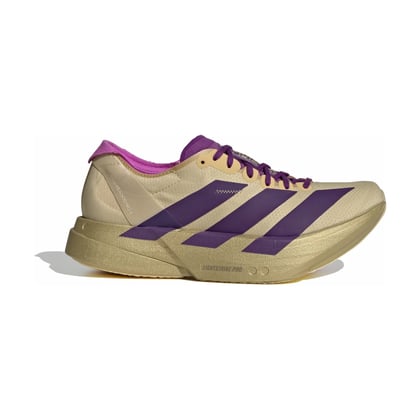

Adidas Adizero Adios Pro 4
Best price today
£110£249.99−56%
at End Clothing90D LOW · 42% under 30d avg
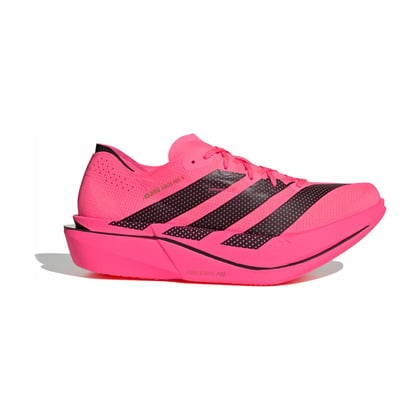
| Spec | Adizero Adios Pro 4 | Adizero Adios Pro 5 |
|---|---|---|
| Best price now | £110 | £198 |
| 90-day low | £110 | £151.75 |
| 30-day average | £190.97 | £215.14 |
| RRP | £249.99 | £220 |
| Category | Race | Race |
| Surface | Road | Road |
| Weight | 188g | 177g |
| Drop | 6mm | 4mm |
| Heel stack | 39mm | 39mm |
| Forefoot stack | 33mm | 35mm |
| Carbon plated | Yes | Yes |
| Stability | No | No |
| Review rating | 5.0 (1) | - |
Adizero Adios Pro 4 or Adizero Adios Pro 5: which should you buy?
Adizero Adios Pro 4
Reviewers mostly liked how the Adios Pro 4 runs, and their complaints were about their toes. On speed they're close to unanimous: softer and bouncier than the Pro 3, a lot lighter, and properly quick once you're at 10k to marathon effort. The Run Testers found it lighter and cheaper than the Alphafly 3, if a little less springy. On fit, the toe box tapers, it runs a little short, and several testers had sore toes by the end of a marathon. So this is a carbon racing shoe for neutral runners with normal to narrow feet who race with some intent, from 5k up to the full distance. It's less happy at jogging pace or under a heavy heel strike. The newer Adios Pro 5 has a lower RRP and more padding at the heel, so check the price table before paying full whack for the older shoe.
Adizero Adios Pro 5
£220 is a lot for a pair of running shoes, but it's £30 under the Adios Pro 4's £249.99 RRP, and on paper you get more for it. adidas has swapped the old EnergyRods for an ENERGYRIM carbon ring taken from the Adios Pro Evo 3, packed more Lightstrike Pro foam directly under your foot, and brought the listed weight down to 177g. The early reviews are strong. Doctors of Running and RTINGS both rate it best for half and full marathon racing, with a softer, bouncier ride than the Pro 4 and a heel that no longer slips. It's less convincing at 10k pace, where some testers found the soft forefoot a touch less snappy, and it was never meant for easy miles. If you race 13.1 or 26.2 and can hold your form late on, this is one of the first carbon racing shoes we'd shortlist, next to the Vaporfly 4.
Adizero Adios Pro 4 vs Adizero Adios Pro 5: how they score
Adizero Adios Pro 4
Lightness9.2
Cushioning8.0
Flexibility3.0
Responsive9.2
Stability5.5
Grip8.5
Adizero Adios Pro 5
Lightness9.5
Cushioning8.5
Flexibility3.0
Responsive9.0
Stability5.5
Grip7.5
Who the Adizero Adios Pro 4 and the Adizero Adios Pro 5 are for
Adizero Adios Pro 4
Who should buy it
90D Low£110
30D Avg£190.97
RRP£249.99
Where to buy the Adizero Adios Pro 4


- 01End Clothing3d ago£110£249.99−56%Women's
- 02Profeet5d ago£126.52£249.99−49%Women's
- 03Up and Running3d ago£129.99£249.99−48%Women's
- 04SportsShoesLIVE£131.99£249.99−47%Women's
- 05DirectRunning1d ago£138.54£249.99−45%Men's
- 06Runlimited5d ago£140£249.99−44%Women's
- 07Start Fitness5d ago£144.90£249.99−42%Women's
- 08RunningXpertLIVE£145£249.99−42%Men's
- 09365RiderLIVE£160.39£249.99−36%Men's
- 10Secret Sales1d ago£164.90£249.99−34%Women's
- 11Secret Sales3d ago£164.90£249.99−34%Men's
- 12SportsdirectLIVE£174.99£249.99−30%Men's
- 13SportsShoesLIVE£175.99£249.99−30%Men's
- 14Side KicksLIVE£182£249.99−27%Women's
- 15Direct RunningLIVE£211.52£249.99−15%Women's
- 16AdidasLIVE£220£249.99−12%Check gender
- 17Run Active5d ago£220£249.99−12%Women's
Live = checked in the last 24 hours. Older prices show when we last saw them.


