//
Adizero Adios Pro 4 vs Hyperion Elite 4
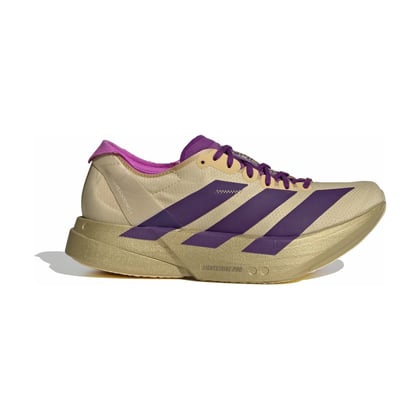

Adidas Adizero Adios Pro 4
Best price today
£129.26£249.99−48%
at Direct Running90D LOW · 23% under 30d avg
| Spec | Adizero Adios Pro 4 | Hyperion Elite 4 |
|---|---|---|
| Best price now | £129.26 | - |
| 90-day low | £129.26 | £165.11 |
| 30-day average | £168.48 | £166.08 |
| RRP | £249.99 | £245.00 |
| Category | Race | Race |
| Surface | Road | Road |
| Weight | 188g | 196g |
| Drop | 6mm | 8mm |
| Heel stack | 39mm | 40mm |
| Forefoot stack | 33mm | 32mm |
| Carbon plated | Yes | Yes |
| Stability | No | No |
| Review rating | 5.0 (1) | - |
Expert review
Adizero Adios Pro 4 or Hyperion Elite 4: which should you buy?
Adizero Adios Pro 4
Reviewers mostly liked how the Adios Pro 4 runs, and their complaints were about their toes. On speed they're close to unanimous: softer and bouncier than the Pro 3, a lot lighter, and properly quick once you're at 10k to marathon effort. The Run Testers found it lighter and cheaper than the Alphafly 3, if a little less springy. On fit, the toe box tapers, it runs a little short, and several testers had sore toes by the end of a marathon. So this is a carbon racing shoe for neutral runners with normal to narrow feet who race with some intent, from 5k up to the full distance. It's less happy at jogging pace or under a heavy heel strike. The newer Adios Pro 5 has a lower RRP and more padding at the heel, so check the price table before paying full whack for the older shoe.
Hyperion Elite 4
The Hyperion Elite 4 is Brooks going all in on the marathon: a carbon racing shoe with one job, and it does it with a surprisingly light touch. At 196g it is not the lightest super shoe on a shelf full of sub-190g rivals, but the balance is where it wins. The nitrogen-infused foam feels bouncy without the top-heavy wobble some race shoes carry, and the carbon plate keeps you rolling forward once you settle into pace. This is a road running shoe built for race day, not your easy miles. It suits a runner who wants a stable, predictable ride they can trust for 26.2 rather than the twitchiest, most aggressive tool in the pack. Against a Nike Vaporfly 4 it trades a little raw pop for a calmer, more planted feel. At £245 it sits right in premium carbon territory, so it earns its place on merit, not price.
At a glance
Adizero Adios Pro 4 vs Hyperion Elite 4: how they score
Adizero Adios Pro 4
Lightness9.2
Cushioning8.0
Flexibility3.0
Responsive9.2
Stability5.5
Grip8.5
Hyperion Elite 4
Lightness8.2
Cushioning8.5
Flexibility6.0
Responsive8.7
Stability6.5
Grip7.5
Who it suits
Who the Adizero Adios Pro 4 and the Hyperion Elite 4 are for
Adizero Adios Pro 4
90D Low£129.26
30D Avg£168.48
RRP£249.99
UK prices
Where to buy the Adizero Adios Pro 4


- 01Direct RunningLIVE£129.26£249.99−48%
- 02Run ActiveLIVE£130.00£249.99−48%
- 03Sevenstore1d ago£130.00£249.99−48%
- 04Fitstuff4d ago£140.00£249.99−44%
- 05Start Fitness1d ago£153.90£249.99−38%
- 06365RiderLIVE£171.85£249.99−31%
- 07SportsShoesLIVE£175.99£249.99−30%