Adizero Adios Pro 4 vs Endorphin Elite 3
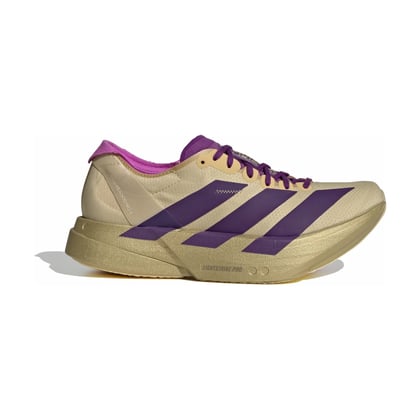

Adidas Adizero Adios Pro 4
Best price today
£120£249.99−52%
at Sportsdirect · 29% under 30d avg
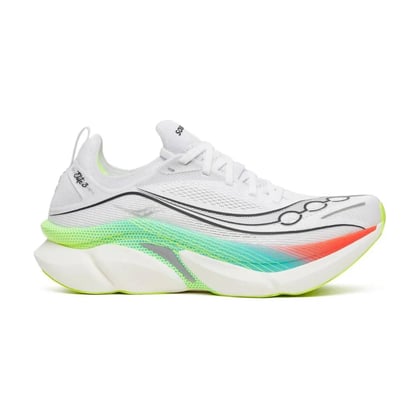

Saucony Endorphin Elite 3
Best price today
£204£300−32%
at Run & Ride90D LOW · 29% under 30d avg
| Spec | Adizero Adios Pro 4 | Endorphin Elite 3 |
|---|---|---|
| Best price now | £120 | £204 |
| 90-day low | £116 | £204 |
| 30-day average | £169.96 | £288.61 |
| RRP | £249.99 | £300 |
| Category | Race | Race |
| Surface | Road | Road |
| Weight | 188g | 210g |
| Drop | 6mm | 8mm |
| Heel stack | 39mm | 40mm |
| Forefoot stack | 33mm | 32mm |
| Carbon plated | Yes | Yes |
| Stability | No | No |
| Review rating | 5.0 (1) | - |
Expert review
Adizero Adios Pro 4 or Endorphin Elite 3: which should you buy?
Adizero Adios Pro 4
Reviewers mostly liked how the Adios Pro 4 runs, and their complaints were about their toes. On speed they're close to unanimous: softer and bouncier than the Pro 3, a lot lighter, and properly quick once you're at 10k to marathon effort. The Run Testers found it lighter and cheaper than the Alphafly 3, if a little less springy. On fit, the toe box tapers, it runs a little short, and several testers had sore toes by the end of a marathon. So this is a carbon racing shoe for neutral runners with normal to narrow feet who race with some intent, from 5k up to the full distance. It's less happy at jogging pace or under a heavy heel strike. The newer Adios Pro 5 has a lower RRP and more padding at the heel, so check the price table before paying full whack for the older shoe.
Endorphin Elite 3
The Endorphin Elite 3 is Saucony's no-compromise carbon racing shoe, built for one job: chasing a personal best over the half and full marathon. This is a specialist marathon shoe, not a do-it-all trainer. You get a tall 40mm heel, a full-length carbon plate and Saucony's springy IncrediRUN foam, all wrapped up at a race weight of 210g. At £306 it sits right at the top of the market, alongside the Nike Alphafly 3 and the adidas Adizero Adios Pro 4. What you are paying for is peak return at speed. The slotted plate and high stack give a rolling, aggressive ride that wants to move. It is less versatile than Saucony's own Endorphin Pro 5, and it asks for a fair bit of leg strength to get the best from it. We rate it as one of the sharpest tools you can lace up on race day, so long as race day is what you want it for.
At a glance
Adizero Adios Pro 4 vs Endorphin Elite 3: how they score
Adizero Adios Pro 4
Lightness9.2
Cushioning8.0
Flexibility3.0
Responsive9.2
Stability5.5
Grip8.5
Endorphin Elite 3
Lightness8.5
Cushioning8.5
Flexibility6.0
Responsive9.5
Stability5.5
Grip7.5
Who it suits
Who the Adizero Adios Pro 4 and the Endorphin Elite 3 are for
90D Low£116
30D Avg£169.96
RRP£249.99
UK prices
Where to buy the Adizero Adios Pro 4


- 01SportsdirectLIVE£120£249.99−52%Women's
- 02Run Active2d ago£130£249.99−48%Women's
- 03SportsShoes2d ago£131.99£249.99−47%Women's
- 04RunningBear2d ago£150£249.99−40%Women's
- 05Start Fitness2d ago£153.90£249.99−38%Women's
- 06DerbyRunner5d ago£154£249.99−38%Women's
- 07Secret SalesLIVE£164.90£249.99−34%Women's
- 08Secret Sales2d ago£164.90£249.99−34%Men's
- 09365RiderLIVE£165.17£249.99−34%Men's
- 10runningbath.co.uk2d ago£174£249.99−30%Men's
- 11SportsdirectLIVE£174.99£249.99−30%Men's
- 12SportsShoes2d ago£175.99£249.99−30%Men's
- 13Direct RunningLIVE£211.52£249.99−15%Women's
- 14DirectRunning2d ago£211.52£249.99−15%Men's
- 15DirectRunning3d ago£211.52£249.99−15%Women's
- 16Profeet5d ago£220£249.99−12%Men's


