//
Adizero Adios Pro 5 vs Alphafly 3

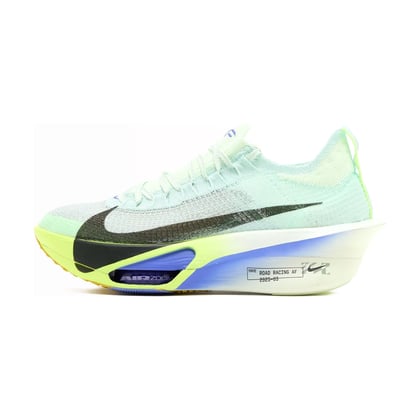

Nike Alphafly 3
Best price today
£128.42£285.00−55%
at SportsShoes90D LOW · 40% under 30d avg
| Spec | Adizero Adios Pro 5 | Alphafly 3 |
|---|---|---|
| Best price now | - | £128.42 |
| 90-day low | - | £128.42 |
| 30-day average | - | £215.30 |
| RRP | £220.00 | £285.00 |
| Category | Race | Race |
| Surface | Road | Road |
| Weight | 177g | 218g |
| Drop | 4mm | 8mm |
| Heel stack | 39mm | 40mm |
| Forefoot stack | 35mm | 32mm |
| Carbon plated | Yes | Yes |
| Stability | No | No |
| Review rating | - | - |
Expert review
Adizero Adios Pro 5 or Alphafly 3: which should you buy?
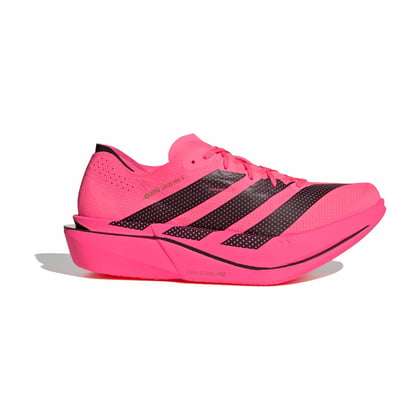
Adizero Adios Pro 5
£220 is a lot for a pair of running shoes, but it's £30 under the Adios Pro 4's £249.99 RRP, and on paper you get more for it. adidas has swapped the old EnergyRods for an ENERGYRIM carbon ring taken from the Adios Pro Evo 3, packed more Lightstrike Pro foam directly under your foot, and brought the listed weight down to 177g. The early reviews are strong. Doctors of Running and RTINGS both rate it best for half and full marathon racing, with a softer, bouncier ride than the Pro 4 and a heel that no longer slips. It's less convincing at 10k pace, where some testers found the soft forefoot a touch less snappy, and it was never meant for easy miles. If you race 13.1 or 26.2 and can hold your form late on, this is one of the first carbon racing shoes we'd shortlist, next to the Vaporfly 4.
Alphafly 3
The Nike Alphafly 3 is the brand's maximalist marathon racer, the carbon racing shoe built to carry you to a road PB and not much else. It pairs a full-length carbon plate with twin forefoot Air pods and a tall slab of ZoomX foam, so you get a ride that is bouncy, propulsive and unapologetically built for going long and fast. At 218g it is not the lightest super shoe on the shelf, but the energy return more than earns the few extra grams once you settle into marathon or half pace. This is a specialist. It rewards a committed forefoot or midfoot strike and a pace you can actually hold, and it feels flat and over-built if you jog it easy. If you want a slightly lighter, more nimble option for shorter races, the Nike Vaporfly 4 is the natural stablemate. For the marathon, though, the Alphafly is the one we reach for.
At a glance
Adizero Adios Pro 5 vs Alphafly 3: how they score
Adizero Adios Pro 5
Lightness9.5
Cushioning8.5
Flexibility3.0
Responsive9.0
Stability5.5
Grip7.5
Alphafly 3
Lightness7.5
Cushioning9.5
Flexibility5.0
Responsive9.5
Stability5.5
Grip8.0
Who it suits
Who the Adizero Adios Pro 5 and the Alphafly 3 are for
Adizero Adios Pro 5
RRP£220.00
90D Low£128.42
30D Avg£215.30
RRP£285.00
UK prices
Where to buy the Alphafly 3


- 01SportsShoesLIVE£128.42£285.00−55%
- 02Progress Running Club2d ago£142.00£285.00−50%
- 03SportsShoes5d ago£142.49£285.00−50%
- 04Run4It3d ago£151.32£285.00−47%
- 05Run North West2d ago£161.49£285.00−43%
- 06Run4ItLIVE£169.99£285.00−40%
- 07End ClothingLIVE£171.00£285.00−40%
- 08RunlimitedLIVE£184.99£285.00−35%
- 09Run North WestLIVE£189.99£285.00−33%
- 10NikeLIVE£199.49£285.00−30%
- 11Nike4d ago£199.49£285.00−30%
- 12Runlimited1d ago£199.99£285.00−30%
- 13SportsdirectLIVE£210.00£285.00−26%
- 14HouseOfFraserLIVE£210.00£285.00−26%
- 15Go OutdoorsLIVE£285.00
- 16Go OutdoorsLIVE£285.00