Adizero Adios Pro 5 vs Deviate Nitro Elite 4


Puma Deviate Nitro Elite 4
Best price today
£125.99£215−41%
at SportsShoes · 28% under 30d avg
| Spec | Adizero Adios Pro 5 | Deviate Nitro Elite 4 |
|---|---|---|
| Best price now | £198 | £125.99 |
| 90-day low | £151.75 | £117.87 |
| 30-day average | £215.14 | £174.33 |
| RRP | £220 | £215 |
| Category | Race | Race |
| Surface | Road | Road |
| Weight | 177g | 170g |
| Drop | 4mm | 8mm |
| Heel stack | 39mm | 38mm |
| Forefoot stack | 35mm | 30mm |
| Carbon plated | Yes | Yes |
| Stability | No | No |
| Review rating | - | - |
Adizero Adios Pro 5 or Deviate Nitro Elite 4: which should you buy?
Adizero Adios Pro 5
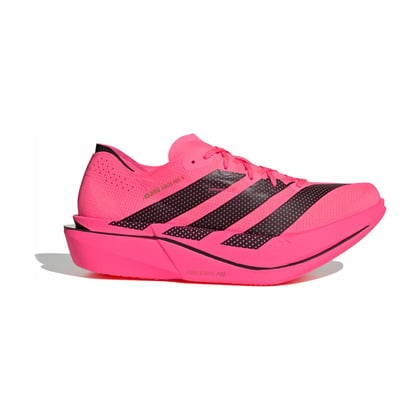
£220 is a lot for a pair of running shoes, but it's £30 under the Adios Pro 4's £249.99 RRP, and on paper you get more for it. adidas has swapped the old EnergyRods for an ENERGYRIM carbon ring taken from the Adios Pro Evo 3, packed more Lightstrike Pro foam directly under your foot, and brought the listed weight down to 177g. The early reviews are strong. Doctors of Running and RTINGS both rate it best for half and full marathon racing, with a softer, bouncier ride than the Pro 4 and a heel that no longer slips. It's less convincing at 10k pace, where some testers found the soft forefoot a touch less snappy, and it was never meant for easy miles. If you race 13.1 or 26.2 and can hold your form late on, this is one of the first carbon racing shoes we'd shortlist, next to the Vaporfly 4.
Deviate Nitro Elite 4
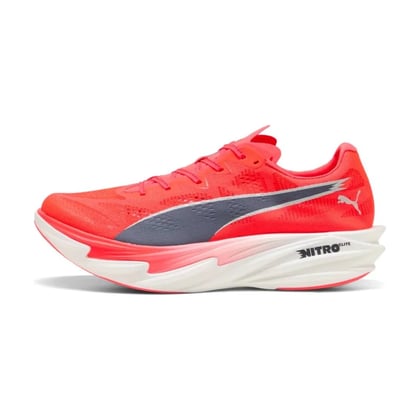
At 170g, the Deviate Nitro Elite 4 now weighs the same as Puma's more aggressive Fast-R Nitro Elite 3, and that shifts who it's for. It keeps the steadier, heel-strike-friendly shape the Elite line has always had, but most reviewers found the midsole livelier than the Elite 3's and the outsole better too. One long-term tester said it was the first Deviate Elite they'd enjoyed since the original, and Believe in the Run went further, calling it Puma's best race shoe so far. We see it as a carbon racing shoe for 10K and half marathon, and a marathon shoe for runners who find the Fast-R too twitchy. The catches are a narrow midfoot, thin forefoot rubber and early wear reports from a couple of testers. At £215 RRP it's priced alongside the big names, so check the price table before paying full whack.
Adizero Adios Pro 5 vs Deviate Nitro Elite 4: how they score
Adizero Adios Pro 5
Lightness9.5
Cushioning8.5
Flexibility3.0
Responsive9.0
Stability5.5
Grip7.5
Deviate Nitro Elite 4
Lightness9.2
Cushioning7.0
Flexibility3.5
Responsive8.8
Stability7.0
Grip7.5
Who the Adizero Adios Pro 5 and the Deviate Nitro Elite 4 are for
Adizero Adios Pro 5
Who should buy it
90D Low£151.75
30D Avg£215.14
RRP£220
Where to buy the Adizero Adios Pro 5


- 01Fitstuff2d ago£198£220−10%Men's
- 02Fitstuff2d ago£198£220−10%Women's
- 03Start Fitness1d ago£219.90Women's
- 04Start Fitness4d ago£219.90Men's
- 05Direct RunningLIVE£219.99Women's
- 06SportsShoes1d ago£219.99Women's
- 07The Running Outlet2d ago£219.99Women's
- 08The Running Outlet4d ago£219.99Men's
- 09AdidasLIVE£220Check gender
- 10Run Active1d ago£220Women's
- 11runningbath.co.uk2d ago£220Women's
- 12DerbyRunner2d ago£220Women's
- 13AchillesHeel2d ago£220Women's
- 14RunningBear2d ago£220Women's
- 15Run North West3d ago£220Women's
- 16Out And Back3d ago£220Women's
- 17Run Active3d ago£220Men's
- 18runningbath.co.uk4d ago£220Men's
- 19AchillesHeel4d ago£220Men's
- 20DerbyRunner4d ago£220Men's
Live = checked in the last 24 hours. Older prices show when we last saw them.


