Adizero EVO SL 1 vs Hyperion 3
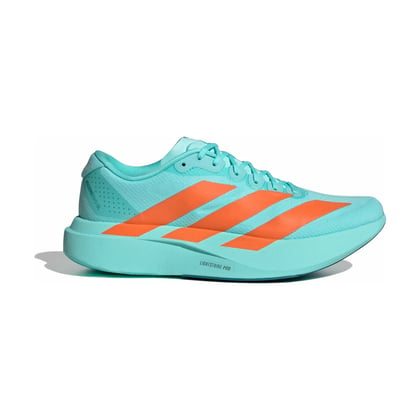

Adidas Adizero EVO SL 1
Best price today
£77.99£150.00−48%
at SportsShoes · 35% under 30d avg


| Spec | Adizero EVO SL 1 | Hyperion 3 |
|---|---|---|
| Best price now | £77.99 | £79.00 |
| 90-day low | £69.00 | £62.00 |
| 30-day average | £119.94 | £95.52 |
| RRP | £150.00 | £130.00 |
| Category | Tempo | Tempo |
| Surface | Road | Road |
| Weight | 224g | 244g |
| Drop | 6mm | 11.3mm |
| Heel stack | 39mm | 36.5mm |
| Forefoot stack | 33mm | 25.2mm |
| Carbon plated | No | No |
| Stability | No | No |
| Review rating | 5.0 (1) | - |
Expert review
Adizero EVO SL 1 or Hyperion 3: which should you buy?
Adizero EVO SL 1
Few running shoes of the last couple of years got talked about as much as the EVO SL, and the reason is simple. adidas took the Lightstrike Pro foam from its race shoes, left out the carbon rods, and sold it at a daily-trainer price. At 224g with a 39mm heel, it's a light, bouncy tempo shoe that reviewers keep calling a bargain.
It shines when you pick up the pace. Tempo runs, intervals and goal-pace work are its home, and plenty of runners race half marathons in it. It's less happy at a slow shuffle, and it isn't a stable shoe, so it won't suit everyone as a do-everything trainer.
If you want a plate for race day, the Adios Pro 5 is the step up. As an unplated speed trainer, though, this is the one others in the category get measured against, and the few flaws people mention (laces, tongue, some early outsole wear) are small ones.
Hyperion 3
The Brooks Hyperion 3 is a lightweight speed trainer built to add a bit of zip to your faster days without asking you to buy a dedicated racer. It is a neutral road running shoe aimed at tempo runs, intervals and strides, and at 244g it is light enough to feel quick underfoot the moment you pick up the pace. There is no carbon plate here, so you will not get the springboard snap of a super shoe. What you get instead is a simple, honest tempo shoe with a firm, responsive ride and a versatile streak that lets it double as a lighter daily trainer. The 11.3mm drop is on the traditional side and rewards heel strikers. Against the plated crowd it gives up some return, but at £130 it undercuts most of them and asks for less commitment. If you liked the Brooks Hyperion 2, this is a familiar, refined update rather than a reinvention.
At a glance
Adizero EVO SL 1 vs Hyperion 3: how they score
Adizero EVO SL 1
Lightness9.0
Cushioning7.5
Flexibility6.5
Responsive8.5
Stability5.0
Grip7.5
Hyperion 3
Lightness8.5
Cushioning6.5
Flexibility7.5
Responsive8.0
Stability6.0
Grip7.0
Who it suits
Who the Adizero EVO SL 1 and the Hyperion 3 are for
90D Low£69.00
30D Avg£119.94
RRP£150.00
UK prices
Where to buy the Adizero EVO SL 1


- 01SportsShoes2d ago£77.99£150.00−48%
- 02Direct RunningLIVE£89.93£150.00−40%
- 03VeryLIVE£90.00£150.00−40%
- 04Run ActiveLIVE£91.00£150.00−39%
- 05Run ActiveLIVE£91.00£150.00−39%
- 06SportsdirectLIVE£92.00£150.00−39%
- 07SportsdirectLIVE£92.00£150.00−39%
- 08Direct RunningLIVE£96.35£150.00−36%
- 09DecathlonLIVE£99.99£150.00−33%
- 10Consortium2d ago£99.99£150.00−33%
- 11RunningXpert5d ago£103.00£150.00−31%
- 12365RiderLIVE£103.10£150.00−31%
- 13Start Fitness1d ago£109.00£150.00−27%
- 14HouseOfFraser5d ago£109.99£150.00−27%
- 15ASOSLIVE£119.99£150.00−20%
- 16DirectRunning2d ago£122.06£150.00−19%
- 17365RiderLIVE£122.19£150.00−19%
- 18DirectRunning1d ago£128.48£150.00−14%
- 19DecathlonLIVE£129.99£150.00−13%
- 20SportsShoes1d ago£129.99£150.00−13%
- 21Foot Locker3d ago£129.99£150.00−13%
- 22Foot Locker5d ago£129.99£150.00−13%
- 23AdidasLIVE£130.00£150.00−13%
- 24MainlineMenswearLIVE£130.00£150.00−13%
- 25NextLIVE£130.00£150.00−13%
- 26schuhLIVE£130.00£150.00−13%
- 27JD SportsLIVE£130.00£150.00−13%
- 28Sigma SportsLIVE£130.00£150.00−13%
- 29AchillesHeel1d ago£130.00£150.00−13%
- 30ASOS3d ago£130.00£150.00−13%
- 31Very6d ago£130.00£150.00−13%


