Supernova Prima 1 vs Supernova Rise 3
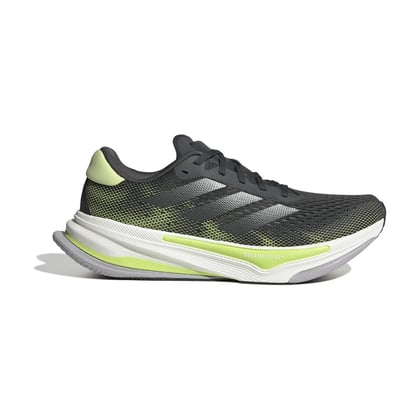

Adidas Supernova Prima 1
Best price today
£44.97£160−72%
at Profeet90D LOW · 64% under 30d avg
| Spec | Supernova Prima 1 | Supernova Rise 3 |
|---|---|---|
| Best price now | £44.97 | £65 |
| 90-day low | £74.99 | £59.99 |
| 30-day average | £126.45 | £116.44 |
| RRP | £160 | £130 |
| Category | Max Cushion | Daily |
| Surface | Road | Road |
| Weight | 290g | 264g |
| Drop | 8mm | 7.8mm |
| Heel stack | 37.5mm | 35mm |
| Forefoot stack | 29.5mm | 27.2mm |
| Carbon plated | No | No |
| Stability | No | No |
| Review rating | - | - |
Supernova Prima 1 or Supernova Rise 3: which should you buy?
Supernova Prima 1
The Supernova Prima is adidas leaning all the way into soft, protective cushioning: a deeply padded max-cushion running shoe built for easy miles and long, gentle recovery days rather than speed. It sits above the daily Supernova Rise in the range, trading a little snap for a plusher, more forgiving ride underfoot. At 290g it is on the heavier side of the category, and with no plate and an 8mm drop this is a comfort trainer first and foremost, not a tempo tool. What you get for the £160 RRP is a smooth, cushioned road shoe that soaks up the pounding on higher-mileage weeks and keeps your legs feeling fresh. We rate it as a specialist rather than an all-rounder. If you want one shoe to do easy days and workouts, look elsewhere. If you want a dedicated cruiser for long, relaxed miles, it makes a strong case.
Supernova Rise 3
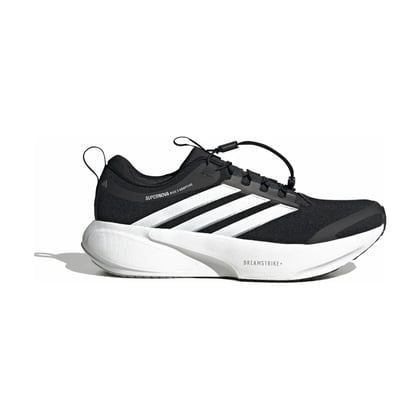
The Supernova Rise 3 is adidas doing the sensible thing well: a cushioned, neutral daily training shoe built to soak up easy miles rather than chase a time. It sits squarely in the do-everything daily-trainer bracket, with a 35mm heel and a 7.8mm drop giving you a protective, slightly rockered ride that suits steady runs and building a base. At 264g it is not the lightest daily shoe out there, and you feel that weight when you try to pick up the pace. That is the honest trade-off here. This is a comfort-first running shoe, not a tempo tool. If you loved the Supernova Rise 2, this is a familiar, refined step on. In our view it earns its keep as the shoe you reach for most mornings, and at a £130 RRP it is priced to be exactly that.
Supernova Prima 1 vs Supernova Rise 3: how they score
Supernova Prima 1
Lightness5.5
Cushioning9.0
Flexibility6.0
Responsive5.5
Stability6.5
Grip7.5
Supernova Rise 3
Lightness6.0
Cushioning8.5
Flexibility6.5
Responsive5.5
Stability7.0
Grip7.5
Who the Supernova Prima 1 and the Supernova Rise 3 are for
Supernova Prima 1
Who should buy it
- Neutral runners who want a plush, protective shoe for easy and recovery days
90D Low£74.99
30D Avg£126.45
RRP£160
Where to buy the Supernova Prima 1


- 01ProfeetLIVE£44.97£160−72%Women's
- 02Run North West2d ago£74.99£160−53%Women's
- 03SportsShoes2d ago£74.99£160−53%Women's
- 04LovellLIVE£81.50£160−49%Women's
- 05SportsdirectLIVE£94.49£160−41%Women's
- 06Side Kicks4d ago£110£160−31%Women's
- 07Direct RunningLIVE£143.84£160−10%Women's
Live = checked in the last 24 hours. Older prices show when we last saw them.


