Supernova Rise 3 vs Wave Rider 30
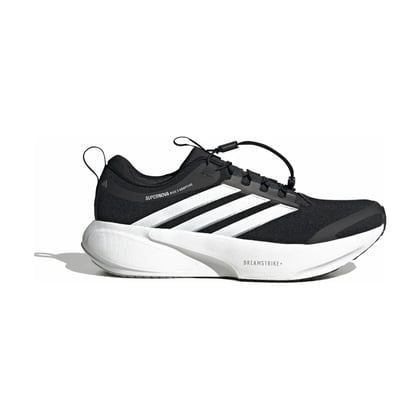


| Spec | Supernova Rise 3 | Wave Rider 30 |
|---|---|---|
| Best price now | £65 | £87.54 |
| 90-day low | £59.99 | £83 |
| 30-day average | £116.44 | £118.08 |
| RRP | £130 | £140 |
| Category | Daily | Daily |
| Surface | Road | Road |
| Weight | 264g | 266g |
| Drop | 7.8mm | 9.1mm |
| Heel stack | 35mm | 42.8mm |
| Forefoot stack | 27.2mm | 33.7mm |
| Carbon plated | No | No |
| Stability | No | No |
| Review rating | - | - |
Supernova Rise 3 or Wave Rider 30: which should you buy?
Supernova Rise 3
The Supernova Rise 3 is adidas doing the sensible thing well: a cushioned, neutral daily training shoe built to soak up easy miles rather than chase a time. It sits squarely in the do-everything daily-trainer bracket, with a 35mm heel and a 7.8mm drop giving you a protective, slightly rockered ride that suits steady runs and building a base. At 264g it is not the lightest daily shoe out there, and you feel that weight when you try to pick up the pace. That is the honest trade-off here. This is a comfort-first running shoe, not a tempo tool. If you loved the Supernova Rise 2, this is a familiar, refined step on. In our view it earns its keep as the shoe you reach for most mornings, and at a £130 RRP it is priced to be exactly that.
Wave Rider 30
For years the Wave Rider was the firm, slightly old-fashioned daily trainer that Mizuno fans loved and everyone else walked past. Version 30 is built to change that. Heel stack climbs from 37.5mm on the Wave Rider 29 to 42.8mm, the foam is much softer, and weight only creeps up to 266g. Most of the reviews we read call it a big step up. Fordy Runs rates it above the latest Saucony Ride and Pegasus. RTINGS is the cooler voice: its lab found plenty of protection and stability but little energy coming back, and it scored the shoe well below the others. Both readings hold up. It's a soft, stable daily training shoe for easy miles and long runs. It copes with steadier efforts, though it won't feel quick. At £140 RRP it sits beside the Ghost and Cumulus. Loyal Rider fans who liked the old ground feel may miss it.
Supernova Rise 3 vs Wave Rider 30: how they score
Supernova Rise 3
Lightness6.0
Cushioning8.5
Flexibility6.5
Responsive5.5
Stability7.0
Grip7.5
Wave Rider 30
Lightness6.5
Cushioning8.5
Flexibility4.5
Responsive5.5
Stability8.5
Grip8.0
Who the Supernova Rise 3 and the Wave Rider 30 are for
Supernova Rise 3
Who should buy it
- Runners wanting one comfortable shoe for the bulk of their easy weekly miles
90D Low£59.99
30D Avg£116.44
RRP£130
Where to buy the Supernova Rise 3


- 01AdidasLIVE£65£130−50%Check gender
- 02Profeet2d ago£66.61£130−49%Women's
- 03Run4It2d ago£78.19£130−40%Women's
- 04RunningBearLIVE£82£130−37%Women's
- 05365RiderLIVE£82.08£130−37%Men's
- 06DirectRunning2d ago£82.46£130−37%Check gender
- 07DirectRunningLIVE£90.04£130−31%Women's
- 08DirectSports2d ago£90.04£130−31%Women's
- 09365RiderLIVE£90.68£130−30%Women's
- 10ASOSLIVE£91£130−30%Men's
- 11SportsdirectLIVE£92£130−29%Women's
- 12SportsdirectLIVE£92£130−29%Men's
- 13Direct RunningLIVE£95.55£130−27%Women's
- 14SOLE4d ago£96.60£130−26%Men's
- 15Secret Sales2d ago£97.40£130−25%Men's
- 16VeryLIVE£97.50£130−25%Men's
- 17Parasol StoreLIVE£104£130−20%Men's
- 18DecathlonLIVE£129.99Women's
- 19SportsShoesLIVE£129.99Men's
- 20Run ActiveLIVE£130Women's
- 21Bog DogLIVE£130Men's
- 22Run Active2d ago£130Men's
- 23Next4d ago£130Men's
- 24Coes5d ago£130Check gender
- 25Parasol Store5d ago£130Women's
- 26Side Kicks4d ago£150Check gender
- 27Side Kicks4d ago£158Women's
- 28Littlewoods1d ago£169Men's
Live = checked in the last 24 hours. Older prices show when we last saw them.


