Supernova Rise 3 vs Pegasus 41
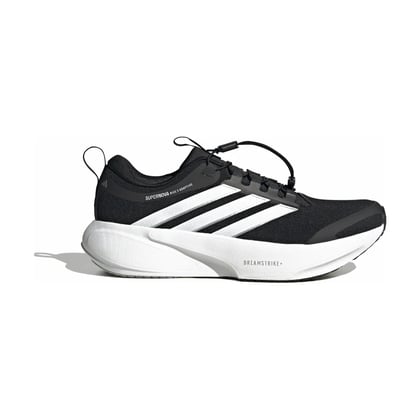

Adidas Supernova Rise 3
Best price today
£77.08£130.00−41%
at Direct Running · 29% under 30d avg
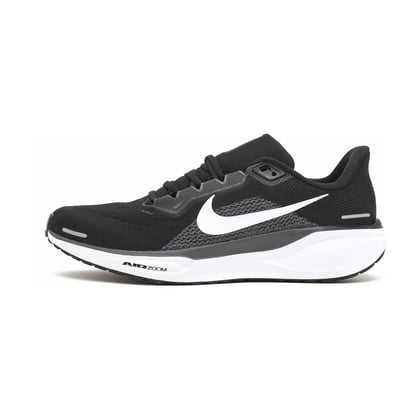

| Spec | Supernova Rise 3 | Pegasus 41 |
|---|---|---|
| Best price now | £77.08 | £65.00 |
| 90-day low | £65.00 | £62.80 |
| 30-day average | £108.18 | £99.43 |
| RRP | £130.00 | £129.99 |
| Category | Daily | Daily |
| Surface | Road | Road |
| Weight | 264g | 283g |
| Drop | 7.8mm | 10mm |
| Heel stack | 35mm | 37mm |
| Forefoot stack | 27.2mm | 27mm |
| Carbon plated | No | No |
| Stability | No | No |
| Review rating | - | - |
Expert review
Supernova Rise 3 or Pegasus 41: which should you buy?
Supernova Rise 3
The Supernova Rise 3 is adidas doing the sensible thing well: a cushioned, neutral daily training shoe built to soak up easy miles rather than chase a time. It sits squarely in the do-everything daily-trainer bracket, with a 35mm heel and a 7.8mm drop giving you a protective, slightly rockered ride that suits steady runs and building a base. At 264g it is not the lightest daily shoe out there, and you feel that weight when you try to pick up the pace. That is the honest trade-off here. This is a comfort-first running shoe, not a tempo tool. If you loved the Supernova Rise 2, this is a familiar, refined step on. In our view it earns its keep as the shoe you reach for most mornings, and at a £130 RRP it is priced to be exactly that.
Pegasus 41
The Nike Pegasus 41 is the do-everything daily training shoe in Nike's range, and it plays that role well. This is not a carbon racing shoe or a plush recovery slipper. It is a dependable workhorse built to soak up easy miles, the odd faster session and the weekly long run without complaint. At 283g it is not the lightest daily trainer on the market, and the 10mm drop is firmly traditional, so heel-strikers will feel at home. What you get for your money is reassurance: a road shoe that handles commute runs, marathon-block mileage and parkrun duty with the same steady, predictable ride. If you want one running shoe that does most jobs and lasts, the Pegasus 41 earns its keep. We rate it as a safe, sensible buy rather than an exciting one, and for a lot of runners that is exactly the point. The successor Pegasus 42 is now out, which often makes the 41 the smarter value pick on discount.
At a glance
Supernova Rise 3 vs Pegasus 41: how they score
Supernova Rise 3
Lightness6.0
Cushioning8.5
Flexibility6.5
Responsive5.5
Stability7.0
Grip7.5
Pegasus 41
Lightness6.0
Cushioning7.5
Flexibility7.0
Responsive6.5
Stability7.0
Grip7.5
Who it suits
Who the Supernova Rise 3 and the Pegasus 41 are for
Supernova Rise 3
90D Low£65.00
30D Avg£108.18
RRP£130.00
UK prices
Where to buy the Supernova Rise 3


- 01Direct RunningLIVE£77.08£130.00−41%
- 02Run4It5d ago£78.19£130.00−40%
- 03ASOSLIVE£79.99£130.00−38%
- 04365RiderLIVE£82.61£130.00−36%
- 05365RiderLIVE£83.99£130.00−35%
- 06Run ActiveLIVE£84.00£130.00−35%
- 07Run ActiveLIVE£84.00£130.00−35%
- 08AdidasLIVE£84.50£130.00−35%
- 09Start Fitness1d ago£90.90£130.00−30%
- 10SportsdirectLIVE£90.99£130.00−30%
- 11RunningBear1d ago£91.00£130.00−30%
- 12ASOS4d ago£91.00£130.00−30%
- 13SportsdirectLIVE£92.00£130.00−29%
- 14SportsdirectLIVE£92.00£130.00−29%
- 15SportsShoesLIVE£93.59£130.00−28%
- 16SportsShoes1d ago£93.59£130.00−28%
- 17DirectSports1d ago£93.95£130.00−28%
- 18DirectRunning1d ago£93.95£130.00−28%
- 19Parasol StoreLIVE£95.00£130.00−27%
- 20Very4d ago£97.50£130.00−25%
- 21Run North WestLIVE£99.99£130.00−23%
- 22Run North West1d ago£99.99£130.00−23%
- 23Alpine Trek4d ago£109.61£130.00−16%
- 24Sole Mate1d ago£117.00£130.00−10%
- 25DecathlonLIVE£129.99
- 26DerbyRunner1d ago£130.00
- 27Snowleader.co.uk4d ago£130.40


