//
Supernova Rise 3 vs Pegasus 42
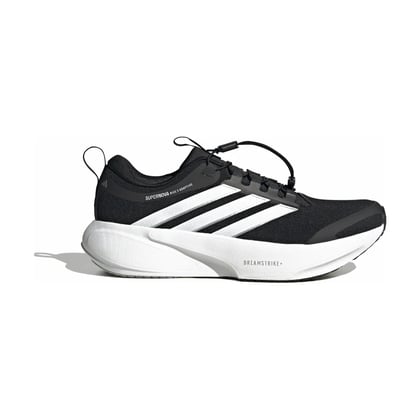

Adidas Supernova Rise 3
Best price today
£77.08£130.00−41%
at Direct Running · 29% under 30d avg

| Spec | Supernova Rise 3 | Pegasus 42 |
|---|---|---|
| Best price now | £77.08 | £89.93 |
| 90-day low | £65.00 | £69.99 |
| 30-day average | £109.32 | £101.41 |
| RRP | £130.00 | £130.00 |
| Category | Daily | Daily |
| Surface | Road | Road |
| Weight | 264g | 286g |
| Drop | 7.8mm | 8mm |
| Heel stack | 35mm | 37mm |
| Forefoot stack | 27.2mm | 29mm |
| Carbon plated | No | No |
| Stability | No | No |
| Review rating | - | - |
Expert review
Supernova Rise 3 or Pegasus 42: which should you buy?
Supernova Rise 3
The Supernova Rise 3 is adidas doing the sensible thing well: a cushioned, neutral daily training shoe built to soak up easy miles rather than chase a time. It sits squarely in the do-everything daily-trainer bracket, with a 35mm heel and a 7.8mm drop giving you a protective, slightly rockered ride that suits steady runs and building a base. At 264g it is not the lightest daily shoe out there, and you feel that weight when you try to pick up the pace. That is the honest trade-off here. This is a comfort-first running shoe, not a tempo tool. If you loved the Supernova Rise 2, this is a familiar, refined step on. In our view it earns its keep as the shoe you reach for most mornings, and at a £130 RRP it is priced to be exactly that.
Pegasus 42
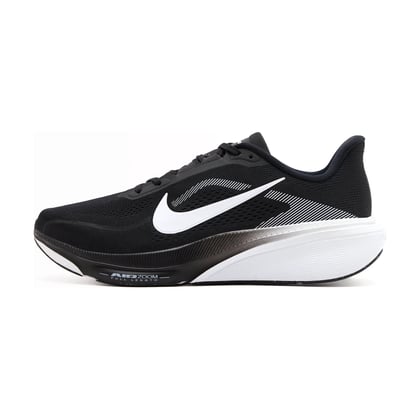
The Pegasus 42 is Nike's do-everything daily training shoe, and the 42nd version of the longest-running name in running. It is not a racer and it is not trying to be. This is the shoe you reach for on the easy miles, the steady runs and the commute jogs, the one that just works. The big change for this version is the cushioning: a full-length Air Zoom unit paired with ReactX foam, which Nike claims gives around 15% more energy return than the Pegasus 41. In practice that means a daily running shoe that feels a touch livelier underfoot without losing the dependable, planted feel the Pegasus is known for. It sits in the busiest part of the market, up against the Brooks Ghost and Asics Cumulus, and at £130 it is priced right where most daily trainers land. If you want one road shoe to log the bulk of your weekly mileage, the Pegasus 42 is a safe, sensible pick that rarely puts a foot wrong.
At a glance
Supernova Rise 3 vs Pegasus 42: how they score
Supernova Rise 3
Lightness6.0
Cushioning8.5
Flexibility6.5
Responsive5.5
Stability7.0
Grip7.5
Pegasus 42
Lightness7.0
Cushioning7.8
Flexibility7.0
Responsive7.2
Stability7.5
Grip7.5
Who it suits
Who the Supernova Rise 3 and the Pegasus 42 are for
Supernova Rise 3
90D Low£65.00
30D Avg£109.32
RRP£130.00
UK prices
Where to buy the Supernova Rise 3


- 01Direct RunningLIVE£77.08£130.00−41%
- 02365RiderLIVE£83.09£130.00−36%
- 03Run ActiveLIVE£84.00£130.00−35%
- 04Run ActiveLIVE£84.00£130.00−35%
- 05AdidasLIVE£84.50£130.00−35%
- 06Run North West2d ago£84.99£130.00−35%
- 07365RiderLIVE£85.91£130.00−34%
- 08ASOSLIVE£99.99£130.00−23%
- 09Run North West2d ago£99.99£130.00−23%
- 10SportsShoes2d ago£103.99£130.00−20%
- 11Alpine TrekLIVE£109.61£130.00−16%
- 12Sole MateLIVE£117.00£130.00−10%
- 13LittlewoodsLIVE£128.00£130.00−2%
- 14DecathlonLIVE£129.99£130.00−0%
- 15JD SportsLIVE£130.00
- 16VeryLIVE£130.00


