Terrex Agravic Speed Ultra 1 vs Tecton X 3
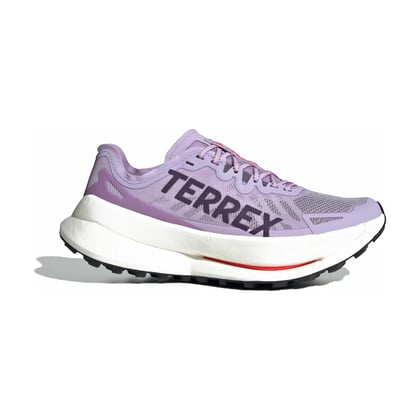

Adidas Terrex Agravic Speed Ultra 1
Best price today
£90£190−53%
at Sportsdirect · 35% under 30d avg

| Spec | Terrex Agravic Speed Ultra 1 | Tecton X 3 |
|---|---|---|
| Best price now | £90 | £109.99 |
| 90-day low | £89.99 | £109.98 |
| 30-day average | £137.94 | £155.93 |
| RRP | £190 | £220 |
| Category | Trail Race | Trail Race |
| Surface | Trail | Trail |
| Weight | 259g | 252g |
| Drop | 8mm | 5mm |
| Heel stack | 38mm | 40mm |
| Forefoot stack | 30mm | 35mm |
| Carbon plated | No | Yes |
| Stability | No | No |
| Review rating | - | - |
Expert review
Terrex Agravic Speed Ultra 1 or Tecton X 3: which should you buy?
Terrex Agravic Speed Ultra 1
The Terrex Agravic Speed Ultra is Adidas at its most single-minded on the trail: a lightweight competition racer built to move fast over long, technical ground. At 259g it is featherweight for a trail shoe, and the moderate 8mm drop still lets you react quickly to the ground on rough terrain. This is a running shoe for the sharp end of a race, not a plush daily trail cruiser. It rewards a runner with a quick, midfoot-led stride and enough strength to handle a firm, ground-feel ride over the miles. In our view it slots in as a premium trail racer, sitting alongside plated rivals like the Hoka Tecton X 3, though the Adidas takes a leaner, more natural route with no carbon plate. At £190 it is a serious investment, so we would save it for race day and key sessions rather than everyday muddy plods.
Tecton X 3
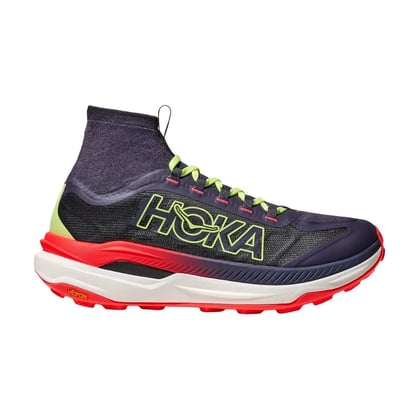
The Tecton X 3 is Hoka's carbon-plated trail racing shoe, built for runners who want road-race pop on rough ground. At 252g it is remarkably light for a shoe with this much cushion under the foot, and the carbon plate gives you a real snap through toe-off when you are moving well. With a 5mm drop and an RRP of £220 it sits at the sharp, premium end of the trail market, squarely aimed at long-distance and ultra racing rather than everyday miles. This is a specialist. It rewards a runner who wants to hold pace over technical terrain and carry that efficiency deep into a race, when tired legs need every bit of help they can get. If you race trail ultras or fast half and full marathon distances off-road, it belongs on your shortlist. The nearest rival in our catalogue is the Nike Ultrafly, another plated trail racer chasing the same runner.
At a glance
Terrex Agravic Speed Ultra 1 vs Tecton X 3: how they score
Terrex Agravic Speed Ultra 1
Lightness9.0
Cushioning7.0
Flexibility6.5
Responsive8.5
Stability6.5
Grip8.0
Tecton X 3
Lightness9.0
Cushioning8.5
Flexibility5.5
Responsive9.0
Stability6.5
Grip7.5
Who it suits
Who the Terrex Agravic Speed Ultra 1 and the Tecton X 3 are for
90D Low£89.99
30D Avg£137.94
RRP£190
UK prices
Where to buy the Terrex Agravic Speed Ultra 1


- 01SportsdirectLIVE£90£190−53%Women's
- 02Alpine TrekLIVE£108.87£190−43%Women's
- 03Hardloop6d ago£134.90£190−29%Men's
- 04Run North WestLIVE£140£190−26%Women's
- 05Go OutdoorsLIVE£200Women's


