Hyperion 2 vs FuelCell Rebel 4


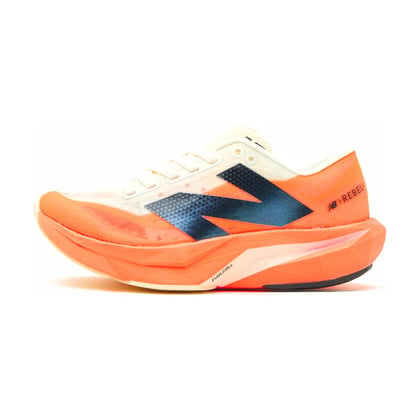

New Balance FuelCell Rebel 4
Best price today
£83.99£140−40%
at SportsShoes · 30% under 30d avg
| Spec | Hyperion 2 | FuelCell Rebel 4 |
|---|---|---|
| Best price now | £53.99 | £83.99 |
| 90-day low | £60 | £69.99 |
| 30-day average | £95.59 | £120.73 |
| RRP | £150 | £140 |
| Category | Tempo | Tempo |
| Surface | Road | Road |
| Weight | 204g | 212g |
| Drop | 8mm | 6mm |
| Heel stack | 32mm | 30mm |
| Forefoot stack | 24mm | 24mm |
| Carbon plated | No | No |
| Stability | No | No |
| Review rating | - | - |
Hyperion 2 or FuelCell Rebel 4: which should you buy?
Hyperion 2
The Hyperion 2 is Brooks at its most versatile: a light, non-plated speed trainer built to make your fast days feel fast without asking you to save it for race morning. At 204g it sits comfortably in lightweight-trainer territory, and the ride is snappy and low to the ground rather than soft and plush. There is no carbon plate here, which is the whole point. You get a natural, flexible foot feel that rewards a quick turnover, so it handles tempo runs, intervals and strides better than it handles slow miles. In our view this is one of the more honest running shoes in its class: it does not pretend to be a marathon super-shoe, and it is better for it. If you want a single pair for structured speed work, or a first proper 5K and 10K racer, the Hyperion 2 earns its place. The newer Hyperion 3 refines the same idea if you want the latest version.
FuelCell Rebel 4
The FuelCell Rebel v4 is New Balance at its most fun: a lightweight, plateless tempo shoe built to make quick running feel easy. At 212g it is properly light, and there is no carbon plate here, so the pop comes straight from a soft, springy FuelCell midsole rather than a stiff propulsion board. That makes it one of the more versatile speed shoes going. You can rip a session in it, float through a steady long run, then use it as a do-everything daily trainer the next morning. It sits in that sweet spot between a cushioned daily and a race shoe, and it does it for a fair RRP. If you want a single pair to cover most of your mileage without buying a rotation, this is a strong pick. The newer Rebel v5 has since arrived, so the v4 is often the smarter buy on price. Just do not expect the locked-in, aggressive feel of a plated racer. This one is about bounce and freedom, not rigidity.
Hyperion 2 vs FuelCell Rebel 4: how they score
Hyperion 2
Lightness8.5
Cushioning6.5
Flexibility7.5
Responsive8.0
Stability6.0
Grip7.5
FuelCell Rebel 4
Lightness9.0
Cushioning8.0
Flexibility8.0
Responsive8.2
Stability5.5
Grip7.5
Who the Hyperion 2 and the FuelCell Rebel 4 are for
Hyperion 2
90D Low£60
30D Avg£95.59
RRP£150
Where to buy the Hyperion 2


- 01Bog Dog1d ago£53.99£150−64%Women's
- 02Start Fitness5d ago£60£150−60%Women's
- 03Start Fitness1d ago£70£150−53%Men's
- 04Sporting Feet2d ago£75£150−50%Men's
- 05DirectRunning2d ago£102.95£150−31%Men's
- 06Run Active1d ago£140£150−7%Women's
Live = checked in the last 24 hours. Older prices show when we last saw them.


