Hyperion 2 vs FuelCell Rebel 5


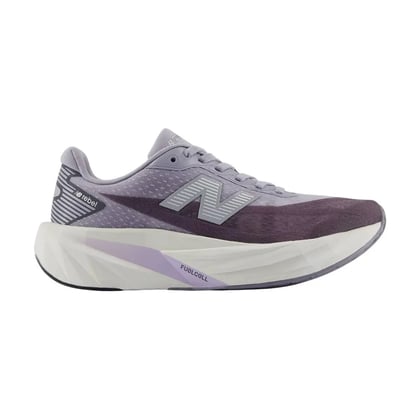

New Balance FuelCell Rebel 5
Best price today
£79.99£140−43%
at Decathlon · 28% under 30d avg
| Spec | Hyperion 2 | FuelCell Rebel 5 |
|---|---|---|
| Best price now | £70 | £79.99 |
| 90-day low | £70 | £58 |
| 30-day average | £94.68 | £111.77 |
| RRP | £150 | £140 |
| Category | Tempo | Tempo |
| Surface | Road | Road |
| Weight | 204g | 220g |
| Drop | 8mm | 6.3mm |
| Heel stack | 32mm | 33mm |
| Forefoot stack | 24mm | 26.7mm |
| Carbon plated | No | No |
| Stability | No | No |
| Review rating | - | - |
Expert review
Hyperion 2 or FuelCell Rebel 5: which should you buy?
Hyperion 2
The Hyperion 2 is Brooks at its most versatile: a light, non-plated speed trainer built to make your fast days feel fast without asking you to save it for race morning. At 204g it sits comfortably in lightweight-trainer territory, and the ride is snappy and low to the ground rather than soft and plush. There is no carbon plate here, which is the whole point. You get a natural, flexible foot feel that rewards a quick turnover, so it handles tempo runs, intervals and strides better than it handles slow miles. In our view this is one of the more honest running shoes in its class: it does not pretend to be a marathon super-shoe, and it is better for it. If you want a single pair for structured speed work, or a first proper 5K and 10K racer, the Hyperion 2 earns its place. The newer Hyperion 3 refines the same idea if you want the latest version.
FuelCell Rebel 5
The FuelCell Rebel 5 is New Balance at its most likeable: a lightweight, plateless running shoe that wants to do almost everything in your week. At 220g it is genuinely light for the stack you get, and the FuelCell midsole gives you a soft, springy pop that flatters easy miles and comes alive when you lift the pace. There is no carbon plate here, so this is not a marathon racer. Think of it as the fun, do-it-all uptempo trainer that handles easy days, strides, tempo efforts and even a parkrun without complaint. If you loved the FuelCell Rebel 4, the 5 keeps that playful character and refines the fit. For runners who want one versatile daily training shoe with a bit of race-day spirit, we rate it highly at the price.
At a glance
Hyperion 2 vs FuelCell Rebel 5: how they score
Hyperion 2
Lightness8.5
Cushioning6.5
Flexibility7.5
Responsive8.0
Stability6.0
Grip7.5
FuelCell Rebel 5
Lightness9.0
Cushioning7.8
Flexibility8.2
Responsive7.9
Stability6.3
Grip7.5
Who it suits
Who the Hyperion 2 and the FuelCell Rebel 5 are for
Hyperion 2
90D Low£70
30D Avg£94.68
RRP£150
UK prices
Where to buy the Hyperion 2


- 01Start Fitness1d ago£70£150−53%Men's
- 02Bog Dog1d ago£97£150−35%Women's
- 03Sporting Feet5d ago£100£150−33%Men's


