//
Hyperion 3 vs FuelCell Rebel 4

Brooks Hyperion 3
Best price today
£62.00£130.00−52%
at Sigma Sports90D LOW · 40% under 30d avg
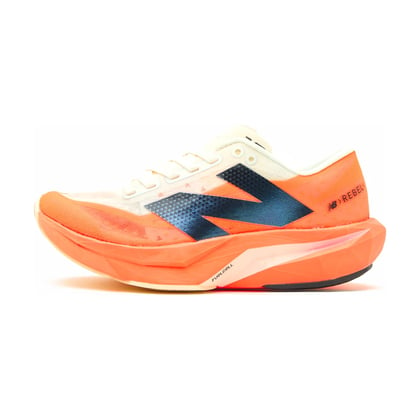

New Balance FuelCell Rebel 4
Best price today
£69.99£140.00−50%
at SportsShoes · 20% under 30d avg
| Spec | Hyperion 3 | FuelCell Rebel 4 |
|---|---|---|
| Best price now | £62.00 | £69.99 |
| 90-day low | £62.00 | £66.22 |
| 30-day average | £103.14 | £87.73 |
| RRP | £130.00 | £140.00 |
| Category | Tempo | Tempo |
| Surface | Road | Road |
| Weight | 244g | 212g |
| Drop | 11.3mm | 6mm |
| Heel stack | 36.5mm | 30mm |
| Forefoot stack | 25.2mm | 24mm |
| Carbon plated | No | No |
| Stability | No | No |
| Review rating | — | — |
Expert review
Hyperion 3 or FuelCell Rebel 4: which should you buy?
Hyperion 3
The Brooks Hyperion 3 is a lightweight speed trainer built to add a bit of zip to your faster days without asking you to buy a dedicated racer. It is a neutral road running shoe aimed at tempo runs, intervals and strides, and at 244g it is light enough to feel quick underfoot the moment you pick up the pace. There is no carbon plate here, so you will not get the springboard snap of a super shoe. What you get instead is a simple, honest tempo shoe with a firm, responsive ride and a versatile streak that lets it double as a lighter daily trainer. The 11.3mm drop is on the traditional side and rewards heel strikers. Against the plated crowd it gives up some return, but at £130 it undercuts most of them and asks for less commitment. If you liked the Brooks Hyperion 2, this is a familiar, refined update rather than a reinvention.
FuelCell Rebel 4
The FuelCell Rebel v4 is New Balance at its most fun: a lightweight, plateless tempo shoe built to make quick running feel easy. At 212g it is properly light, and there is no carbon plate here, so the pop comes straight from a soft, springy FuelCell midsole rather than a stiff propulsion board. That makes it one of the more versatile speed shoes going. You can rip a session in it, float through a steady long run, then use it as a do-everything daily trainer the next morning. It sits in that sweet spot between a cushioned daily and a race shoe, and it does it for a fair RRP. If you want a single pair to cover most of your mileage without buying a rotation, this is a strong pick. The newer Rebel v5 has since arrived, so the v4 is often the smarter buy on price. Just do not expect the locked-in, aggressive feel of a plated racer. This one is about bounce and freedom, not rigidity.
At a glance
Hyperion 3 vs FuelCell Rebel 4: how they score
Hyperion 3
Lightness8.5
Cushioning6.5
Flexibility7.5
Responsive8.0
Stability6.0
Grip7.0
FuelCell Rebel 4
Lightness9.0
Cushioning8.0
Flexibility8.0
Responsive8.2
Stability5.5
Grip7.5
Who it suits
Who the Hyperion 3 and the FuelCell Rebel 4 are for
90D Low£62.00
30D Avg£103.14
RRP£130.00
UK prices
Where to buy the Hyperion 3


- 01Sigma Sports7d ago£62.00£130.00−52%
- 02AmazonLIVE£88.99£130.00−32%
- 03runningbath.co.uk1d ago£94.50£130.00−27%
- 04SportsShoes1d ago£98.00£130.00−25%


