Cielo X1 2 vs Deviate Nitro Elite 4

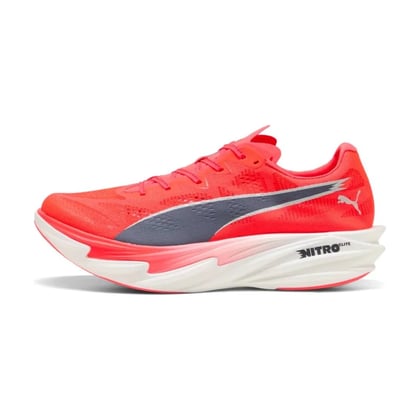

Puma Deviate Nitro Elite 4
Best price today
£125.99£215−41%
at SportsShoes · 28% under 30d avg
| Spec | Cielo X1 2 | Deviate Nitro Elite 4 |
|---|---|---|
| Best price now | £79 | £125.99 |
| 90-day low | £104.99 | £117.87 |
| 30-day average | £158.44 | £174.33 |
| RRP | £250 | £215 |
| Category | Race | Race |
| Surface | Road | Road |
| Weight | 228g | 170g |
| Drop | 7mm | 8mm |
| Heel stack | 46mm | 38mm |
| Forefoot stack | 39mm | 30mm |
| Carbon plated | Yes | Yes |
| Stability | No | No |
| Review rating | - | - |
Cielo X1 2 or Deviate Nitro Elite 4: which should you buy?
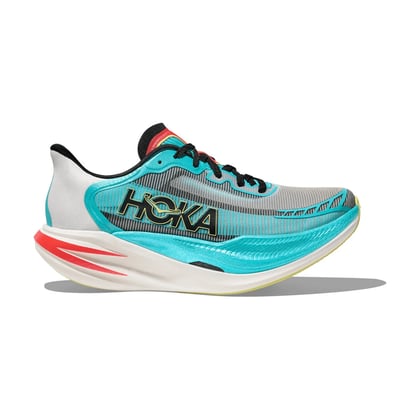
Cielo X1 2
The Hoka Cielo X1 2 is the brand's flagship carbon racing shoe, and it does racing in a way that is unmistakably Hoka: big, plush and stable rather than razor-light. It is a road racer built around a winged carbon plate and a deep, soft midsole, so you get a tall, protective ride that holds up when your legs start to fatigue late in a marathon. At 228g it is one of the heavier super shoes on the market, noticeably more than something like the Nike Vaporfly 4, and at £275 it sits right at the top of the price ladder. What you are buying is comfort and stability at speed, not the snappiest, lightest tool in the category. We rate it as a long-distance racer for runners who want a carbon shoe that feels planted and forgiving underfoot, and who will happily trade a few grams for that security over 26.2 miles.
Deviate Nitro Elite 4
At 170g, the Deviate Nitro Elite 4 now weighs the same as Puma's more aggressive Fast-R Nitro Elite 3, and that shifts who it's for. It keeps the steadier, heel-strike-friendly shape the Elite line has always had, but most reviewers found the midsole livelier than the Elite 3's and the outsole better too. One long-term tester said it was the first Deviate Elite they'd enjoyed since the original, and Believe in the Run went further, calling it Puma's best race shoe so far. We see it as a carbon racing shoe for 10K and half marathon, and a marathon shoe for runners who find the Fast-R too twitchy. The catches are a narrow midfoot, thin forefoot rubber and early wear reports from a couple of testers. At £215 RRP it's priced alongside the big names, so check the price table before paying full whack.
Cielo X1 2 vs Deviate Nitro Elite 4: how they score
Cielo X1 2
Lightness6.5
Cushioning9.3
Flexibility6.0
Responsive8.0
Stability8.2
Grip7.5
Deviate Nitro Elite 4
Lightness9.2
Cushioning7.0
Flexibility3.5
Responsive8.8
Stability7.0
Grip7.5
Who the Cielo X1 2 and the Deviate Nitro Elite 4 are for
Cielo X1 2
Who should buy it
90D Low£104.99
30D Avg£158.44
RRP£250
Where to buy the Cielo X1 2


- 01RunningBear1d ago£79£250−68%Unisex
- 02J's Cycles4d ago£99.95£250−60%Check gender
- 03Run North West4d ago£99.99£250−60%Check gender
- 04Speedhub The Triathlon Store2d ago£104.99£250−58%Check gender
- 05runningbath.co.uk2d ago£120£250−52%Check gender
- 06SportsShoes1d ago£124.99£250−50%Check gender
- 07AchillesHeel4d ago£125£250−50%Check gender
- 08HokaLIVE£149.99£250−40%Check gender
- 09Side Kicks1d ago£250Check gender
- 10DerbyRunner2d ago£250Unisex
- 11Run Active2d ago£250Unisex
Live = checked in the last 24 hours. Older prices show when we last saw them.


