//
Clifton Pro 1 vs FuelCell Propel 5
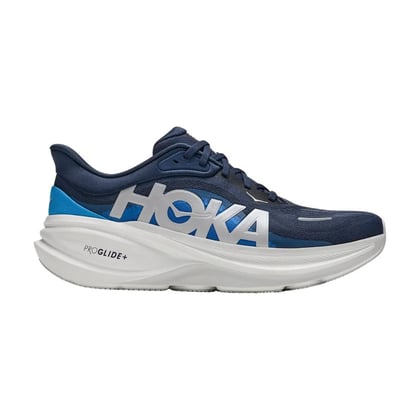

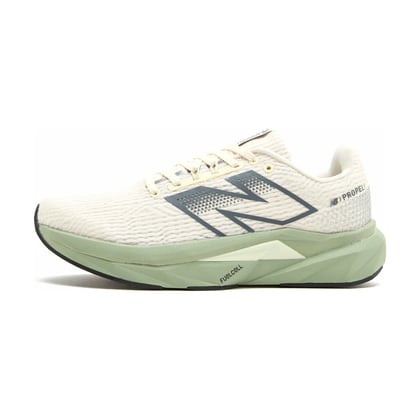

New Balance FuelCell Propel 5
Best price today
£69.99£120.00−42%
at Decathlon · 34% under 30d avg
| Spec | Clifton Pro 1 | FuelCell Propel 5 |
|---|---|---|
| Best price now | £109.99 | £69.99 |
| 90-day low | £85.99 | £63.50 |
| 30-day average | £159.58 | £105.91 |
| RRP | £155.00 | £120.00 |
| Category | Daily | Daily |
| Surface | Road | Road |
| Weight | 298g | 280g |
| Drop | 8mm | 6mm |
| Heel stack | 42mm | 34mm |
| Forefoot stack | 34mm | 28mm |
| Carbon plated | No | No |
| Stability | No | No |
| Review rating | — | — |
Expert review
Clifton Pro 1 or FuelCell Propel 5: which should you buy?
Clifton Pro 1
The Clifton Pro is Hoka taking its most famous daily training shoe upmarket. Where the standard Clifton is the safe, do-everything running shoe, the Pro swaps in a supercritical ProGlide+ midsole to chase more bounce and energy return from the same easy-day brief. With a tall 42mm heel, a moderate 8mm drop and a max-cushion feel underfoot, it is built for soaking up easy miles, long runs and recovery days rather than chasing pace. In our view it sits in the premium daily training shoe bracket, priced accordingly at £155. At 298g it is not light, so this is not a shoe you buy for speed. What you get instead is a plush, protective ride that stays comfortable deep into a long run. If you already love the Clifton 11 and want a bouncier, more energetic version of the same idea, this is the one to try.
FuelCell Propel 5
The FuelCell Propel 5 is New Balance at its most sensible: an affordable neutral daily running shoe built to soak up easy miles without emptying your wallet. At around £120 it sits at the value end of the daily trainer market, and it plays that role honestly. The FuelCell foam gives you a firm, stable, dependable ride rather than a soft bouncy one, so this is a shoe for logging steady mileage, easing into a training habit, or keeping your knees happy on recovery days. At 280g it is on the heavier side for a modern daily trainer, and it is not going to make you feel fast. That is fine. If you want more pop for tempo days, New Balance's own FuelCell Rebel 5 is the livelier sibling, and the Nike Pegasus 42 is the obvious workhorse rival. But as a first proper running shoe or a rugged easy-day option, the Propel 5 earns its keep.
At a glance
Clifton Pro 1 vs FuelCell Propel 5: how they score
Clifton Pro 1
Lightness5.5
Cushioning9.2
Flexibility5.5
Responsive6.5
Stability7.0
Grip7.5
FuelCell Propel 5
Lightness5.5
Cushioning7.0
Flexibility6.5
Responsive5.5
Stability7.5
Grip7.0
Who it suits
Who the Clifton Pro 1 and the FuelCell Propel 5 are for
90D Low£85.99
30D Avg£159.58
RRP£155.00
UK prices
Where to buy the Clifton Pro 1


- 01Amazon13d ago£109.99£155.00−29%
- 02Runner's Need6d ago£149.95£155.00−3%
- 03CotswoldOutdoor6d ago£149.95£155.00−3%
- 04CotswoldOutdoor1d ago£149.95£155.00−3%
- 05Runner's Need1d ago£149.95£155.00−3%
- 06SportsShoes6d ago£149.99£155.00−3%
- 07SportsShoes1d ago£149.99£155.00−3%
- 08RunningXpert6d ago£150.00£155.00−3%
- 09Rugby Heaven1d ago£150.00£155.00−3%
- 10Hoka7d ago£150.00£155.00−3%
- 11DerbyRunner13d ago£150.00£155.00−3%
- 12AlexandraSports6d ago£150.00£155.00−3%
- 13Runlimited11d ago£150.00£155.00−3%
- 14RunningXpert1d ago£150.00£155.00−3%
- 15Hoka7d ago£150.00£155.00−3%
- 16Rugby Heaven2d ago£150.00£155.00−3%
- 17Runlimited1d ago£150.00£155.00−3%
- 18Run4It1d ago£150.00£155.00−3%
- 19AlexandraSports8d ago£150.00£155.00−3%
- 20Run4It6d ago£150.00£155.00−3%
- 21365Rider7d ago£162.35
- 22365Rider7d ago£162.35


