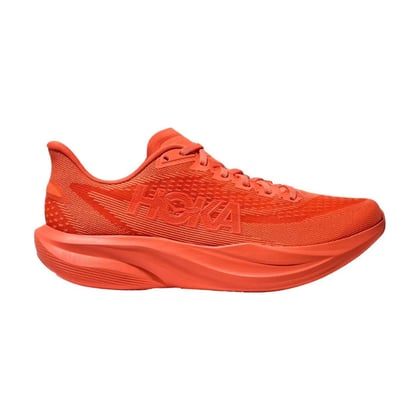
Mach 7 vs FuelCell Rebel 4

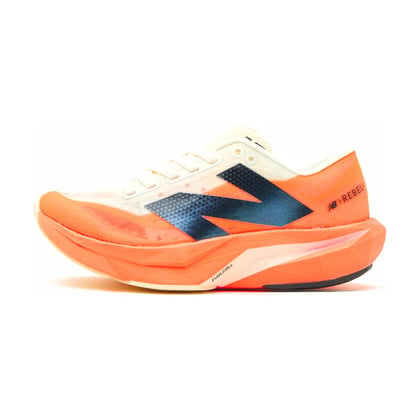

New Balance FuelCell Rebel 4
Best price today
£83.99£140−40%
at SportsShoes · 30% under 30d avg
| Spec | Mach 7 | FuelCell Rebel 4 |
|---|---|---|
| Best price now | £82.50 | £83.99 |
| 90-day low | £70 | £69.99 |
| 30-day average | £128.76 | £120.73 |
| RRP | £140 | £140 |
| Category | Tempo | Tempo |
| Surface | Road | Road |
| Weight | 237g | 212g |
| Drop | 5mm | 6mm |
| Heel stack | 37mm | 30mm |
| Forefoot stack | 32mm | 24mm |
| Carbon plated | No | No |
| Stability | No | No |
| Review rating | - | - |
Mach 7 or FuelCell Rebel 4: which should you buy?
Mach 7
The Hoka Mach 7 is the brand's do-it-all tempo trainer, a lightweight road shoe that wants to cover almost everything between an easy jog and a genuine session. There is no carbon plate here and that is the point. Instead you get a supercritical EVA midsole that feels lively and quick without the aggressive, one-pace demands of a racer. With a low 5mm drop and a 37mm heel stack it sits in the sweet spot for runners who want one shoe for daily miles, tempo runs and the odd longer effort. It is a clear step on from the Mach 6, keeping the versatile, pick-up-and-go character that made the line popular. At £130 it is fairly priced for a modern lightweight trainer. We rate it as one of the smartest single-shoe buys for club runners who log steady mileage but still like to push the pace once or twice a week.
FuelCell Rebel 4
The FuelCell Rebel v4 is New Balance at its most fun: a lightweight, plateless tempo shoe built to make quick running feel easy. At 212g it is properly light, and there is no carbon plate here, so the pop comes straight from a soft, springy FuelCell midsole rather than a stiff propulsion board. That makes it one of the more versatile speed shoes going. You can rip a session in it, float through a steady long run, then use it as a do-everything daily trainer the next morning. It sits in that sweet spot between a cushioned daily and a race shoe, and it does it for a fair RRP. If you want a single pair to cover most of your mileage without buying a rotation, this is a strong pick. The newer Rebel v5 has since arrived, so the v4 is often the smarter buy on price. Just do not expect the locked-in, aggressive feel of a plated racer. This one is about bounce and freedom, not rigidity.
Mach 7 vs FuelCell Rebel 4: how they score
Mach 7
Lightness8.5
Cushioning7.5
Flexibility8.0
Responsive8.2
Stability6.5
Grip7.5
FuelCell Rebel 4
Lightness9.0
Cushioning8.0
Flexibility8.0
Responsive8.2
Stability5.5
Grip7.5
Who the Mach 7 and the FuelCell Rebel 4 are for
Mach 7
Who should buy it
90D Low£70
30D Avg£128.76
RRP£140
Where to buy the Mach 7


- 01SportsdirectLIVE£82.50£140−41%Women's
- 02Adapt Outdoors5d ago£89.25£140−36%Men's
- 03Greaves1d ago£89.60£140−36%Women's
- 04The Sports EditLIVE£97.50£140−30%Women's
- 05RunningXpert3d ago£97.99£140−30%Women's
- 06Run North West3d ago£99.99£140−29%Men's
- 07365RiderLIVE£101.18£140−28%Women's
- 08365RiderLIVE£105£140−25%Men's
- 09Alpine TrekLIVE£107.76£140−23%Women's
- 10Alpine Trek1d ago£107.76£140−23%Men's
- 11CribGochOutdoor2d ago£109£140−22%Men's
- 12Moti Running1d ago£109.95£140−21%Men's
- 13RunningXpert1d ago£109.99£140−21%Men's
- 14The Vault UK3d ago£109.99£140−21%Men's
- 15HouseOfFraser1d ago£110£140−21%Men's
- 16HokaLIVE£111.99£140−20%Men's
- 17HokaLIVE£111.99£140−20%Women's
- 18Run4ItLIVE£112£140−20%Women's
- 19Northern RunnerLIVE£117.99£140−16%Women's
- 20The Vault UKLIVE£120£140−14%Women's
- 21SportsShoesLIVE£125.99£140−10%Women's
- 22SportsShoes1d ago£125.99£140−10%Men's
- 23Speedhub The Triathlon Store3d ago£135£140−4%Men's
- 24The Trainer ContainerLIVE£139£140−1%Women's
- 25Amazon2d ago£139.16£140−1%Men's
- 26Start Fitness2d ago£139.90Men's
- 27The Jog ShopLIVE£139.99Women's
- 28The Jog ShopLIVE£139.99Men's
- 29SportsdirectLIVE£140Men's
- 30Run ActiveLIVE£140Men's
- 31runningbath.co.uk1d ago£140Men's
- 32Run Active3d ago£140Women's
- 33Bog Dog3d ago£140Men's
- 34Bog Dog5d ago£140Women's
- 35Side Kicks2d ago£148Women's
Live = checked in the last 24 hours. Older prices show when we last saw them.


