//
Mach X 3 vs Neo Vista 3
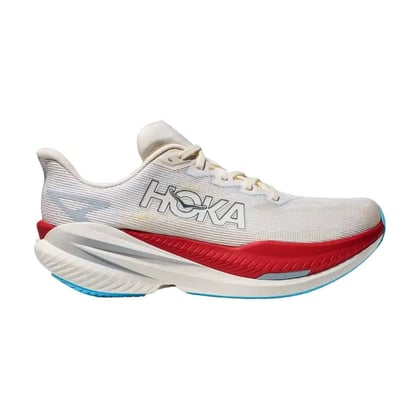


| Spec | Mach X 3 | Neo Vista 3 |
|---|---|---|
| Best price now | £99.95 | - |
| 90-day low | £99.90 | - |
| 30-day average | £143.04 | - |
| RRP | £170.00 | £150.00 |
| Category | Super Trainer | Super Trainer |
| Surface | Road | Road |
| Weight | 289g | 266g |
| Drop | 5mm | 8.5mm |
| Heel stack | 44mm | 43.5mm |
| Forefoot stack | 39mm | 35mm |
| Carbon plated | No | No |
| Stability | No | No |
| Review rating | - | - |
Expert review
Mach X 3 or Neo Vista 3: which should you buy?
Mach X 3
The Mach X 3 is Hoka's do-it-all super trainer, the shoe you reach for when one pair has to cover the tempo session on Tuesday and the long run at the weekend. A Pebax plate sits inside a tall 44mm heel and 39mm forefoot stack, so you get a snappy, rolling ride without the harsh, race-only feel of a full carbon racing shoe. At 289g it is not light for the category, and you notice that on genuinely fast reps. What you get in return is versatility. It has enough cushioning to protect your legs over 20 miles and enough pop to hold marathon pace when you ask for it. Think of it as a workhorse with an extra gear rather than a pure speed tool. For runners who want a single plated trainer that does most jobs well, and who do not want to spend race-shoe money doing it, we rate the Mach X 3 highly. Just go in knowing it prioritises range over outright speed.
Neo Vista 3
Mizuno trimmed the Neo Vista this year instead of making it bigger. Our spec sheet has the 3 a little lower than the Neo Vista 2 at heel and forefoot, at much the same 266g, and the RRP comes down to £150. The change reviewers noticed first is the fit: the heel now holds your foot properly, and the length complaints about the last version have gone. Underfoot it's still a big, soft max-cushion super trainer with no carbon plate, and most testers liked it more than the 2. Where they part ways is pace. Some found real spring for uptempo finishes, while one lab measured only modest energy return and called it bulky once you push. Doctors of Running graded the performance highly but marked the fit down hard, mostly for thick heel padding that bothered a tester's Achilles. We'd buy it as a long-run and recovery running shoe and leave the intervals to something lighter.
At a glance
Mach X 3 vs Neo Vista 3: how they score
Mach X 3
Lightness6.5
Cushioning8.5
Flexibility6.0
Responsive8.0
Stability6.5
Grip7.0
Neo Vista 3
Lightness5.5
Cushioning9.3
Flexibility4.0
Responsive6.5
Stability7.5
Grip7.5
Who it suits
Who the Mach X 3 and the Neo Vista 3 are for
90D Low£99.90
30D Avg£143.04
RRP£170.00
UK prices
Where to buy the Mach X 3


- 01J's Cycles1d ago£99.95£170.00−41%
- 02365RiderLIVE£101.19£170.00−40%
- 03Alpine Trek5d ago£101.97£170.00−40%
- 04SportsShoes1d ago£101.99£170.00−40%
- 05GreavesLIVE£102.00£170.00−40%
- 06AchillesHeel2d ago£102.00£170.00−40%
- 07About The RunLIVE£109.00£170.00−36%
- 08About The RunLIVE£109.00£170.00−36%
- 09All Sports1d ago£115.00£170.00−32%
- 10365RiderLIVE£115.51£170.00−32%
- 11Run North West5d ago£119.99£170.00−29%
- 12DerbyRunner1d ago£127.50£170.00−25%
- 13Start Fitness1d ago£135.90£170.00−20%
- 14HokaLIVE£135.99£170.00−20%
- 15HokaLIVE£135.99£170.00−20%
- 16Moti RunningLIVE£153.00£170.00−10%
- 17Moti RunningLIVE£153.00£170.00−10%
- 18Metres to Miles1d ago£155.00£170.00−9%
- 19Alpine TrekLIVE£156.35£170.00−8%
- 20Snowleader.co.ukLIVE£165.50£170.00−3%
- 21Rugby HeavenLIVE£170.00
- 22Kinisi Run HubLIVE£170.00
- 23Run ActiveLIVE£170.00
- 24Run ActiveLIVE£170.00
- 25Kinisi Run Hub2d ago£170.00
- 26Rugby Heaven5d ago£170.00