Neo Vista 3 vs Deviate Pure Nitro 1


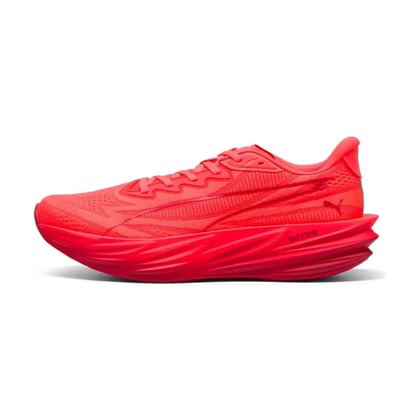

Puma Deviate Pure Nitro 1
Best price today
£100.23£150.00−33%
at 365Rider · 13% under 30d avg
| Spec | Neo Vista 3 | Deviate Pure Nitro 1 |
|---|---|---|
| Best price now | £110.24 | £100.23 |
| 90-day low | £100.21 | £81.09 |
| 30-day average | £130.05 | £115.41 |
| RRP | £150.00 | £150.00 |
| Category | Super Trainer | Super Trainer |
| Surface | Road | Road |
| Weight | 266g | 220g |
| Drop | 8.5mm | 8mm |
| Heel stack | 43.5mm | 38mm |
| Forefoot stack | 35mm | 30mm |
| Carbon plated | No | No |
| Stability | No | No |
| Review rating | - | - |
Expert review
Neo Vista 3 or Deviate Pure Nitro 1: which should you buy?
Neo Vista 3
Mizuno trimmed the Neo Vista this year instead of making it bigger. Our spec sheet has the 3 a little lower than the Neo Vista 2 at heel and forefoot, at much the same 266g, and the RRP comes down to £150. The change reviewers noticed first is the fit: the heel now holds your foot properly, and the length complaints about the last version have gone. Underfoot it's still a big, soft max-cushion super trainer with no carbon plate, and most testers liked it more than the 2. Where they part ways is pace. Some found real spring for uptempo finishes, while one lab measured only modest energy return and called it bulky once you push. Doctors of Running graded the performance highly but marked the fit down hard, mostly for thick heel padding that bothered a tester's Achilles. We'd buy it as a long-run and recovery running shoe and leave the intervals to something lighter.
Deviate Pure Nitro 1
The Deviate Pure Nitro is Puma's plateless super trainer, and it sits in a clever spot: most of the bounce of a race shoe, without the plate telling your legs what to do. It runs on a full PEBA Nitrofoam midsole with a 38mm heel and 30mm forefoot, an 8mm drop, and a listed 220g, so it is light for how much shoe you get underfoot. This is a fast everyday trainer rather than a marathon racer. It shines on tempo runs, progression runs and honest daily miles where you want a lively, energetic ride but still want your foot to do the steering. Because there is no carbon plate, it feels more natural and forgiving than a plated super trainer like the Puma Deviate Nitro Elite 4, which makes it easier to run slow in. If you want one bouncy running shoe that covers most of your week, this is a strong pick.
At a glance
Neo Vista 3 vs Deviate Pure Nitro 1: how they score
Neo Vista 3
Lightness5.5
Cushioning9.3
Flexibility4.0
Responsive6.5
Stability7.5
Grip7.5
Deviate Pure Nitro 1
Lightness8.0
Cushioning8.0
Flexibility6.5
Responsive8.5
Stability6.0
Grip7.0
Who it suits
Who the Neo Vista 3 and the Deviate Pure Nitro 1 are for
90D Low£100.21
30D Avg£130.05
RRP£150.00
UK prices
Where to buy the Neo Vista 3


- 01Direct RunningLIVE£110.24£150.00−27%
- 02Hardloop4d ago£116.90£150.00−22%
- 03RunningXpertLIVE£117.00£150.00−22%
- 04RunningXpert2d ago£117.00£150.00−22%
- 05SportsdirectLIVE£119.00£150.00−21%
- 06HouseOfFraser2d ago£119.00£150.00−21%
- 07SportsdirectLIVE£120.00£150.00−20%
- 08365RiderLIVE£120.28£150.00−20%
- 09365RiderLIVE£120.28£150.00−20%
- 10365RiderLIVE£122.20£150.00−19%
- 11HardloopLIVE£125.90£150.00−16%
- 12Run North West2d ago£127.50£150.00−15%
- 13DirectRunning4d ago£131.82£150.00−12%
- 14SportsShoes2d ago£134.99£150.00−10%
- 15Direct RunningLIVE£138.76£150.00−7%
- 16Start FitnessLIVE£139.90£150.00−7%
- 17GreavesLIVE£150.00
- 18Run North WestLIVE£150.00
- 19Snowleader.co.uk2d ago£156.90
- 20Adapt Run Hub4d ago£200.00


