Wave Inspire 21 vs Guide 19


Mizuno Wave Inspire 21
Best price today
£49.99£145.00−66%
at RunningXpert90D LOW · 42% under 30d avg
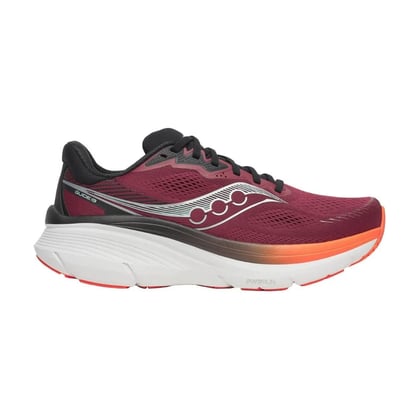

Saucony Guide 19
Best price today
£80.00£150.00−47%
at RunningXpert90D LOW · 37% under 30d avg
| Spec | Wave Inspire 21 | Guide 19 |
|---|---|---|
| Best price now | £49.99 | £80.00 |
| 90-day low | £63.00 | £80.00 |
| 30-day average | £86.70 | £127.71 |
| RRP | £145.00 | £150.00 |
| Category | Stability | Stability |
| Surface | Road | Road |
| Weight | 295g | 275g |
| Drop | 12mm | 6mm |
| Heel stack | 38mm | 35mm |
| Forefoot stack | 26mm | 29mm |
| Carbon plated | No | No |
| Stability | No | No |
| Review rating | - | - |
Expert review
Wave Inspire 21 or Guide 19: which should you buy?
Wave Inspire 21
The Wave Inspire 21 is Mizuno's dependable stability running shoe, built for runners who want gentle support without a corrective, medical feel. This is a daily training shoe first and foremost: high 12mm drop, a firm and planted ride, and enough structure to keep a mild overpronator honest over the miles. At around 295g it is not light, and it never pretends to be fast. What it does well is turn up every day and hold its shape, which is exactly what a lot of runners want from their main trainer. In our view it sits in the same conversation as the Asics GT-2000 14 and the Brooks Adrenaline GTS 25: honest, supportive daily miles rather than plush luxury or race-day pop. If you overpronate a little and want a shoe that just works, it earns its place. Runners chasing a soft, bouncy ride should look elsewhere.
Guide 19
The Saucony Guide 19 is a supportive daily training shoe built for runners who want gentle stability without a clunky, over-corrected ride. It sits in the classic stability daily trainer bracket: the shoe you reach for on easy runs, steady miles and long slow distance when your form starts to soften. Instead of a rigid medial post, the Guide leans on a centre-path guidance frame that keeps your foot tracking straight and only nudges you back when you drift. With a 35mm heel, 6mm drop and a 275g weight, this is a cushioned, planted running shoe rather than a light and lively one. We rate it as one of the safer picks for mild overpronators and neutral runners who simply like a stable, dependable platform. If you want a everyday mile-eater that keeps your legs honest over distance, the Guide 19 earns its place. Just do not expect it to feel fast.
At a glance
Wave Inspire 21 vs Guide 19: how they score
Wave Inspire 21
Lightness5.5
Cushioning6.5
Flexibility6.0
Responsive5.5
Stability8.5
Grip7.5
Guide 19
Lightness5.5
Cushioning7.5
Flexibility6.0
Responsive5.5
Stability8.5
Grip7.0
Who it suits
Who the Wave Inspire 21 and the Guide 19 are for
90D Low£63.00
30D Avg£86.70
RRP£145.00
UK prices
Where to buy the Wave Inspire 21


- 01RunningXpertLIVE£49.99£145.00−66%Women's
- 02Start Fitness3d ago£79.00£145.00−46%Women's
- 03The Running Outlet6d ago£79.99£145.00−45%Men's
- 04runningbath.co.uk4d ago£84.00£145.00−42%Men's
- 05Direct RunningLIVE£90.97£145.00−37%Women's
- 06LovellLIVE£98.00£145.00−32%Women's
- 07Running FormLIVE£98.00£145.00−32%Men's
- 08Sutton Runner6d ago£99.99£145.00−31%Women's
- 09Metres to Miles6d ago£109.00£145.00−25%Women's
- 10DerbyRunner6d ago£112.00£145.00−23%Women's
- 11Amazon3d ago£113.48£145.00−22%Men's
- 12MizunoLIVE£140.00£145.00−3%Women's


