Wave Inspire 21 vs Hurricane 25


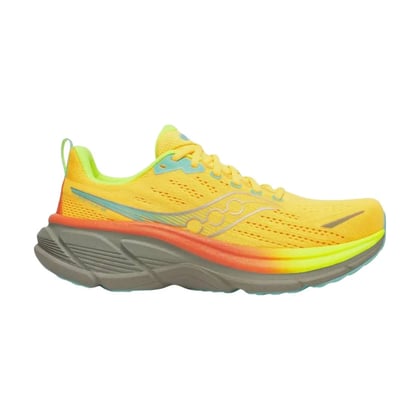

| Spec | Wave Inspire 21 | Hurricane 25 |
|---|---|---|
| Best price now | £37.50 | £82.50 |
| 90-day low | £63 | £73 |
| 30-day average | £103.35 | £122.61 |
| RRP | £145 | £160 |
| Category | Stability | Stability |
| Surface | Road | Road |
| Weight | 295g | 283g |
| Drop | 12mm | 6mm |
| Heel stack | 38mm | 38mm |
| Forefoot stack | 26mm | 32mm |
| Carbon plated | No | No |
| Stability | No | No |
| Review rating | - | - |
Wave Inspire 21 or Hurricane 25: which should you buy?
Wave Inspire 21
The Wave Inspire 21 is Mizuno's dependable stability running shoe, built for runners who want gentle support without a corrective, medical feel. This is a daily training shoe first and foremost: high 12mm drop, a firm and planted ride, and enough structure to keep a mild overpronator honest over the miles. At around 295g it is not light, and it never pretends to be fast. What it does well is turn up every day and hold its shape, which is exactly what a lot of runners want from their main trainer. In our view it sits in the same conversation as the Asics GT-2000 14 and the Brooks Adrenaline GTS 25: honest, supportive daily miles rather than plush luxury or race-day pop. If you overpronate a little and want a shoe that just works, it earns its place. Runners chasing a soft, bouncy ride should look elsewhere.
Hurricane 25
Heavy and bulky it may be, but the Hurricane 25 scored higher with independent reviewers than most stability shoes we track. RunRepeat's lab review put it in its top band, and the other two reviews we read liked the ride just as much. It's Saucony's most cushioned support shoe: 38mm of stack under the heel, a 6mm drop and a wide base that keeps an inward-rolling foot in line without a hard medial post. At 283g it isn't built for intervals, and nobody we read tried to use it that way. It earns its £160 RRP on slow miles, recovery days and the back half of long runs, when your form starts to fade. Reviewers disagree on how much it moved on from the 24. Believe in the Run found it bouncier and less plodding, while a UK panel called it a mild update to a similar shoe. Neutral runners who like a big, planted shoe get on with it too.
Wave Inspire 21 vs Hurricane 25: how they score
Wave Inspire 21
Lightness5.5
Cushioning6.5
Flexibility6.0
Responsive5.5
Stability8.5
Grip7.5
Hurricane 25
Lightness5.2
Cushioning9.1
Flexibility4.0
Responsive6.8
Stability8.7
Grip7.5
Who the Wave Inspire 21 and the Hurricane 25 are for
Wave Inspire 21
Who should buy it
90D Low£63
30D Avg£103.35
RRP£145
Where to buy the Wave Inspire 21


- 01Lovell4d ago£37.50£145−74%Women's
- 02RunningXpert1d ago£49.99£145−66%Women's
- 03SportsShoes3d ago£69.99£145−52%Men's
- 04SportsShoes5d ago£69.99£145−52%Women's
- 05Start Fitness3d ago£70£145−52%Women's
- 06Up and Running5d ago£70£145−52%Women's
- 07DirectRunning1d ago£87.54£145−40%Women's
- 08DirectRunning1d ago£87.54£145−40%Men's
- 09Sutton Runner3d ago£99.99£145−31%Women's
- 10Alton Sports1d ago£112£145−23%Women's
- 11Direct RunningLIVE£135.38£145−7%Women's
Live = checked in the last 24 hours. Older prices show when we last saw them.


