Wave Rider 28 vs Velocity Nitro 5


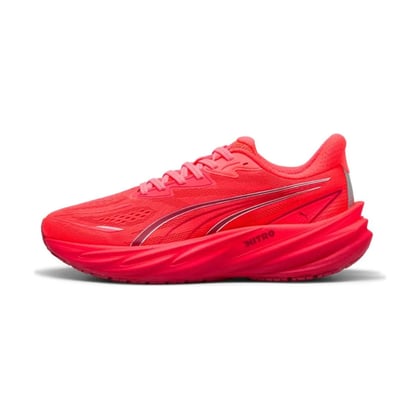

| Spec | Wave Rider 28 | Velocity Nitro 5 |
|---|---|---|
| Best price now | £69 | £77 |
| 90-day low | £60 | £70.28 |
| 30-day average | £100.85 | £96.36 |
| RRP | £140 | £110 |
| Category | Daily | Daily |
| Surface | Road | Road |
| Weight | 280g | 230g |
| Drop | 12mm | 8mm |
| Heel stack | 38mm | 35mm |
| Forefoot stack | 26mm | 27mm |
| Carbon plated | No | No |
| Stability | No | No |
| Review rating | - | - |
Expert review
Wave Rider 28 or Velocity Nitro 5: which should you buy?
Wave Rider 28
The Wave Rider 28 is Mizuno's long-running neutral daily trainer, and version 28 keeps doing what this line has always done: give you a smooth, dependable road running shoe you can lace up every day without a second thought. It is not the softest or the lightest daily trainer out there. At 280g and with a traditional 12mm drop, it leans firmer and more old-school than the tall, bouncy foam trainers filling shelves right now. That is the point. You get a settled, planted ride that rewards steady mileage and a natural heel-to-toe roll rather than a springy pop. We rate it as a workhorse for runners who want structure and longevity over trend. If you have run in Wave Riders before and liked them, the 28 will feel like home. If you want maximum softness, look elsewhere. For an honest daily miles shoe at RRP 140 pounds, it earns its keep. The newer Wave Rider 29 refines the same recipe if you want the latest version.
Velocity Nitro 5
At £110, the Velocity Nitro 5 is one of the cheaper daily trainers from a major brand, and that price is a big part of its appeal. It's a neutral running shoe for everyday miles: easy runs, steady efforts and the odd pickup in pace. Puma has dropped the heel-to-toe drop to 8mm from the 9.7mm of the Velocity Nitro 4 and added a little stack, but reviewers mostly describe it as a modest update rather than a new shoe.
Grip and stability are where testers agree. The PumaGrip outsole holds on wet roads and towpaths better than most trainers, and the ride stays planted. Cushioning is where they split. One reviewer found the Nitrofoam soft and forgiving, others felt the forefoot went thin on longer runs. If you want more bounce for faster days, Puma's Deviate Pure Nitro costs £40 more. As a dependable, grippy daily training shoe at a fair price, we'd call it a good buy, not a class leader.
At a glance
Wave Rider 28 vs Velocity Nitro 5: how they score
Wave Rider 28
Lightness6.0
Cushioning7.0
Flexibility6.5
Responsive6.5
Stability8.0
Grip7.5
Velocity Nitro 5
Lightness7.5
Cushioning6.3
Flexibility7.5
Responsive6.0
Stability8.2
Grip9.0
90D Low£60
30D Avg£100.85
RRP£140
UK prices
Where to buy the Wave Rider 28


- 01Start Fitness3d ago£69£140−51%Men's
- 02AlexandraSports5d ago£95£140−32%Women's
- 03runningbath.co.uk5d ago£98£140−30%Women's
- 04The Jog Shop5d ago£126£140−10%Women's
- 05Alton Sports5d ago£140Check gender


