FuelCell Propel 5 vs Velocity Nitro 5
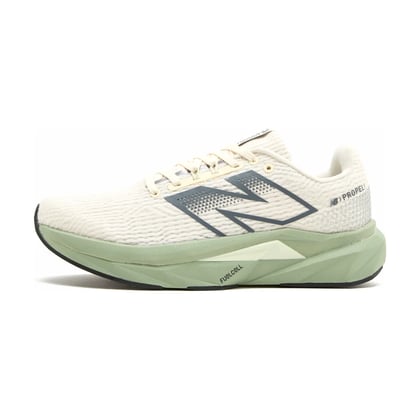

New Balance FuelCell Propel 5
Best price today
£59£120−51%
at Sigma Sports90D LOW · 28% under 30d avg

| Spec | FuelCell Propel 5 | Velocity Nitro 5 |
|---|---|---|
| Best price now | £59 | £77 |
| 90-day low | £59 | £70.28 |
| 30-day average | £81.86 | £97.18 |
| RRP | £120 | £110 |
| Category | Daily | Daily |
| Surface | Road | Road |
| Weight | 280g | 230g |
| Drop | 6mm | 8mm |
| Heel stack | 34mm | 35mm |
| Forefoot stack | 28mm | 27mm |
| Carbon plated | No | No |
| Stability | No | No |
| Review rating | - | - |
Expert review
FuelCell Propel 5 or Velocity Nitro 5: which should you buy?
FuelCell Propel 5
The FuelCell Propel 5 is New Balance at its most sensible: an affordable neutral daily running shoe built to soak up easy miles without emptying your wallet. At around £120 it sits at the value end of the daily trainer market, and it plays that role honestly. The FuelCell foam gives you a firm, stable, dependable ride rather than a soft bouncy one, so this is a shoe for logging steady mileage, easing into a training habit, or keeping your knees happy on recovery days. At 280g it is on the heavier side for a modern daily trainer, and it is not going to make you feel fast. That is fine. If you want more pop for tempo days, New Balance's own FuelCell Rebel 5 is the livelier sibling, and the Nike Pegasus 42 is the obvious workhorse rival. But as a first proper running shoe or a rugged easy-day option, the Propel 5 earns its keep.
Velocity Nitro 5
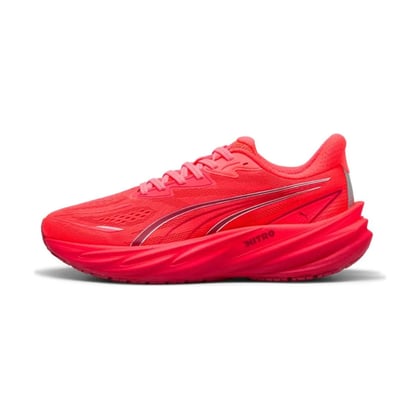
At £110, the Velocity Nitro 5 is one of the cheaper daily trainers from a major brand, and that price is a big part of its appeal. It's a neutral running shoe for everyday miles: easy runs, steady efforts and the odd pickup in pace. Puma has dropped the heel-to-toe drop to 8mm from the 9.7mm of the Velocity Nitro 4 and added a little stack, but reviewers mostly describe it as a modest update rather than a new shoe.
Grip and stability are where testers agree. The PumaGrip outsole holds on wet roads and towpaths better than most trainers, and the ride stays planted. Cushioning is where they split. One reviewer found the Nitrofoam soft and forgiving, others felt the forefoot went thin on longer runs. If you want more bounce for faster days, Puma's Deviate Pure Nitro costs £40 more. As a dependable, grippy daily training shoe at a fair price, we'd call it a good buy, not a class leader.
At a glance
FuelCell Propel 5 vs Velocity Nitro 5: how they score
FuelCell Propel 5
Lightness5.5
Cushioning7.0
Flexibility6.5
Responsive5.5
Stability7.5
Grip7.0
Velocity Nitro 5
Lightness7.5
Cushioning6.3
Flexibility7.5
Responsive6.0
Stability8.2
Grip9.0
90D Low£59
30D Avg£81.86
RRP£120
UK prices
Where to buy the FuelCell Propel 5


- 01Sigma Sports2d ago£59£120−51%Women's
- 02SportsdirectLIVE£59.99£120−50%Women's
- 03DecathlonLIVE£59.99£120−50%Women's
- 04New BalanceLIVE£66£120−45%Women's
- 05New Balance3d ago£66£120−45%Men's
- 06MandMLIVE£69.99£120−42%Men's
- 07Next1d ago£70£120−42%Men's
- 08DirectRunning1d ago£74.95£120−38%Men's
- 09DirectSports1d ago£74.95£120−38%Men's
- 10Express TrainersLIVE£74.99£120−38%Men's
- 11Express Trainers2d ago£74.99£120−38%Women's
- 12Chivers Running5d ago£75£120−38%Men's
- 13Soletrader4d ago£77£120−36%Men's
- 14SportsdirectLIVE£79.19£120−34%Men's
- 15HouseOfFraser1d ago£80£120−33%Men's
- 16BrandAlley UK4d ago£80£120−33%Men's
- 17Secret SalesLIVE£90.24£120−25%Men's
- 18Secret SalesLIVE£94.99£120−21%Women's
- 19SportsShoesLIVE£107.99£120−10%Women's
- 20TaskersSportsLIVE£120Men's
- 21Side Kicks6d ago£128Women's


