FuelCell Rebel 5 vs Deviate Nitro 3
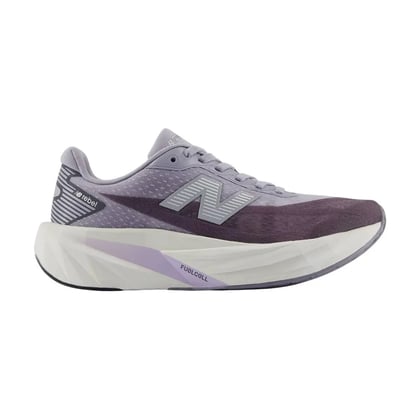

New Balance FuelCell Rebel 5
Best price today
£73.50£140−48%
at Sportsdirect · 34% under 30d avg

| Spec | FuelCell Rebel 5 | Deviate Nitro 3 |
|---|---|---|
| Best price now | £73.50 | £75 |
| 90-day low | £58 | £69.99 |
| 30-day average | £112.20 | £89.30 |
| RRP | £140 | £160 |
| Category | Tempo | Tempo |
| Surface | Road | Road |
| Weight | 220g | 250g |
| Drop | 6.3mm | 10mm |
| Heel stack | 33mm | 39mm |
| Forefoot stack | 26.7mm | 29mm |
| Carbon plated | No | Yes |
| Stability | No | No |
| Review rating | - | 5.0 (1) |
Expert review
FuelCell Rebel 5 or Deviate Nitro 3: which should you buy?
FuelCell Rebel 5
The FuelCell Rebel 5 is New Balance at its most likeable: a lightweight, plateless running shoe that wants to do almost everything in your week. At 220g it is genuinely light for the stack you get, and the FuelCell midsole gives you a soft, springy pop that flatters easy miles and comes alive when you lift the pace. There is no carbon plate here, so this is not a marathon racer. Think of it as the fun, do-it-all uptempo trainer that handles easy days, strides, tempo efforts and even a parkrun without complaint. If you loved the FuelCell Rebel 4, the 5 keeps that playful character and refines the fit. For runners who want one versatile daily training shoe with a bit of race-day spirit, we rate it highly at the price.
Deviate Nitro 3
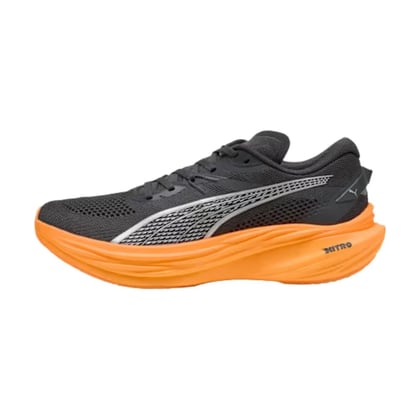
The Puma Deviate Nitro 3 is a carbon-plated do-it-all running shoe: enough pop to handle tempo work and race day, enough cushioning and rubber underfoot to survive your everyday miles. That dual-purpose brief is what sets it apart from a pure racer. Think of it as one shoe for the runner who wants a single versatile trainer rather than a rotation. With a 10mm drop and a firm-but-lively ride, it rewards you when you get on your toes and press the pace, while staying stable enough for steady runs. At 250g it is not the lightest plated shoe out there, and you notice that on the fastest reps, so treat it as a workhorse tempo and long-run trainer rather than a featherweight 5k weapon. For the £160 RRP you get real durability and a genuinely versatile ride. If you want one carbon shoe that does a bit of everything, it earns its place.
At a glance
FuelCell Rebel 5 vs Deviate Nitro 3: how they score
FuelCell Rebel 5
Lightness9.0
Cushioning7.8
Flexibility8.2
Responsive7.9
Stability6.3
Grip7.5
Deviate Nitro 3
Lightness6.5
Cushioning7.5
Flexibility6.0
Responsive8.5
Stability7.5
Grip8.0
Who it suits
Who the FuelCell Rebel 5 and the Deviate Nitro 3 are for
FuelCell Rebel 5
90D Low£58
30D Avg£112.20
RRP£140
UK prices
Where to buy the FuelCell Rebel 5


- 01SportsdirectLIVE£73.50£140−48%Men's
- 02DecathlonLIVE£79.99£140−43%Men's
- 03Run ActiveLIVE£83.99£140−40%Women's
- 04Run ActiveLIVE£83.99£140−40%Men's
- 05SportsShoesLIVE£83.99£140−40%Women's
- 06SportsShoesLIVE£83.99£140−40%Men's
- 07SportsdirectLIVE£86£140−39%Women's
- 08DirectSports2d ago£87.97£140−37%Men's
- 09DirectRunning6d ago£87.97£140−37%Men's
- 10Northern Runner2d ago£88£140−37%Women's
- 11Secret SalesLIVE£99£140−29%Women's
- 12BrandAlley UK3d ago£99£140−29%Women's
- 13DecathlonLIVE£99.99£140−29%Women's
- 14365RiderLIVE£103.09£140−26%Women's
- 15365RiderLIVE£104.05£140−26%Men's
- 16Alpine Trek4d ago£109.56£140−22%Women's
- 17HouseOfFraser5d ago£110£140−21%Men's
- 18RunningXpert1d ago£112£140−20%Women's
- 19Run North WestLIVE£119£140−15%Women's
- 20Runner's Need4d ago£125.96£140−10%Women's
- 21Runner's Need5d ago£125.96£140−10%Men's
- 22DirectSportsLIVE£125.99£140−10%Women's
- 23Moti RunningLIVE£126£140−10%Women's
- 24Moti RunningLIVE£126£140−10%Men's
- 25Sigma SportsLIVE£133£140−5%Men's
- 26Snowleader.co.uk4d ago£139.10£140−1%Women's
- 27Snowleader.co.uk5d ago£139.11£140−1%Men's
- 28The Sports Edit4d ago£139.50Women's
- 29ASOSLIVE£140Women's
- 30Sigma SportsLIVE£140Women's
- 31RunningXpertLIVE£140Men's
- 32schuh2d ago£140Women's
- 33Greaves2d ago£140Women's
- 34RunningBear2d ago£140Men's
- 35Bog Dog4d ago£140Men's
- 36Progress Running Club5d ago£140Women's
- 37DerbyRunner6d ago£140Men's


