//
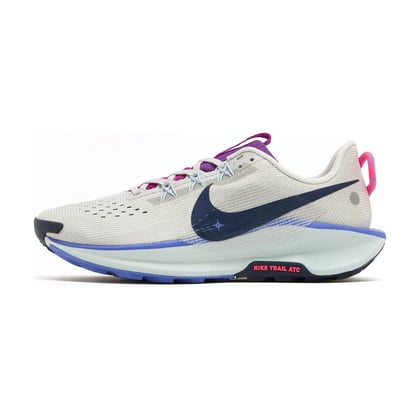
Pegasus Trail 5 vs Peregrine 14


Saucony Peregrine 14
Best price today
£75.00£120.00−38%
at Metres to Miles · 25% under 30d avg
| Spec | Pegasus Trail 5 | Peregrine 14 |
|---|---|---|
| Best price now | £69.00 | £75.00 |
| 90-day low | £59.30 | £67.49 |
| 30-day average | £101.73 | £99.35 |
| RRP | £145.00 | £120.00 |
| Category | Trail | Trail |
| Surface | Trail | Trail |
| Weight | 300g | 283g |
| Drop | 9.5mm | 4mm |
| Heel stack | 37mm | 28mm |
| Forefoot stack | 27.5mm | 24mm |
| Carbon plated | No | No |
| Stability | No | No |
| Review rating | - | 5.0 (1) |
Expert review
Pegasus Trail 5 or Peregrine 14: which should you buy?
Pegasus Trail 5
The Pegasus Trail 5 is Nike's door-to-trail running shoe: a cushioned, do-everything trail shoe built to carry you from the pavement onto gravel, light singletrack and mixed paths without missing a beat. It is not a technical mountain racer and it does not pretend to be. With a soft, forgiving ride and a 9.5mm drop, it feels close to a road trainer with extra grip and protection, which is exactly the point. If your local running mixes a road warm-up with woodland trail and the odd muddy patch, this is one of the most versatile options out there. At 300g it is on the heavier side, so it will not win you a fast trail race, and the moderate lugs give up traction in deep mud and on greasy rock. But as a comfortable, durable trail running shoe for everyday miles, the Pegasus Trail 5 nails the brief. We rate it as a buy-it-and-forget-it daily trail shoe rather than a specialist.
Peregrine 14
Saucony has since moved on to the Peregrine 16, but the 14 is still an easy trail running shoe to recommend if you can find your size. It's low, flexible and grippy, with a rock plate and deep lugs, the kind of shoe you can take down a muddy bridleway on Saturday and up a rocky path on Sunday. Reviewers liked it. RunRepeat rated it highly for value and versatility, and most testers rated the grip well above average. Not everyone agrees on the wet stuff, though: iRunFar found it only adequate in mud and slippery on wet wooden bridges. The bigger catch is a firmish, fairly thin ride that gets tiring on long days. Think of it as a daily trail shoe rather than an ultra shoe. Fewer UK retailers carry it now that it's been replaced, so check sizes before you get attached.
At a glance
Pegasus Trail 5 vs Peregrine 14: how they score
Pegasus Trail 5
Lightness5.5
Cushioning8.5
Flexibility6.0
Responsive5.5
Stability6.5
Grip7.0
Peregrine 14
Lightness7.0
Cushioning5.5
Flexibility8.5
Responsive6.0
Stability7.5
Grip8.0
Who it suits
Who the Pegasus Trail 5 and the Peregrine 14 are for
Pegasus Trail 5
90D Low£59.30
30D Avg£101.73
RRP£145.00
UK prices
Where to buy the Pegasus Trail 5


- 01Sportsdirect4d ago£69.00£145.00−52%
- 02Direct RunningLIVE£89.93£145.00−38%
- 03Nike1d ago£89.99£145.00−38%
- 04TaskersSportsLIVE£90.99£145.00−37%
- 05HouseOfFraser4d ago£92.00£145.00−37%
- 06RackhamsLIVE£109.99£145.00−24%
- 07AmazonLIVE£109.99£145.00−24%
- 08Kicks Worldwide4d ago£114.99£145.00−21%
- 09TaskersSports3d ago£129.99£145.00−10%


