//
Structure 26 vs Hurricane 25


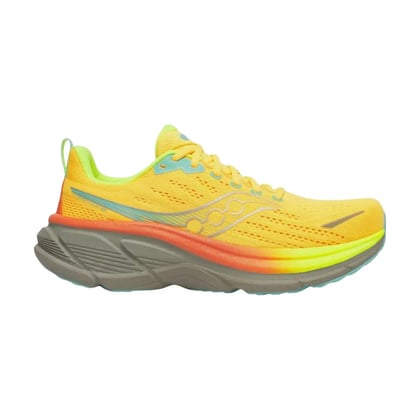

| Spec | Structure 26 | Hurricane 25 |
|---|---|---|
| Best price now | £80.74 | £90.00 |
| 90-day low | £65.00 | £83.84 |
| 30-day average | £108.06 | £112.84 |
| RRP | £130.00 | £160.00 |
| Category | Stability | Stability |
| Surface | Road | Road |
| Weight | 298g | 283g |
| Drop | 10.1mm | 6mm |
| Heel stack | 36.1mm | 38mm |
| Forefoot stack | 26mm | 32mm |
| Carbon plated | No | No |
| Stability | Yes | No |
| Review rating | - | - |
Expert review
Structure 26 or Hurricane 25: which should you buy?
Structure 26
The Nike Structure 26 is a steady, no-drama stability running shoe built for everyday miles rather than fireworks. It is a support daily trainer aimed at runners who want gentle guidance underfoot without a heavy-handed medial post. At 298g it is a substantial shoe, and that weight tells you what it is for: long, easy, repeatable training runs where comfort and a planted feel matter more than speed. The 10mm drop and 36.1mm heel stack give you a familiar, protective ride that suits heel strikers well. It is a sensible step on from the Structure 25, keeping the supportive character while smoothing out the ride. We rate it as a dependable workhorse: not exciting, but exactly the kind of stability daily trainer you reach for when you just want to clock the miles and stay comfortable. At £130 RRP it sits in the mainstream support bracket and competes squarely with the established names.
Hurricane 25
Heavy and bulky it may be, but the Hurricane 25 scored higher with independent reviewers than most stability shoes we track. RunRepeat's lab review put it in its top band, and the other two reviews we read liked the ride just as much. It's Saucony's most cushioned support shoe: 38mm of stack under the heel, a 6mm drop and a wide base that keeps an inward-rolling foot in line without a hard medial post. At 283g it isn't built for intervals, and nobody we read tried to use it that way. It earns its £160 RRP on slow miles, recovery days and the back half of long runs, when your form starts to fade. Reviewers disagree on how much it moved on from the 24. Believe in the Run found it bouncier and less plodding, while a UK panel called it a mild update to a similar shoe. Neutral runners who like a big, planted shoe get on with it too.
At a glance
Structure 26 vs Hurricane 25: how they score
Structure 26
Lightness5.5
Cushioning7.5
Flexibility6.0
Responsive6.0
Stability8.5
Grip7.5
Hurricane 25
Lightness5.2
Cushioning9.1
Flexibility4.0
Responsive6.8
Stability8.7
Grip7.5
Who it suits
Who the Structure 26 and the Hurricane 25 are for
90D Low£65.00
30D Avg£108.06
RRP£130.00
UK prices
Where to buy the Structure 26


- 01Run North WestLIVE£80.74£130.00−38%
- 02Run North West2d ago£84.99£130.00−35%
- 03Direct RunningLIVE£89.93£130.00−31%
- 04Nike2d ago£94.49£130.00−27%
- 05VeryLIVE£94.50£130.00−27%
- 06Foot Locker3d ago£99.62£130.00−23%
- 07Sportsdirect1d ago£100.00£130.00−23%
- 08HouseOfFraser1d ago£100.00£130.00−23%
- 09LittlewoodsLIVE£118.25£130.00−9%
- 10SportsShoesLIVE£121.49£130.00−7%
- 11Alpine TrekLIVE£122.50£130.00−6%
- 12Go OutdoorsLIVE£129.99£130.00−0%
- 13Go OutdoorsLIVE£130.00
- 14Snowleader.co.ukLIVE£130.41
- 15Progress Running ClubLIVE£134.99
- 16NikeLIVE£134.99


