Vaporfly 3 vs Deviate Nitro Elite 4


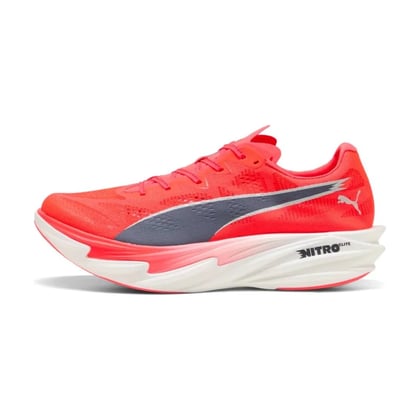

Puma Deviate Nitro Elite 4
Best price today
£125.99£215−41%
at SportsShoes · 28% under 30d avg
| Spec | Vaporfly 3 | Deviate Nitro Elite 4 |
|---|---|---|
| Best price now | £120 | £125.99 |
| 90-day low | £120 | £117.87 |
| 30-day average | £306.21 | £174.33 |
| RRP | £265 | £215 |
| Category | Race | Race |
| Surface | Road | Road |
| Weight | 194g | 170g |
| Drop | 8mm | 8mm |
| Heel stack | 40mm | 38mm |
| Forefoot stack | 32mm | 30mm |
| Carbon plated | Yes | Yes |
| Stability | No | No |
| Review rating | - | - |
Vaporfly 3 or Deviate Nitro Elite 4: which should you buy?
Vaporfly 3
The Vaporfly 3 is Nike's carbon racing shoe for runners who want to go fast without the towering stack of an Alphafly. It is a pure road racer, built for 5k up to the marathon, and it does that one job very well. At 194g it is light, the 8mm drop keeps you rolling forward, and the carbon plate gives you real pop when you commit to race pace. This is not a shoe for plodding. It rewards a quick, efficient stride and comes alive the harder you push. If you have run in earlier Vaporflys you will know the feeling: fast, slightly twitchy, and unmistakably a tool for race day. The newer Vaporfly 4 refines the formula, but the 3 remains a serious marathon shoe, and when it drops below RRP it is one of the better-value carbon racers you can buy. We rate it for runners who already have a daily trainer and want a dedicated PB weapon.
Deviate Nitro Elite 4
At 170g, the Deviate Nitro Elite 4 now weighs the same as Puma's more aggressive Fast-R Nitro Elite 3, and that shifts who it's for. It keeps the steadier, heel-strike-friendly shape the Elite line has always had, but most reviewers found the midsole livelier than the Elite 3's and the outsole better too. One long-term tester said it was the first Deviate Elite they'd enjoyed since the original, and Believe in the Run went further, calling it Puma's best race shoe so far. We see it as a carbon racing shoe for 10K and half marathon, and a marathon shoe for runners who find the Fast-R too twitchy. The catches are a narrow midfoot, thin forefoot rubber and early wear reports from a couple of testers. At £215 RRP it's priced alongside the big names, so check the price table before paying full whack.
Vaporfly 3 vs Deviate Nitro Elite 4: how they score
Vaporfly 3
Lightness9.5
Cushioning8.0
Flexibility6.5
Responsive9.5
Stability5.0
Grip7.5
Deviate Nitro Elite 4
Lightness9.2
Cushioning7.0
Flexibility3.5
Responsive8.8
Stability7.0
Grip7.5
Who the Vaporfly 3 and the Deviate Nitro Elite 4 are for
Vaporfly 3
Who should buy it
90D Low£120
30D Avg£306.21
RRP£265
Where to buy the Vaporfly 3


- 01TaskersSports9d ago£120£265−55%Men's
- 02RunningXpert9d ago£192£265−28%Men's
- 03Side Kicks9d ago£322Men's
Live = checked in the last 24 hours. Older prices show when we last saw them.


