Deviate Nitro Elite 4 vs Endorphin Elite 3


Puma Deviate Nitro Elite 4
Best price today
£125.99£215−41%
at SportsShoes · 28% under 30d avg
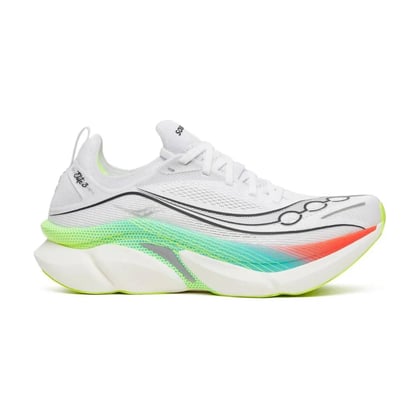

Saucony Endorphin Elite 3
Best price today
£204£300−32%
at Run & Ride90D LOW · 29% under 30d avg
| Spec | Deviate Nitro Elite 4 | Endorphin Elite 3 |
|---|---|---|
| Best price now | £125.99 | £204 |
| 90-day low | £117.87 | £204 |
| 30-day average | £174.33 | £288.61 |
| RRP | £215 | £300 |
| Category | Race | Race |
| Surface | Road | Road |
| Weight | 170g | 210g |
| Drop | 8mm | 8mm |
| Heel stack | 38mm | 40mm |
| Forefoot stack | 30mm | 32mm |
| Carbon plated | Yes | Yes |
| Stability | No | No |
| Review rating | - | - |
Expert review
Deviate Nitro Elite 4 or Endorphin Elite 3: which should you buy?
Deviate Nitro Elite 4
At 170g, the Deviate Nitro Elite 4 now weighs the same as Puma's more aggressive Fast-R Nitro Elite 3, and that shifts who it's for. It keeps the steadier, heel-strike-friendly shape the Elite line has always had, but most reviewers found the midsole livelier than the Elite 3's and the outsole better too. One long-term tester said it was the first Deviate Elite they'd enjoyed since the original, and Believe in the Run went further, calling it Puma's best race shoe so far. We see it as a carbon racing shoe for 10K and half marathon, and a marathon shoe for runners who find the Fast-R too twitchy. The catches are a narrow midfoot, thin forefoot rubber and early wear reports from a couple of testers. At £215 RRP it's priced alongside the big names, so check the price table before paying full whack.
Endorphin Elite 3
The Endorphin Elite 3 is Saucony's no-compromise carbon racing shoe, built for one job: chasing a personal best over the half and full marathon. This is a specialist marathon shoe, not a do-it-all trainer. You get a tall 40mm heel, a full-length carbon plate and Saucony's springy IncrediRUN foam, all wrapped up at a race weight of 210g. At £306 it sits right at the top of the market, alongside the Nike Alphafly 3 and the adidas Adizero Adios Pro 4. What you are paying for is peak return at speed. The slotted plate and high stack give a rolling, aggressive ride that wants to move. It is less versatile than Saucony's own Endorphin Pro 5, and it asks for a fair bit of leg strength to get the best from it. We rate it as one of the sharpest tools you can lace up on race day, so long as race day is what you want it for.
At a glance
Deviate Nitro Elite 4 vs Endorphin Elite 3: how they score
Deviate Nitro Elite 4
Lightness9.2
Cushioning7.0
Flexibility3.5
Responsive8.8
Stability7.0
Grip7.5
Endorphin Elite 3
Lightness8.5
Cushioning8.5
Flexibility6.0
Responsive9.5
Stability5.5
Grip7.5
Who it suits
90D Low£117.87
30D Avg£174.33
RRP£215
UK prices
Where to buy the Deviate Nitro Elite 4


- 01SportsShoes2d ago£125.99£215−41%Women's
- 02SportsShoes2d ago£125.99£215−41%Men's
- 03365RiderLIVE£136.51£215−37%Women's
- 04Run Active2d ago£147£215−32%Women's
- 05Run Active2d ago£147£215−32%Men's
- 06Run North West2d ago£149.99£215−30%Men's
- 07365RiderLIVE£150.84£215−30%Men's
- 08Sole Mate3d ago£170£215−21%Women's
- 09Start FitnessLIVE£188.90£215−12%Men's
- 10RunningXpertLIVE£189.99£215−12%Men's
- 11RunningXpert4d ago£189.99£215−12%Women's
- 12Direct RunningLIVE£211.52£215−2%Women's
- 13DirectRunningLIVE£211.52£215−2%Men's


