//
Terrex Agravic Speed 2 vs Terrex Agravic Speed Ultra 2
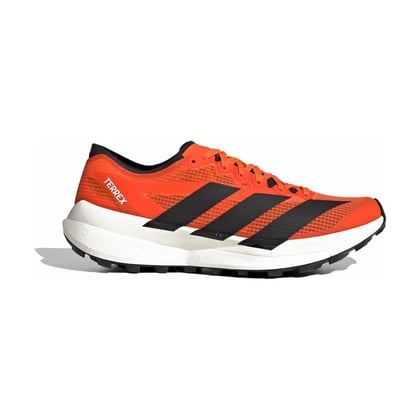

Adidas Terrex Agravic Speed 2
Best price today
£77.00£180.00−57%
at Adidas · 34% under 30d avg

Adidas Terrex Agravic Speed Ultra 2
Best price today
£139.90£200.00−30%
at Start Fitness90D LOW · 9% under 30d avg
| Spec | Terrex Agravic Speed 2 | Terrex Agravic Speed Ultra 2 |
|---|---|---|
| Best price now | £77.00 | £139.90 |
| 90-day low | £75.32 | £139.90 |
| 30-day average | £117.15 | £153.57 |
| RRP | £180.00 | £200.00 |
| Category | Trail Race | Trail Race |
| Surface | Trail | Trail |
| Weight | 240g | 265g |
| Drop | 8mm | 0.1mm |
| Heel stack | 30mm | 30.7mm |
| Forefoot stack | 22mm | 30.6mm |
| Carbon plated | No | No |
| Stability | No | No |
| Review rating | - | - |
Expert review
Terrex Agravic Speed 2 or Terrex Agravic Speed Ultra 2: which should you buy?
Terrex Agravic Speed 2
The Terrex Agravic Speed is adidas at its most stripped back on the trail: a lightweight trail racing shoe built to move fast over shorter, sharper terrain. At 240g it sits firmly in the fast-and-low camp, and there is no carbon plate here, so what you get is a direct, ground-feel-forward ride rather than a propulsive rocker. That is the point. This is a running shoe for runners who want to feel the trail and react to it, not float above it. The 8mm drop keeps you in a familiar, slightly heel-biased position that most road converts will get on with straight away. We rate it as a proper trail race and tempo tool: skyrunning, shorter ultras, hard hill efforts and race-day on technical ground. If you want more shoe underfoot for long days, the roomier Terrex Agravic Speed Ultra is the natural step up. For fast trail work, this one earns its keep.
Terrex Agravic Speed Ultra 2
Adidas kept the second Agravic Speed Ultra fast and fussy, and fixed most of what people disliked about the first. The upper is far comfier than on the original Speed Ultra and the lugs bite harder, and the reviews we read broadly agree most runners will prefer it. It is still a trail racing shoe with a narrow heel, a pointed toe box and a rocker that wants you up on your forefoot. Women's Running UK gave it five stars as an ultra racer for runners who put speed and control ahead of plush cushioning. On our spec sheet it is effectively zero drop, and lab testing says the heel rocker makes it feel less flat than that. At a £200 RRP it sits alongside the S/Lab Genesis 2 and Tecton X 3 as a race-day trail shoe. If you land midfoot and race on fast, runnable trails, we'd pick it over both. Heel strikers and wide feet should look elsewhere.
At a glance
Terrex Agravic Speed 2 vs Terrex Agravic Speed Ultra 2: how they score
Terrex Agravic Speed 2
Lightness9.0
Cushioning6.5
Flexibility7.5
Responsive8.5
Stability6.5
Grip8.0
Terrex Agravic Speed Ultra 2
Lightness8.0
Cushioning7.2
Flexibility6.5
Responsive9.3
Stability5.5
Grip8.8
90D Low£75.32
30D Avg£117.15
RRP£180.00
UK prices
Where to buy the Terrex Agravic Speed 2


- 01AdidasLIVE£77.00£180.00−57%
- 02Littlewoods6d ago£104.99£180.00−42%
- 03Very6d ago£109.00£180.00−39%
- 04Start Fitness6d ago£111.90£180.00−38%
- 05SportsShoesLIVE£111.99£180.00−38%
- 06SportsShoes1d ago£111.99£180.00−38%
- 07Run North WestLIVE£119.99£180.00−33%
- 08Alpine Trek6d ago£124.62£180.00−31%
- 09Direct RunningLIVE£137.05£180.00−24%
- 10ASOS2d ago£140.00£180.00−22%


