//
Terrex Agravic Speed 2 vs Catamount 4
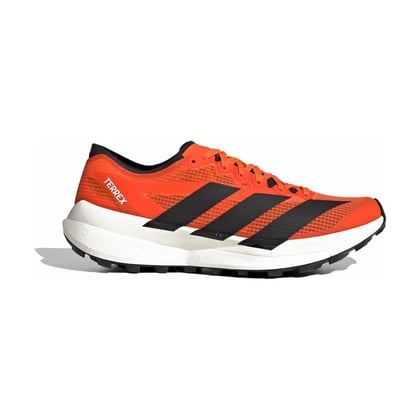

Adidas Terrex Agravic Speed 2
Best price today
£75.32£180.00−58%
at Alpine Trek90D LOW · 35% under 30d avg


Brooks Catamount 4
Best price today
£70.00£159.99−56%
at Start Fitness90D LOW · 35% under 30d avg
| Spec | Terrex Agravic Speed 2 | Catamount 4 |
|---|---|---|
| Best price now | £75.32 | £70.00 |
| 90-day low | £75.32 | £70.00 |
| 30-day average | £116.42 | £107.93 |
| RRP | £180.00 | £159.99 |
| Category | Trail Race | Trail Race |
| Surface | Trail | Trail |
| Weight | 240g | 270g |
| Drop | 8mm | 8.4mm |
| Heel stack | 30mm | 31.5mm |
| Forefoot stack | 22mm | 23.1mm |
| Carbon plated | No | No |
| Stability | No | No |
| Review rating | - | - |
Expert review
Terrex Agravic Speed 2 or Catamount 4: which should you buy?
Terrex Agravic Speed 2
The Terrex Agravic Speed is adidas at its most stripped back on the trail: a lightweight trail racing shoe built to move fast over shorter, sharper terrain. At 240g it sits firmly in the fast-and-low camp, and there is no carbon plate here, so what you get is a direct, ground-feel-forward ride rather than a propulsive rocker. That is the point. This is a running shoe for runners who want to feel the trail and react to it, not float above it. The 8mm drop keeps you in a familiar, slightly heel-biased position that most road converts will get on with straight away. We rate it as a proper trail race and tempo tool: skyrunning, shorter ultras, hard hill efforts and race-day on technical ground. If you want more shoe underfoot for long days, the roomier Terrex Agravic Speed Ultra is the natural step up. For fast trail work, this one earns its keep.
Catamount 4
Reviewers split hard on the Catamount 4, and the spec sheet shows why. Brooks raised the drop to 8.4mm from the 6mm of the Catamount 3 and stiffened the SkyVault plate, so this fast trail running shoe now rolls you through the stride instead of bending with the ground. Some testers liked that a lot. iRunFar found it nimble enough for training, workouts and races up to 50K, and one lab review rated its stability among the best on the trail market. The Believe in the Run team went the other way: a harsh midsole, a heel that wouldn't lock down, and a step back from version 3. We land between them. It weighs 270g, almost exactly what the Catamount 3 did, and nearly everyone liked the grip. If you land on your heel and want a steady platform at speed, it makes sense. If the old shoe's flex was the reason you bought it, try this one on before you commit.
At a glance
Terrex Agravic Speed 2 vs Catamount 4: how they score
Terrex Agravic Speed 2
Lightness9.0
Cushioning6.5
Flexibility7.5
Responsive8.5
Stability6.5
Grip8.0
Catamount 4
Lightness7.5
Cushioning5.5
Flexibility3.5
Responsive6.5
Stability8.5
Grip8.5
Who it suits
Who the Terrex Agravic Speed 2 and the Catamount 4 are for
90D Low£75.32
30D Avg£116.42
RRP£180.00
UK prices
Where to buy the Terrex Agravic Speed 2


- 01Alpine Trek2d ago£75.32£180.00−58%
- 02AdidasLIVE£77.00£180.00−57%
- 03SportsShoes1d ago£111.99£180.00−38%
- 04SportsShoes2d ago£111.99£180.00−38%
- 05Run North West1d ago£119.99£180.00−33%
- 06Direct RunningLIVE£137.05£180.00−24%
- 07ASOS3d ago£140.00£180.00−22%


