//
Novablast 6 vs Superblast 3
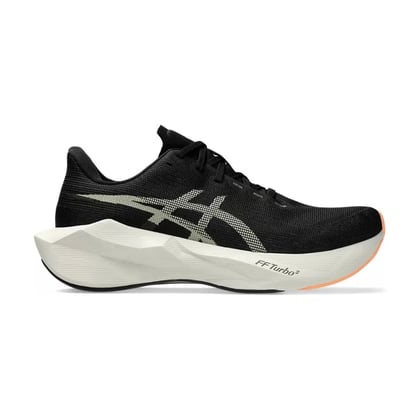

Asics Novablast 6
Best price today
£114.99£140.00−18%
at Decathlon90D LOW · 24% under 30d avg
| Spec | Novablast 6 | Superblast 3 |
|---|---|---|
| Best price now | £114.99 | £179.49 |
| 90-day low | £114.99 | £115.00 |
| 30-day average | £150.50 | £194.11 |
| RRP | £140.00 | £200.00 |
| Category | Daily | Super Trainer |
| Surface | Road | Road |
| Weight | 249g | 235g |
| Drop | 8mm | 8mm |
| Heel stack | 41.5mm | 45.8mm |
| Forefoot stack | 33.5mm | 37.7mm |
| Carbon plated | No | No |
| Stability | No | No |
| Review rating | — | — |
Expert review
Novablast 6 or Superblast 3: which should you buy?
Novablast 6
The Novablast 6 is Asics at its most playful: a high-stack, bouncy daily training shoe built to make easy miles fun and steady miles feel effortless. At 249g with a big 41.5mm heel it sits in the upper reaches of the daily trainer class, closer to a max-cushion cruiser than a lean workhorse, yet the FF Blast Max midsole keeps it lively rather than dull. This is the do-everything running shoe for the runner who wants one pair for most of the week: warm-ups, recovery jogs, long runs and the odd relaxed tempo. It is not a race shoe and it is not a stability shoe, so if you overpronate heavily or want firm ground feel, look elsewhere. But as a cushioned, spirited daily trainer at a sensible price, we rate it highly. The Novablast 5 fans will feel right at home, with a touch more bounce underfoot.
Superblast 3
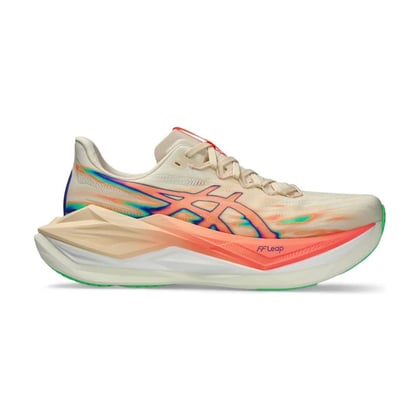
The ASICS Superblast 3 is the most versatile running shoe ASICS makes: a towering, plateless super trainer that does the job of three or four shoes in your rotation. With a 45.8mm heel and 37.7mm forefoot it sits right at the World Athletics stack limit, yet at 235g it stays light enough to pick up the pace when you ask. There is no carbon plate here, and that is the whole point. This is soft, bouncy foam doing the work, so you get a springy daily training shoe that will still hang on through a tempo session or a half marathon. We rate it as one of the best do-it-all trainers on the road right now. It is not a dedicated marathon shoe and it is not cheap at £190, but if you want a single pair that covers easy miles, long runs and race-pace efforts without switching, the Superblast 3 is about as good as it gets. Bigger runner, one shoe, most of the week: this is the one.
At a glance
Novablast 6 vs Superblast 3: how they score
Novablast 6
Lightness6.5
Cushioning9.2
Flexibility6.5
Responsive7.5
Stability6.5
Grip7.5
Superblast 3
Lightness7.5
Cushioning9.5
Flexibility6.0
Responsive8.5
Stability6.5
Grip7.5
Who it suits
Who the Novablast 6 and the Superblast 3 are for
Novablast 6
90D Low£114.99
30D Avg£150.50
RRP£140.00
UK prices
Where to buy the Novablast 6


- 01Decathlon5d ago£114.99£140.00−18%
- 02Sportsdirect6d ago£115.00£140.00−18%
- 03Sportsdirect6d ago£115.00£140.00−18%
- 04Moti Running5d ago£126.00£140.00−10%
- 05Alpine Trek8d ago£136.95£140.00−2%
- 06365Rider4d ago£137.47£140.00−2%
- 07The Jog Shop5d ago£139.99£140.00−0%
- 08The Jog Shop5d ago£139.99£140.00−0%
- 09SportsShoes8d ago£139.99£140.00−0%
- 10HouseOfFraser8d ago£139.99£140.00−0%
- 11DirectSports6d ago£139.99£140.00−0%
- 12Run Active5d ago£140.00
- 13Sporting Feet5d ago£140.00
- 14Run Active5d ago£140.00
- 15JohnLewis8d ago£140.00
- 16RunningXpert13d ago£140.00
- 17Greaves5d ago£140.00
- 18RunningBear5d ago£140.00
- 19End Clothing10d ago£140.00
- 20About The Run5d ago£140.00
- 21DerbyRunner5d ago£140.00
- 22runningbath.co.uk5d ago£140.00
- 23RunAndBecome5d ago£140.00
- 24Profeet5d ago£140.00
- 25ASOS5d ago£140.00
- 26Amazon13d ago£144.05
- 27365Rider4d ago£152.80


