Ghost 17 vs Wave Rider 30
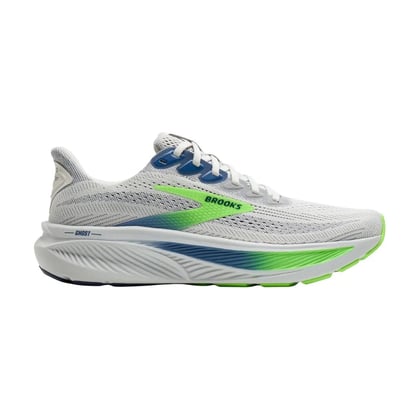


| Spec | Ghost 17 | Wave Rider 30 |
|---|---|---|
| Best price now | £67.50 | £87.54 |
| 90-day low | £64.80 | £83 |
| 30-day average | £102.60 | £118.08 |
| RRP | £130 | £140 |
| Category | Daily | Daily |
| Surface | Road | Road |
| Weight | 289g | 266g |
| Drop | 10mm | 9.1mm |
| Heel stack | 36mm | 42.8mm |
| Forefoot stack | 26mm | 33.7mm |
| Carbon plated | No | No |
| Stability | No | No |
| Review rating | - | - |
Ghost 17 or Wave Rider 30: which should you buy?
Ghost 17
The Ghost 17 is Brooks doing what Brooks does best: a dependable neutral daily training shoe with no drama and no surprises. This is not a carbon racing shoe or a plush max-cushion pillow. It sits right in the middle, the running shoe you reach for on most days of the week when you just want to get the miles done. The DNA Loft v3 nitrogen foam gives it a softer, smoother feel than older Ghosts, so easy runs and steady miles roll along comfortably without feeling mushy. At 289g with a 10mm drop and a 36mm heel, it is a traditional, protective daily trainer built for consistency over flash. We rate it as one of the safest first-choice trainers for everyday runners, and if you liked the Ghost 16 you will feel at home instantly. It will not win you a personal best, but that is not the job. Reliable mileage is.
Wave Rider 30
For years the Wave Rider was the firm, slightly old-fashioned daily trainer that Mizuno fans loved and everyone else walked past. Version 30 is built to change that. Heel stack climbs from 37.5mm on the Wave Rider 29 to 42.8mm, the foam is much softer, and weight only creeps up to 266g. Most of the reviews we read call it a big step up. Fordy Runs rates it above the latest Saucony Ride and Pegasus. RTINGS is the cooler voice: its lab found plenty of protection and stability but little energy coming back, and it scored the shoe well below the others. Both readings hold up. It's a soft, stable daily training shoe for easy miles and long runs. It copes with steadier efforts, though it won't feel quick. At £140 RRP it sits beside the Ghost and Cumulus. Loyal Rider fans who liked the old ground feel may miss it.
Ghost 17 vs Wave Rider 30: how they score
Ghost 17
Lightness6.0
Cushioning8.0
Flexibility6.5
Responsive5.5
Stability7.0
Grip7.5
Wave Rider 30
Lightness6.5
Cushioning8.5
Flexibility4.5
Responsive5.5
Stability8.5
Grip8.0
Who the Ghost 17 and the Wave Rider 30 are for
Ghost 17
Who should buy it
- Everyday runners who want one dependable trainer for most of their miles
90D Low£64.80
30D Avg£102.60
RRP£130
Where to buy the Ghost 17


- 01Run ActiveLIVE£67.50£130−48%Women's
- 02Bog Dog1d ago£68.48£130−47%Women's
- 03DecathlonLIVE£69.99£130−46%Women's
- 04Donaghys4d ago£70£130−46%Women's
- 05CotswoldOutdoor4d ago£77.89£130−40%Men's
- 06Runner's Need5d ago£77.89£130−40%Men's
- 07SportsdirectLIVE£81.50£130−37%Women's
- 08Sporting FeetLIVE£85.50£130−34%Women's
- 09365RiderLIVE£85.91£130−34%Women's
- 10Brooks Running3d ago£87.75£130−33%Women's
- 11Secret Sales4d ago£89.99£130−31%Men's
- 12Express Trainers5d ago£89.99£130−31%Men's
- 13Love the Sales5d ago£89.99£130−31%Men's
- 14SportsShoes1d ago£94.50£130−27%Women's
- 15DerbyRunner5d ago£94.50£130−27%Men's
- 16Secret Sales4d ago£94.99£130−27%Women's
- 17SOLE4d ago£96.05£130−26%Check gender
- 18All Sports2d ago£96.98£130−25%Women's
- 19Start Fitness2d ago£99£130−24%Women's
- 20Run North West2d ago£99.99£130−23%Women's
- 21AmazonLIVE£104.95£130−19%Men's
- 22AmazonLIVE£108.78£130−16%Women's
- 23Fitstuff2d ago£110£130−15%Women's
- 24The Jog ShopLIVE£115£130−12%Women's
- 25The Jog Shop5d ago£115£130−12%Men's
- 26The Vault UK4d ago£120£130−8%Men's
- 27The Vault UK5d ago£120£130−8%Women's
- 28Go OutdoorsLIVE£135Women's
- 29Coes4d ago£135Check gender
Live = checked in the last 24 hours. Older prices show when we last saw them.


