Hyperion 3 vs Deviate Nitro 4


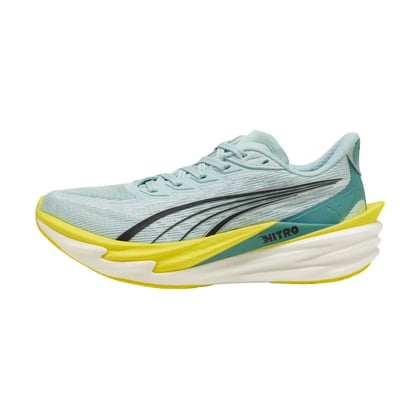

| Spec | Hyperion 3 | Deviate Nitro 4 |
|---|---|---|
| Best price now | £79 | £75 |
| 90-day low | £53 | £60 |
| 30-day average | £110.13 | £122.71 |
| RRP | £130 | £150 |
| Category | Tempo | Tempo |
| Surface | Road | Road |
| Weight | 244g | 245g |
| Drop | 11.3mm | 7mm |
| Heel stack | 36.5mm | 33.6mm |
| Forefoot stack | 25.2mm | 26.6mm |
| Carbon plated | No | Yes |
| Stability | No | No |
| Review rating | - | - |
Hyperion 3 or Deviate Nitro 4: which should you buy?
Hyperion 3
The Brooks Hyperion 3 is a lightweight speed trainer built to add a bit of zip to your faster days without asking you to buy a dedicated racer. It is a neutral road running shoe aimed at tempo runs, intervals and strides, and at 244g it is light enough to feel quick underfoot the moment you pick up the pace. There is no carbon plate here, so you will not get the springboard snap of a super shoe. What you get instead is a simple, honest tempo shoe with a firm, responsive ride and a versatile streak that lets it double as a lighter daily trainer. The 11.3mm drop is on the traditional side and rewards heel strikers. Against the plated crowd it gives up some return, but at £130 it undercuts most of them and asks for less commitment. If you liked the Brooks Hyperion 2, this is a familiar, refined update rather than a reinvention.
Deviate Nitro 4
Puma cut the Deviate Nitro 4's RRP to £150, £10 under version 3, and made it a friendlier shoe while it was at it. Reviewers agree it's the best-fitting Deviate so far: the upper has more give, and the midsole feels softer on easy runs yet still picks up when you push. Think of it as a carbon-plated daily training shoe and tempo shoe rather than a marathon racer. It sits lower than most super trainers, and on paper its 7mm drop is lower than the old model's too. What it lacks is a bit of excitement. One UK review panel liked it but felt rivals such as the Adizero EVO SL are springier, and lab testing found the heel much less lively than the forefoot. We rate it a very good all-rounder, a step behind the best in its class.
Hyperion 3 vs Deviate Nitro 4: how they score
Hyperion 3
Lightness8.5
Cushioning6.5
Flexibility7.5
Responsive8.0
Stability6.0
Grip7.0
Deviate Nitro 4
Lightness7.5
Cushioning6.5
Flexibility3.0
Responsive7.5
Stability7.5
Grip9.0
Who the Hyperion 3 and the Deviate Nitro 4 are for
Hyperion 3
Who should buy it
- Neutral runners who want one light shoe for tempo runs, intervals and strides
90D Low£53
30D Avg£110.13
RRP£130
Where to buy the Hyperion 3


- 01Start Fitness2d ago£79£130−39%Men's
- 02Start Fitness5d ago£79£130−39%Women's
- 03Run North West2d ago£79.99£130−38%Men's
- 04Run North West5d ago£79.99£130−38%Women's
- 05Runner's Need1d ago£83.89£130−35%Men's
- 06CotswoldOutdoor1d ago£83.89£130−35%Men's
- 07Brooks RunningLIVE£84£130−35%Men's
- 08RunningXpertLIVE£84£130−35%Women's
- 09RunningXpertLIVE£84£130−35%Men's
- 10Brooks Running1d ago£84£130−35%Women's
- 11CotswoldOutdoor2d ago£89.89£130−31%Women's
- 12Runner's Need6d ago£89.89£130−31%Women's
- 13Express Trainers1d ago£89.99£130−31%Men's
- 14Secret Sales3d ago£94.99£130−27%Men's
- 15Secret Sales4d ago£94.99£130−27%Women's
- 16SportsdirectLIVE£98£130−25%Women's
- 17SportsdirectLIVE£110£130−15%Men's
Live = checked in the last 24 hours. Older prices show when we last saw them.


