//

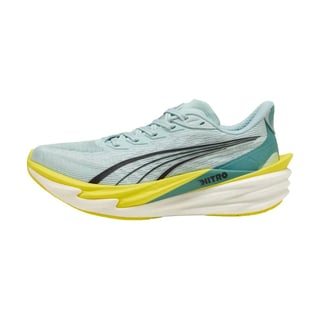
Photo shows one example colourway

Deviate Nitro 4
Tracked dailyCarbon Plated
Where to buy
Today's tracked prices


- 01Direct RunningDEALLIVE£80.42£150.00−46%
- 02365RiderLIVE£86.85£150.00−42%
- 03Hardloop1d ago£89.90£150.00−40%
- 04VeryLIVE£93.00£150.00−38%
- 05365RiderLIVE£93.54£150.00−38%
- 06Run ActiveLIVE£105.00£150.00−30%
- 07Puma1d ago£105.00£150.00−30%
- 08PumaLIVE£113.00£150.00−25%
- 09Run North WestLIVE£118.99£150.00−21%
- 10SportsdirectLIVE£119.00£150.00−21%
- 11SportsdirectLIVE£119.00£150.00−21%
- 12Start FitnessLIVE£119.90£150.00−20%
- 13AmazonLIVE£121.50£150.00−19%
- 14Run North WestLIVE£127.50£150.00−15%
- 15Sporting Feet1d ago£130.00£150.00−13%
- 16SportsShoes1d ago£134.99£150.00−10%
- 17DecathlonLIVE£139.99£150.00−7%
- 18DecathlonLIVE£139.99£150.00−7%
- 19Run ActiveLIVE£150.00
- 20VeryLIVE£150.00
- 21ASOS1d ago£150.00
Tracked daily
Price history
Expert review
Our verdict
Puma cut the Deviate Nitro 4's RRP to £150, £10 under version 3, and made it a friendlier shoe while it was at it. Reviewers agree it's the best-fitting Deviate so far: the upper has more give, and the midsole feels softer on easy runs yet still picks up when you push. Think of it as a carbon-plated daily training shoe and tempo shoe rather than a marathon racer. It sits lower than most super trainers, and on paper its 7mm drop is lower than the old model's too. What it lacks is a bit of excitement. One UK review panel liked it but felt rivals such as the Adizero EVO SL are springier, and lab testing found the heel much less lively than the forefoot. We rate it a very good all-rounder, a step behind the best in its class.
Key features
- Two-layer midsoleA softer layer on top of a firmer base, so easy miles feel kinder than in v3 while the shoe still responds when you speed up
- Carbon composite plateGives you a quick, rolling toe-off at tempo pace, at the cost of a stiff forefoot with very little bend
- Roomier engineered mesh upperHas more stretch than v3, which helps if earlier Deviates felt tight across your forefoot
- PumaGrip outsoleHolds on well on wet and icy roads, and showed very little wear in lab testing
- Gusseted tongueKeeps the tongue from sliding and works with the lacing to lock your midfoot down
Who it suits
Who should buy it
- Runners who want one plated shoe for easy days and tempo sessions
- Previous Deviate owners who found the fit too tight
- Year-round UK running, thanks to grip that copes with wet and icy roads
- Marathon trainees who prefer a lower, firmer ride to a tall bouncy one
Who should not buy it
Good to know
Extra information
Fit & sizing
Stick with your normal size. Every tester did, and one who falls between sizes went for the smaller option without any toe problems. The bigger change is width. Earlier Deviates had a reputation for running narrow, and Puma has loosened the mesh this time, so there's visibly more give across the forefoot. If the Deviate Nitro 3 pinched, this one should be easier on you. It still isn't a wide shoe, though. Lab measurements put the toe box on the narrow side, so if you need a properly roomy forefoot, try a pair on first. Lockdown is good. The gusseted tongue and lacing hold your midfoot in place, and nobody reported hot spots or rubbing.
Performance breakdown
Ride & feel
Firm, but not harsh. Fordy Runs puts it between the Adizero Boston 13, which is firmer, and Saucony's Endorphin Speed, which is softer, and that's a handy way to picture it. At tempo and progression pace the plate gives you an energetic toe-off, and reviewers found it quicker there than v3. Easy runs are comfortable without the shoe nagging you to speed up. The back half is where it's weaker: landings through the heel can feel flat, and one tester thought the roll from heel to toe was a touch slow.
Cushioning
There's enough foam for long, relaxed runs, but this isn't a max-cushion shoe and doesn't pretend to be. Reviewers say the softer top layer gives more on impact than v3, while a firmer base underneath keeps things controlled. Expect the forefoot to feel bouncier than the heel. It'll handle the long runs in a marathon block. For ultras, or if your legs want more protection late in a run, a taller super trainer makes more sense.
Stability
It's a neutral shoe with no stability aids, yet reviewers found it steady for a plated trainer. The firmer base layer helps, as does a platform that isn't especially tall, and one UK reviewer called it very stable at every pace. The slightly narrow base makes it feel nimble rather than planted, so if you overpronate and need real support, look elsewhere.
Upper & comfort
The mesh is the most improved part of the shoe. It breathes well and dries quickly after rain, and the extra stretch takes away the pinch some runners felt in earlier versions. Heel padding is modest but enough for long efforts. Durability is harder to call. Lab testing gave the toe box and heel lining poor wear scores, while Canadian Running's tester got through snow, rain and treadmill sessions without any wear issues. If you tend to wear through uppers at the toe, keep an eye on it.
Honest reviews by runners
Reviews
No reviews yet, be the first to review this shoe.
Sign in to write a review.
Common questions
FAQ
The numbers
Specifications
| Category | Tempo |
| Surface | Road |
| Drop | 7mm |
| Heel Stack | 33.6mm |
| Forefoot Stack | 26.6mm |
| Weight | 245g |
| Carbon Plated | Yes |
| Stability | No |
Keep looking