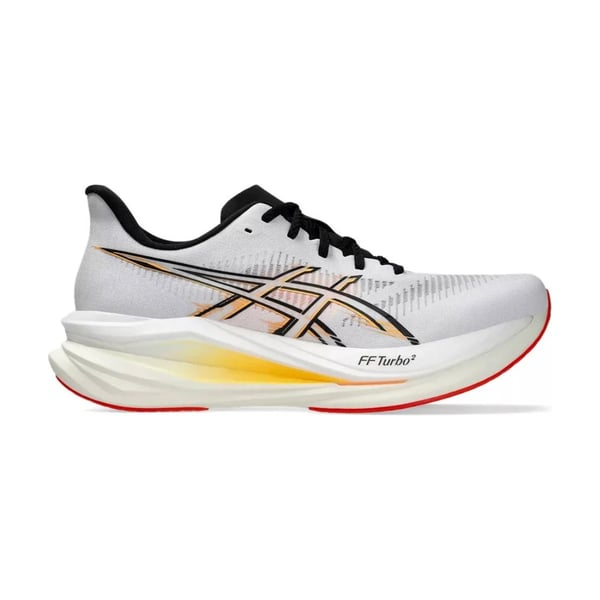
Photo shows one example colourway

Sonicblast 2
★ 90d low Tracked dailyCarbon Plated
Where to buy
Today's tracked prices


- 01HouseOfFraser1d ago£119£170−30%Men's
- 02RunningXpert1d ago£119£170−30%Women's
- 03RunningXpert1d ago£129£170−24%Men's
- 04Run North West2d ago£144.50£170−15%Men's
- 05365RiderLIVE£152.74£170−10%Women's
- 06365RiderLIVE£152.74£170−10%Men's
- 07Alpine Trek1d ago£154.80£170−9%Men's
- 08SportsdirectLIVE£169.99Women's
- 09SportsdirectLIVE£169.99Men's
- 10SportsShoes1d ago£169.99Men's
- 11About The Run1d ago£170Women's
- 12Profeet2d ago£170Men's
- 13ASOS2d ago£170Men's
Tracked daily
Price history
Expert review
Our verdict
Fordy Runs calls it a big step up from the first version, and the spec sheet backs that up. The Sonicblast 2 keeps the layout of the first version (FF Turbo Squared on top, FF Blast Max underneath, a Pebax plate between them) but the plate is now forked, and reviewers say it's noticeably lighter and bouncier than before. It's a plated super trainer for tempo sessions, marathon-pace long runs and the odd race, not a soft shoe for recovery days.
Doctors of Running graded it A-, and another review's three testers liked the ride too, though all of them found it firm at easy pace. The catch is price. At £170 RRP it sits right beside the Superblast 3, which is still the better choice if you want one shoe for easy days as well as fast ones. If most of your running is at tempo or marathon pace, the Sonicblast is the sharper of the two, and it gets easier to recommend once it drops below full price in the table.
Key features
- FF Turbo Squared top layerPuts the firmer, livelier foam right under your foot, so the shoe feels quick when you push the pace.
- FF Blast Max baseAdds a softer layer underneath the top foam, which takes some sting out of long runs on hard roads.
- Forked Pebax plateStiffens the shoe for a snappier toe-off while the split design lets your foot roll through more naturally than a single rigid plate.
- 242g listed weightKeeps it light enough for sessions and races despite the big stack.
- 8mm dropSits in a middle ground that suits most runners without asking your calves to adapt.
Who it suits
Who should buy it
- Runners who want one plated shoe for tempo runs and marathon-pace long runs
- Midfoot and forefoot strikers who will feel the livelier forefoot
- First Sonicblast owners who found it flat, since this version is much livelier
- Racers who want a plated training shoe for goal-pace sessions without wearing out their race-day pair
Good to know
Extra information
Fit & sizing
Reviewers agree it runs true to size. One UK reviewer wore their usual size and found plenty of room in the toe box, though noted the shoe is a touch narrower than the Superblast 3. If you already wear a Superblast and have a broad forefoot, that is the one comparison worth trying on before buying.
The gusseted tongue keeps the midfoot held without much lacing effort, and one tester said the heel rub some people had with the first Sonicblast is gone. Nobody reported needing a break-in period. Two small niggles: the laces are soft but don't stretch, and one reviewer would have preferred a sawtooth-style lace that grips better.
Stick with your normal size. If you sit between sizes and have wide feet, go up half rather than down.
Performance breakdown
Ride & feel
The ride is where the new version earns its keep. Reviewers describe it as bouncy and responsive, with the forefoot giving a noticeable push when you pick up the pace. One review's testers were clear that it rewards effort, though: you have to press into it to get the energy back, and at easy pace it can feel firm and flat.
How you land matters. One reviewer who lands on the midfoot and forefoot felt the forefoot spring clearly and suggested heel strikers may get less out of it. On paper that fits, since most of the liveliness sits under the front of the foot.
Cushioning
There is a lot of foam here (the stack is in the spec table) but it isn't a plush shoe. The firmer FF Turbo Squared layer sits on top, so you feel it before the softer base, and reviewers put the overall feel on the firm side of bouncy. For long runs at steady or marathon pace that firmness helps you keep moving; for a slow recovery jog the Novablast 6 will feel kinder and costs less.
Stability
For a shoe this tall it's steadier than you might expect. One UK reviewer called it surprisingly stable and put that down to the firmer top foam giving a more controlled platform, and another tester rated it more stable than the Megablast. It is still a neutral shoe with no dedicated support features, so overpronators who rely on guidance should look at a stability model instead.
Upper & comfort
Honest reviews by runners
Reviews
No reviews yet, be the first to review this shoe.
Sign in to write a review.
Common questions
FAQ
The numbers
Specifications
| Category | Super Trainer |
| Surface | Road |
| Drop | 8mm |
| Heel Stack | 46mm |
| Forefoot Stack | 38mm |
| Weight | 242g |
| Carbon Plated | Yes |
| Stability | No |
Keep looking