//
Sonicblast 2 vs Deviate Nitro 4


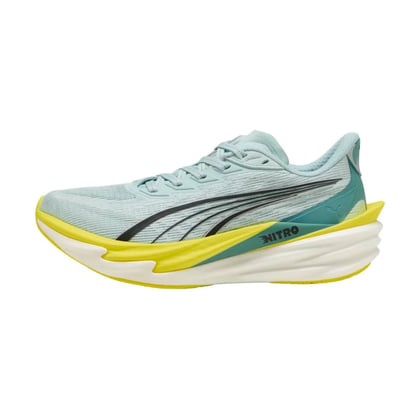

Puma Deviate Nitro 4
Best price today
£80.42£150.00−46%
at Direct Running · 27% under 30d avg
| Spec | Sonicblast 2 | Deviate Nitro 4 |
|---|---|---|
| Best price now | £162.74 | £80.42 |
| 90-day low | £140.00 | £79.05 |
| 30-day average | £171.53 | £110.90 |
| RRP | £170.00 | £150.00 |
| Category | Super Trainer | Tempo |
| Surface | Road | Road |
| Weight | 242g | 245g |
| Drop | 8mm | 7mm |
| Heel stack | 46mm | 33.6mm |
| Forefoot stack | 38mm | 26.6mm |
| Carbon plated | Yes | Yes |
| Stability | No | No |
| Review rating | - | - |
Expert review
Sonicblast 2 or Deviate Nitro 4: which should you buy?
Sonicblast 2
Fordy Runs calls it a big step up from the first version, and the spec sheet backs that up. The Sonicblast 2 keeps the layout of the first version (FF Turbo Squared on top, FF Blast Max underneath, a Pebax plate between them) but the plate is now forked, and reviewers say it's noticeably lighter and bouncier than before. It's a plated super trainer for tempo sessions, marathon-pace long runs and the odd race, not a soft shoe for recovery days.
Doctors of Running graded it A-, and another review's three testers liked the ride too, though all of them found it firm at easy pace. The catch is price. At £170 RRP it sits right beside the Superblast 3, which is still the better choice if you want one shoe for easy days as well as fast ones. If most of your running is at tempo or marathon pace, the Sonicblast is the sharper of the two, and it gets easier to recommend once it drops below full price in the table.
Deviate Nitro 4
Puma cut the Deviate Nitro 4's RRP to £150, £10 under version 3, and made it a friendlier shoe while it was at it. Reviewers agree it's the best-fitting Deviate so far: the upper has more give, and the midsole feels softer on easy runs yet still picks up when you push. Think of it as a carbon-plated daily training shoe and tempo shoe rather than a marathon racer. It sits lower than most super trainers, and on paper its 7mm drop is lower than the old model's too. What it lacks is a bit of excitement. One UK review panel liked it but felt rivals such as the Adizero EVO SL are springier, and lab testing found the heel much less lively than the forefoot. We rate it a very good all-rounder, a step behind the best in its class.
At a glance
Sonicblast 2 vs Deviate Nitro 4: how they score
Sonicblast 2
Lightness7.5
Cushioning7.0
Flexibility3.5
Responsive8.5
Stability7.5
Deviate Nitro 4
Lightness7.5
Cushioning6.5
Flexibility3.0
Responsive7.5
Stability7.5
Grip9.0
Who it suits
Who the Sonicblast 2 and the Deviate Nitro 4 are for
90D Low£140.00
30D Avg£171.53
RRP£170.00
UK prices
Where to buy the Sonicblast 2


- 01DirectRunning4d ago£162.74£170.00−4%
- 02DirectRunning5d ago£162.74£170.00−4%
- 03Alpine TrekLIVE£162.95£170.00−4%
- 04Alpine Trek5d ago£162.95£170.00−4%
- 05SportsShoesLIVE£169.99£170.00−0%
- 06HouseOfFraserLIVE£169.99£170.00−0%
- 07SportsdirectLIVE£169.99£170.00−0%
- 08SportsdirectLIVE£169.99£170.00−0%
- 09SportsShoes5d ago£169.99£170.00−0%
- 10Moti Running1d ago£170.00
- 11Rugby Heaven1d ago£170.00
- 12ASOS1d ago£170.00
- 13DerbyRunner2d ago£170.00
- 14Run North West2d ago£170.00
- 15DerbyRunner5d ago£170.00
- 16365RiderLIVE£181.45
- 17365RiderLIVE£181.45


