//
FuelCell Rebel 5 vs Deviate Nitro 4
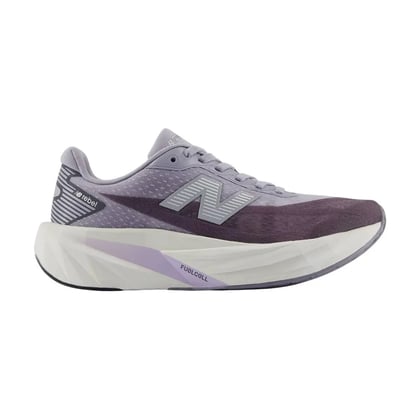

New Balance FuelCell Rebel 5
Best price today
£76.50£140.00−45%
at Snowleader.co.uk · 33% under 30d avg
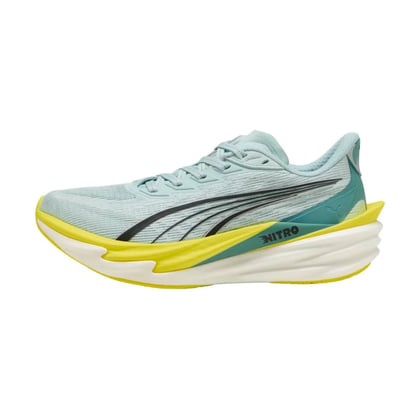

Puma Deviate Nitro 4
Best price today
£80.42£150.00−46%
at Direct Running · 28% under 30d avg
| Spec | FuelCell Rebel 5 | Deviate Nitro 4 |
|---|---|---|
| Best price now | £76.50 | £80.42 |
| 90-day low | £58.00 | £79.05 |
| 30-day average | £114.85 | £111.48 |
| RRP | £140.00 | £150.00 |
| Category | Tempo | Tempo |
| Surface | Road | Road |
| Weight | 220g | 245g |
| Drop | 6.3mm | 7mm |
| Heel stack | 33mm | 33.6mm |
| Forefoot stack | 26.7mm | 26.6mm |
| Carbon plated | No | Yes |
| Stability | No | No |
| Review rating | - | - |
Expert review
FuelCell Rebel 5 or Deviate Nitro 4: which should you buy?
FuelCell Rebel 5
The FuelCell Rebel 5 is New Balance at its most likeable: a lightweight, plateless running shoe that wants to do almost everything in your week. At 220g it is genuinely light for the stack you get, and the FuelCell midsole gives you a soft, springy pop that flatters easy miles and comes alive when you lift the pace. There is no carbon plate here, so this is not a marathon racer. Think of it as the fun, do-it-all uptempo trainer that handles easy days, strides, tempo efforts and even a parkrun without complaint. If you loved the FuelCell Rebel 4, the 5 keeps that playful character and refines the fit. For runners who want one versatile daily training shoe with a bit of race-day spirit, we rate it highly at the price.
Deviate Nitro 4
Puma cut the Deviate Nitro 4's RRP to £150, £10 under version 3, and made it a friendlier shoe while it was at it. Reviewers agree it's the best-fitting Deviate so far: the upper has more give, and the midsole feels softer on easy runs yet still picks up when you push. Think of it as a carbon-plated daily training shoe and tempo shoe rather than a marathon racer. It sits lower than most super trainers, and on paper its 7mm drop is lower than the old model's too. What it lacks is a bit of excitement. One UK review panel liked it but felt rivals such as the Adizero EVO SL are springier, and lab testing found the heel much less lively than the forefoot. We rate it a very good all-rounder, a step behind the best in its class.
At a glance
FuelCell Rebel 5 vs Deviate Nitro 4: how they score
FuelCell Rebel 5
Lightness9.0
Cushioning7.8
Flexibility8.2
Responsive7.9
Stability6.3
Grip7.5
Deviate Nitro 4
Lightness7.5
Cushioning6.5
Flexibility3.0
Responsive7.5
Stability7.5
Grip9.0
Who it suits
Who the FuelCell Rebel 5 and the Deviate Nitro 4 are for
FuelCell Rebel 5
Who should buy it
90D Low£58.00
30D Avg£114.85
RRP£140.00
UK prices
Where to buy the FuelCell Rebel 5


- 01Snowleader.co.uk3d ago£76.50£140.00−45%
- 02DecathlonLIVE£79.99£140.00−43%
- 03Run4It2d ago£82.08£140.00−41%
- 04Run ActiveLIVE£83.99£140.00−40%
- 05Run ActiveLIVE£83.99£140.00−40%
- 06SportsShoesLIVE£83.99£140.00−40%
- 07SportsShoesLIVE£83.99£140.00−40%
- 08GreavesLIVE£84.00£140.00−40%
- 09SportsdirectLIVE£86.00£140.00−39%
- 10DirectSports1d ago£87.97£140.00−37%
- 11BrandAlley UKLIVE£99.00£140.00−29%
- 12BrandAlley UK2d ago£99.00£140.00−29%
- 13365RiderLIVE£99.27£140.00−29%
- 14DecathlonLIVE£99.99£140.00−29%
- 15365RiderLIVE£104.05£140.00−26%
- 16Sigma Sports2d ago£106.00£140.00−24%
- 17Amazon1d ago£110.57£140.00−21%
- 18SportsdirectLIVE£115.00£140.00−18%
- 19Run North WestLIVE£119.00£140.00−15%
- 20Run North West1d ago£119.00£140.00−15%
- 21Moti RunningLIVE£126.00£140.00−10%
- 22Moti RunningLIVE£126.00£140.00−10%
- 23DerbyRunnerLIVE£140.00
- 24ASOSLIVE£140.00
- 25RunningBearLIVE£140.00
- 26TaskersSports2d ago£140.00
- 27ASOS5d ago£140.00


