Mach 7 vs Deviate Nitro 4
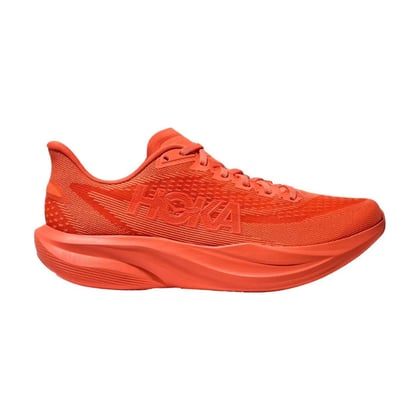

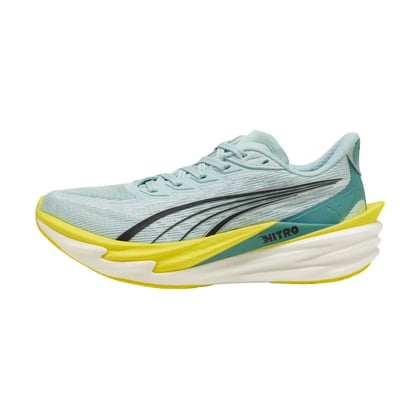

| Spec | Mach 7 | Deviate Nitro 4 |
|---|---|---|
| Best price now | £82.50 | £75 |
| 90-day low | £70 | £60 |
| 30-day average | £128.76 | £122.71 |
| RRP | £140 | £150 |
| Category | Tempo | Tempo |
| Surface | Road | Road |
| Weight | 237g | 245g |
| Drop | 5mm | 7mm |
| Heel stack | 37mm | 33.6mm |
| Forefoot stack | 32mm | 26.6mm |
| Carbon plated | No | Yes |
| Stability | No | No |
| Review rating | - | - |
Mach 7 or Deviate Nitro 4: which should you buy?
Mach 7
The Hoka Mach 7 is the brand's do-it-all tempo trainer, a lightweight road shoe that wants to cover almost everything between an easy jog and a genuine session. There is no carbon plate here and that is the point. Instead you get a supercritical EVA midsole that feels lively and quick without the aggressive, one-pace demands of a racer. With a low 5mm drop and a 37mm heel stack it sits in the sweet spot for runners who want one shoe for daily miles, tempo runs and the odd longer effort. It is a clear step on from the Mach 6, keeping the versatile, pick-up-and-go character that made the line popular. At £130 it is fairly priced for a modern lightweight trainer. We rate it as one of the smartest single-shoe buys for club runners who log steady mileage but still like to push the pace once or twice a week.
Deviate Nitro 4
Puma cut the Deviate Nitro 4's RRP to £150, £10 under version 3, and made it a friendlier shoe while it was at it. Reviewers agree it's the best-fitting Deviate so far: the upper has more give, and the midsole feels softer on easy runs yet still picks up when you push. Think of it as a carbon-plated daily training shoe and tempo shoe rather than a marathon racer. It sits lower than most super trainers, and on paper its 7mm drop is lower than the old model's too. What it lacks is a bit of excitement. One UK review panel liked it but felt rivals such as the Adizero EVO SL are springier, and lab testing found the heel much less lively than the forefoot. We rate it a very good all-rounder, a step behind the best in its class.
Mach 7 vs Deviate Nitro 4: how they score
Mach 7
Lightness8.5
Cushioning7.5
Flexibility8.0
Responsive8.2
Stability6.5
Grip7.5
Deviate Nitro 4
Lightness7.5
Cushioning6.5
Flexibility3.0
Responsive7.5
Stability7.5
Grip9.0
Who the Mach 7 and the Deviate Nitro 4 are for
Mach 7
Who should buy it
- Club runners who want one shoe for daily miles and weekly sessions
- Runners chasing a lively, connected ride without a stiff carbon plate
90D Low£70
30D Avg£128.76
RRP£140
Where to buy the Mach 7


- 01SportsdirectLIVE£82.50£140−41%Women's
- 02Adapt Outdoors5d ago£89.25£140−36%Men's
- 03Greaves1d ago£89.60£140−36%Women's
- 04The Sports EditLIVE£97.50£140−30%Women's
- 05RunningXpert3d ago£97.99£140−30%Women's
- 06Run North West3d ago£99.99£140−29%Men's
- 07365RiderLIVE£101.18£140−28%Women's
- 08365RiderLIVE£105£140−25%Men's
- 09Alpine TrekLIVE£107.76£140−23%Women's
- 10Alpine Trek1d ago£107.76£140−23%Men's
- 11CribGochOutdoor2d ago£109£140−22%Men's
- 12Moti Running1d ago£109.95£140−21%Men's
- 13RunningXpert1d ago£109.99£140−21%Men's
- 14The Vault UK3d ago£109.99£140−21%Men's
- 15HouseOfFraser1d ago£110£140−21%Men's
- 16HokaLIVE£111.99£140−20%Men's
- 17HokaLIVE£111.99£140−20%Women's
- 18Run4ItLIVE£112£140−20%Women's
- 19Northern RunnerLIVE£117.99£140−16%Women's
- 20The Vault UKLIVE£120£140−14%Women's
- 21SportsShoesLIVE£125.99£140−10%Women's
- 22SportsShoes1d ago£125.99£140−10%Men's
- 23Speedhub The Triathlon Store3d ago£135£140−4%Men's
- 24The Trainer ContainerLIVE£139£140−1%Women's
- 25Amazon2d ago£139.16£140−1%Men's
- 26Start Fitness2d ago£139.90Men's
- 27The Jog ShopLIVE£139.99Women's
- 28The Jog ShopLIVE£139.99Men's
- 29SportsdirectLIVE£140Men's
- 30Run ActiveLIVE£140Men's
- 31runningbath.co.uk1d ago£140Men's
- 32Run Active3d ago£140Women's
- 33Bog Dog3d ago£140Men's
- 34Bog Dog5d ago£140Women's
- 35Side Kicks2d ago£148Women's
Live = checked in the last 24 hours. Older prices show when we last saw them.


