//
Wave Rider 30 vs Ride 19


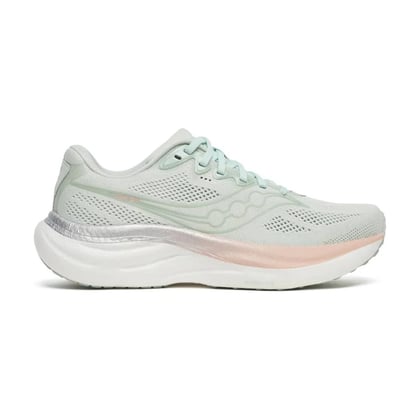

| Spec | Wave Rider 30 | Ride 19 |
|---|---|---|
| Best price now | - | £82.92 |
| 90-day low | - | £81.00 |
| 30-day average | - | £119.23 |
| RRP | £140.00 | £140.00 |
| Category | Daily | Daily |
| Surface | Road | Road |
| Weight | 266g | 255g |
| Drop | 9.1mm | 8mm |
| Heel stack | 42.8mm | 36mm |
| Forefoot stack | 33.7mm | 28mm |
| Carbon plated | No | No |
| Stability | No | No |
| Review rating | - | - |
Expert review
Wave Rider 30 or Ride 19: which should you buy?
Wave Rider 30
For years the Wave Rider was the firm, slightly old-fashioned daily trainer that Mizuno fans loved and everyone else walked past. Version 30 is built to change that. Heel stack climbs from 37.5mm on the Wave Rider 29 to 42.8mm, the foam is much softer, and weight only creeps up to 266g. Most of the reviews we read call it a big step up. Fordy Runs rates it above the latest Saucony Ride and Pegasus. RTINGS is the cooler voice: its lab found plenty of protection and stability but little energy coming back, and it scored the shoe well below the others. Both readings hold up. It's a soft, stable daily training shoe for easy miles and long runs. It copes with steadier efforts, though it won't feel quick. At £140 RRP it sits beside the Ghost and Cumulus. Loyal Rider fans who liked the old ground feel may miss it.
Ride 19
The Saucony Ride 19 is a do-everything neutral daily trainer, the kind of running shoe you reach for on most days of the week without thinking twice. It is not a max-cushion cruiser and it is not a speed shoe. It sits right in the middle, and that is the point. PWRRUN+ foam gives you a lively, slightly bouncy ride that soaks up easy miles but still has enough life to pick up the pace when you want to. With a 36mm heel stack and an 8mm drop it is protective without feeling tall or vague underfoot, and at 255g it stays light enough that it never feels like a chore. In our view this is one of the safest recommendations in the daily training shoe category: versatile, durable and honest about what it is. If you want a single shoe that covers easy runs, steady runs and the odd long run, the Ride 19 earns its place. It is a natural step on from the Ride 18.
At a glance
Wave Rider 30 vs Ride 19: how they score
Wave Rider 30
Lightness6.5
Cushioning8.5
Flexibility4.5
Responsive5.5
Stability8.5
Grip8.0
Ride 19
Lightness7.5
Cushioning8.0
Flexibility7.0
Responsive7.5
Stability6.5
Grip7.5
Who it suits
Who the Wave Rider 30 and the Ride 19 are for
RRP£140.00
90D Low£81.00
30D Avg£119.23
RRP£140.00
UK prices
Where to buy the Ride 19


- 01Run4ItLIVE£82.92£140.00−41%
- 02Run4It2d ago£82.92£140.00−41%
- 03365RiderLIVE£86.86£140.00−38%
- 04365RiderLIVE£89.30£140.00−36%
- 05Direct RunningLIVE£91.36£140.00−35%
- 06DirectRunning1d ago£97.64£140.00−30%
- 07DirectSportsLIVE£97.95£140.00−30%
- 08DecathlonLIVE£99.99£140.00−29%
- 09SportstoreLIVE£109.95£140.00−21%
- 10Amazon2d ago£109.99£140.00−21%
- 11Sporting Feet4d ago£110.00£140.00−21%
- 12SauconyLIVE£112.00£140.00−20%
- 13SportsShoes5d ago£113.39£140.00−19%
- 14SportsShoesLIVE£125.99£140.00−10%
- 15Moti RunningLIVE£126.00£140.00−10%
- 16Amazon3d ago£130.74£140.00−7%
- 17DecathlonLIVE£139.99£140.00−0%
- 18Run ActiveLIVE£140.00
- 19Run ActiveLIVE£140.00
- 20Chivers Running1d ago£140.00
- 21AchillesHeel3d ago£140.00
- 22Up and Running3d ago£140.00
- 23Rugby Heaven4d ago£140.00
- 24About The Run6d ago£140.00