FuelCell Rebel 5 vs Kinvara 15
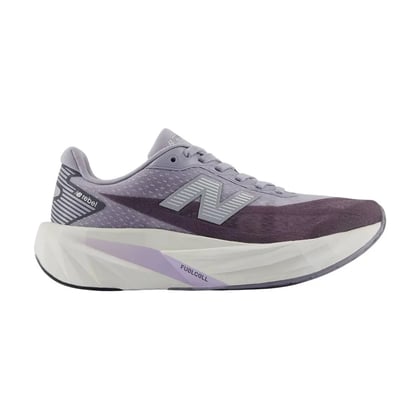

New Balance FuelCell Rebel 5
Best price today
£62.99£140−55%
at SportsShoes90D LOW · 42% under 30d avg


| Spec | FuelCell Rebel 5 | Kinvara 15 |
|---|---|---|
| Best price now | £62.99 | £64.99 |
| 90-day low | £62.99 | £57.28 |
| 30-day average | £107.74 | £117.14 |
| RRP | £140 | £120 |
| Category | Tempo | Lightweight |
| Surface | Road | Road |
| Weight | 220g | 200g |
| Drop | 6.3mm | 4mm |
| Heel stack | 33mm | 30mm |
| Forefoot stack | 26.7mm | 26mm |
| Carbon plated | No | No |
| Stability | No | No |
| Review rating | - | - |
FuelCell Rebel 5 or Kinvara 15: which should you buy?
FuelCell Rebel 5
The FuelCell Rebel 5 is New Balance at its most likeable: a lightweight, plateless running shoe that wants to do almost everything in your week. At 220g it is genuinely light for the stack you get, and the FuelCell midsole gives you a soft, springy pop that flatters easy miles and comes alive when you lift the pace. There is no carbon plate here, so this is not a marathon racer. Think of it as the fun, do-it-all uptempo trainer that handles easy days, strides, tempo efforts and even a parkrun without complaint. If you loved the FuelCell Rebel 4, the 5 keeps that playful character and refines the fit. For runners who want one versatile daily training shoe with a bit of race-day spirit, we rate it highly at the price.
Kinvara 15
The Kinvara 15 is Saucony's lightweight, low-drop daily trainer for runners who like to feel the ground and pick up the pace. At 200g with a 4mm drop, this is a running shoe built around a natural, quick footstrike rather than plush isolation, and that gives it a versatility a lot of chunkier trainers lack. Easy miles, strides, a parkrun, a bit of tempo work, the Kinvara handles all of it without ceremony. It is not a max-cushion shoe and it is not a carbon racer, so do not buy it expecting either. What you get instead is an honest, unfussy lightweight trainer that keeps you connected to your stride. We rate it as a great second shoe or a one-and-done option for lighter, efficient runners. The successor Kinvara 16 refines it further, but the 15 is often the smarter buy on discount.
FuelCell Rebel 5 vs Kinvara 15: how they score
FuelCell Rebel 5
Lightness9.0
Cushioning7.8
Flexibility8.2
Responsive7.9
Stability6.3
Grip7.5
Kinvara 15
Lightness8.5
Cushioning6.5
Flexibility8.0
Responsive7.5
Stability6.0
Grip7.0
Who the FuelCell Rebel 5 and the Kinvara 15 are for
FuelCell Rebel 5
Who should buy it
- Neutral runners who want one versatile trainer for most of their week
- Runners who like a soft, bouncy ride for easy and uptempo miles
90D Low£62.99
30D Avg£107.74
RRP£140
Where to buy the FuelCell Rebel 5


- 01SportsShoes1d ago£62.99£140−55%Women's
- 02Secret Sales5d ago£70£140−50%Women's
- 03DecathlonLIVE£79.99£140−43%Men's
- 04RunningXpert2d ago£82£140−41%Men's
- 05SportsdirectLIVE£86£140−39%Women's
- 06365RiderLIVE£88.77£140−37%Men's
- 07365RiderLIVE£91.68£140−35%Women's
- 08Moti Running5d ago£98.96£140−29%Women's
- 09Moti Running5d ago£98.96£140−29%Men's
- 10Hardloop2d ago£98.98£140−29%Men's
- 11ASOS1d ago£99.99£140−29%Women's
- 12SportsdirectLIVE£100£140−29%Men's
- 13RunningXpert1d ago£100£140−29%Women's
- 14Alpine Trek2d ago£105.45£140−25%Men's
- 15Alpine Trek6d ago£109.56£140−22%Women's
- 16DecathlonLIVE£109.99£140−21%Women's
- 17Progress Running Club2d ago£110£140−21%Women's
- 18Snowleader.co.uk5d ago£111.50£140−20%Women's
- 19DerbyRunner2d ago£111.99£140−20%Women's
- 20Profeet4d ago£112£140−20%Men's
- 21Run North West5d ago£119.99£140−14%Women's
- 22DirectSports1d ago£125.99£140−10%Women's
- 23SportsShoes2d ago£125.99£140−10%Men's
- 24Sigma Sports2d ago£126£140−10%Women's
- 25Sigma Sports2d ago£126£140−10%Men's
- 26Amazon1d ago£129£140−8%Women's
- 27ASOS2d ago£129.99£140−7%Men's
- 28HouseOfFraser5d ago£139.99Women's
- 29Run Active1d ago£140Men's
- 30Run Active2d ago£140Women's
- 31Next6d ago£140Women's
- 32Hardloop5d ago£143.90Women's
- 33Side Kicks3d ago£167Check gender
Live = checked in the last 24 hours. Older prices show when we last saw them.


