SC Elite 4 vs Deviate Nitro Elite 4


Puma Deviate Nitro Elite 4
Best price today
£125.99£215−41%
at SportsShoes · 28% under 30d avg
| Spec | SC Elite 4 | Deviate Nitro Elite 4 |
|---|---|---|
| Best price now | £129.99 | £125.99 |
| 90-day low | £126 | £117.87 |
| 30-day average | £179.39 | £174.33 |
| RRP | £280 | £215 |
| Category | Race | Race |
| Surface | Road | Road |
| Weight | 237g | 170g |
| Drop | 4mm | 8mm |
| Heel stack | 40mm | 38mm |
| Forefoot stack | 36mm | 30mm |
| Carbon plated | Yes | Yes |
| Stability | No | No |
| Review rating | - | - |
SC Elite 4 or Deviate Nitro Elite 4: which should you buy?
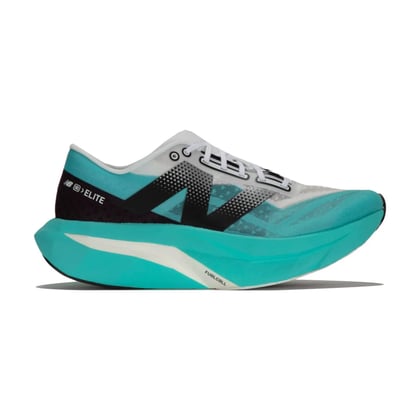
SC Elite 4
The New Balance SC Elite 4 is a full-fat carbon marathon racer, and it wears that brief proudly. This is a tall, soft, aggressively cushioned racing shoe built to keep your legs alive deep into the back half of a marathon rather than to feel featherlight off the line. At 237g it is on the heavier side for a carbon racing shoe, so it does not have the darty, snappy feel of a lighter racer like the Nike Vaporfly 4. What you get instead is a big, forgiving platform and a rolling, momentum-holding ride once you are up to pace. With a 4mm drop and a full carbon plate it sits firmly in the marathon-and-half super-shoe class. At £280 RRP it is a premium buy, but for a runner who wants cushioning and protection over knife-edge sharpness, it is one of the more comfortable ways to race a long road event.
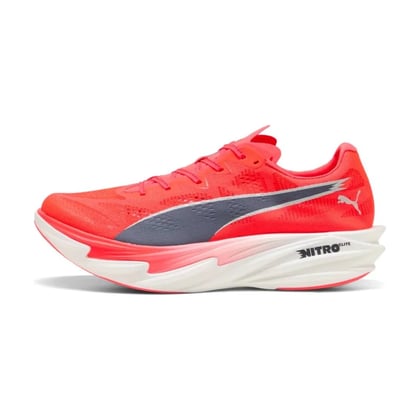
Deviate Nitro Elite 4
At 170g, the Deviate Nitro Elite 4 now weighs the same as Puma's more aggressive Fast-R Nitro Elite 3, and that shifts who it's for. It keeps the steadier, heel-strike-friendly shape the Elite line has always had, but most reviewers found the midsole livelier than the Elite 3's and the outsole better too. One long-term tester said it was the first Deviate Elite they'd enjoyed since the original, and Believe in the Run went further, calling it Puma's best race shoe so far. We see it as a carbon racing shoe for 10K and half marathon, and a marathon shoe for runners who find the Fast-R too twitchy. The catches are a narrow midfoot, thin forefoot rubber and early wear reports from a couple of testers. At £215 RRP it's priced alongside the big names, so check the price table before paying full whack.
SC Elite 4 vs Deviate Nitro Elite 4: how they score
SC Elite 4
Lightness6.5
Cushioning9.5
Flexibility5.5
Responsive8.0
Stability6.0
Grip7.5
Deviate Nitro Elite 4
Lightness9.2
Cushioning7.0
Flexibility3.5
Responsive8.8
Stability7.0
Grip7.5
Who the SC Elite 4 and the Deviate Nitro Elite 4 are for
SC Elite 4
Who should buy it
- Marathon runners who want maximum cushioning and leg protection over raw speed
90D Low£126
30D Avg£179.39
RRP£280
Where to buy the SC Elite 4


- 01SportsShoesLIVE£129.99£280−54%Women's
- 02SportsShoes1d ago£129.99£280−54%Men's
- 03Run ActiveLIVE£130£280−54%Women's
- 04SOLE5d ago£137£280−51%Check gender
- 05Runner's Need1d ago£155.89£280−44%Women's
- 06Side KicksLIVE£193£280−31%Men's
- 07HouseOfFraser5d ago£214.99£280−23%Men's
- 08Lovell5d ago£214.99£280−23%Men's
- 09Side KicksLIVE£226£280−19%Women's
- 10New BalanceLIVE£260£280−7%Women's
- 11Run Active4d ago£260£280−7%Men's
Live = checked in the last 24 hours. Older prices show when we last saw them.


