//
Winflo 12 vs Velocity Nitro 5


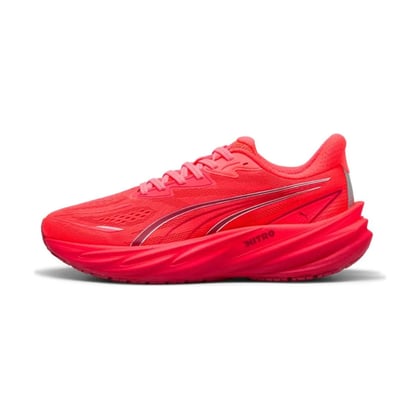

Puma Velocity Nitro 5
Best price today
£72.37£110.00−34%
at Direct Running · 28% under 30d avg
| Spec | Winflo 12 | Velocity Nitro 5 |
|---|---|---|
| Best price now | £68.77 | £72.37 |
| 90-day low | £68.77 | £70.28 |
| 30-day average | £79.23 | £99.92 |
| RRP | £99.99 | £110.00 |
| Category | Daily | Daily |
| Surface | Road | Road |
| Weight | 305g | 230g |
| Drop | 10.6mm | 8mm |
| Heel stack | 40.9mm | 35mm |
| Forefoot stack | 30.3mm | 27mm |
| Carbon plated | No | No |
| Stability | No | No |
| Review rating | - | - |
Expert review
Winflo 12 or Velocity Nitro 5: which should you buy?
Winflo 12
At £99.99 the Winflo 12 is one of the cheapest ways into a high-stack Nike running shoe, and it's a very different shoe from the Winflo 11. Nike piled on foam, taking the heel to 40.9mm and the forefoot to 30.3mm with a 10.6mm drop. The result is a soft, stable daily training shoe for easy miles and long runs. It isn't built for speed, and at 305g it's heavy, which is the complaint that keeps coming up. RunRepeat rated it highly, mostly for how much protection you get for the money. Fordy Runs was cooler, calling it a decent budget shoe but pointing serious runners to the Vomero 18, which costs £45 more at RRP. We sit somewhere between the two. If your budget stops around £100 and most of your running is steady, it makes a lot of sense. If you want a shoe that can also handle tempo work, pick something lighter.
Velocity Nitro 5
At £110, the Velocity Nitro 5 is one of the cheaper daily trainers from a major brand, and that price is a big part of its appeal. It's a neutral running shoe for everyday miles: easy runs, steady efforts and the odd pickup in pace. Puma has dropped the heel-to-toe drop to 8mm from the 9.7mm of the Velocity Nitro 4 and added a little stack, but reviewers mostly describe it as a modest update rather than a new shoe.
Grip and stability are where testers agree. The PumaGrip outsole holds on wet roads and towpaths better than most trainers, and the ride stays planted. Cushioning is where they split. One reviewer found the Nitrofoam soft and forgiving, others felt the forefoot went thin on longer runs. If you want more bounce for faster days, Puma's Deviate Pure Nitro costs £40 more. As a dependable, grippy daily training shoe at a fair price, we'd call it a good buy, not a class leader.
At a glance
Winflo 12 vs Velocity Nitro 5: how they score
Winflo 12
Lightness4.5
Cushioning7.8
Responsive5.5
Stability8.2
Grip7.5
Velocity Nitro 5
Lightness7.5
Cushioning6.3
Flexibility7.5
Responsive6.0
Stability8.2
Grip9.0
Who it suits
Who the Winflo 12 and the Velocity Nitro 5 are for
90D Low£68.77
30D Avg£79.23
RRP£99.99
UK prices
Where to buy the Winflo 12


- 01Sportsdirect1d ago£68.77£99.99−31%
- 02NikeLIVE£69.99£99.99−30%
- 03Direct RunningLIVE£70.65£99.99−29%
- 04Direct RunningLIVE£72.15£99.99−28%
- 05HouseOfFraser1d ago£73.00£99.99−27%
- 06Foot LockerLIVE£94.99£99.99−5%
- 07Go OutdoorsLIVE£100.00
- 08JD SportsLIVE£100.00


