//
Deviate Nitro 3 vs Deviate Nitro 4
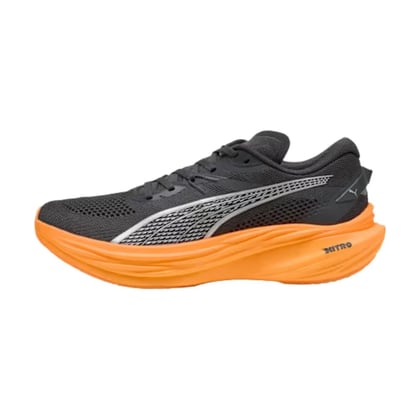

Puma Deviate Nitro 3
Best price today
£56.00£160.00−65%
at Sportsdirect90D LOW · 38% under 30d avg
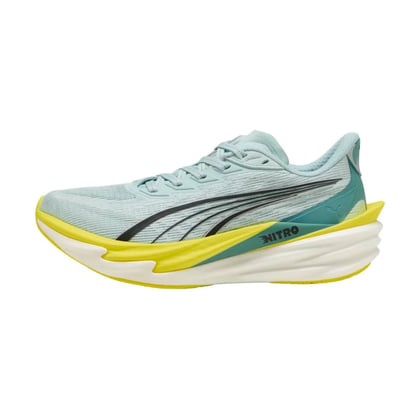
Puma Deviate Nitro 4
Best price today
£80.42£150.00−46%
at Direct Running · 27% under 30d avg
| Spec | Deviate Nitro 3 | Deviate Nitro 4 |
|---|---|---|
| Best price now | £56.00 | £80.42 |
| 90-day low | £69.99 | £79.05 |
| 30-day average | £90.57 | £110.90 |
| RRP | £160.00 | £150.00 |
| Category | Tempo | Tempo |
| Surface | Road | Road |
| Weight | 250g | 245g |
| Drop | 10mm | 7mm |
| Heel stack | 39mm | 33.6mm |
| Forefoot stack | 29mm | 26.6mm |
| Carbon plated | Yes | Yes |
| Stability | No | No |
| Review rating | 5.0 (1) | - |
Expert review
Deviate Nitro 3 or Deviate Nitro 4: which should you buy?
Deviate Nitro 3
The Puma Deviate Nitro 3 is a carbon-plated do-it-all running shoe: enough pop to handle tempo work and race day, enough cushioning and rubber underfoot to survive your everyday miles. That dual-purpose brief is what sets it apart from a pure racer. Think of it as one shoe for the runner who wants a single versatile trainer rather than a rotation. With a 10mm drop and a firm-but-lively ride, it rewards you when you get on your toes and press the pace, while staying stable enough for steady runs. At 250g it is not the lightest plated shoe out there, and you notice that on the fastest reps, so treat it as a workhorse tempo and long-run trainer rather than a featherweight 5k weapon. For the £160 RRP you get real durability and a genuinely versatile ride. If you want one carbon shoe that does a bit of everything, it earns its place.
Deviate Nitro 4
Puma cut the Deviate Nitro 4's RRP to £150, £10 under version 3, and made it a friendlier shoe while it was at it. Reviewers agree it's the best-fitting Deviate so far: the upper has more give, and the midsole feels softer on easy runs yet still picks up when you push. Think of it as a carbon-plated daily training shoe and tempo shoe rather than a marathon racer. It sits lower than most super trainers, and on paper its 7mm drop is lower than the old model's too. What it lacks is a bit of excitement. One UK review panel liked it but felt rivals such as the Adizero EVO SL are springier, and lab testing found the heel much less lively than the forefoot. We rate it a very good all-rounder, a step behind the best in its class.
At a glance
Deviate Nitro 3 vs Deviate Nitro 4: how they score
Deviate Nitro 3
Lightness6.5
Cushioning7.5
Flexibility6.0
Responsive8.5
Stability7.5
Grip8.0
Deviate Nitro 4
Lightness7.5
Cushioning6.5
Flexibility3.0
Responsive7.5
Stability7.5
Grip9.0
Who it suits
Who the Deviate Nitro 3 and the Deviate Nitro 4 are for
Deviate Nitro 3
Who should buy it
90D Low£69.99
30D Avg£90.57
RRP£160.00
UK prices
Where to buy the Deviate Nitro 3


- 01SportsdirectLIVE£56.00£160.00−65%
- 02Sportsdirect1d ago£75.00£160.00−53%
- 03HouseOfFraser3d ago£78.50£160.00−51%
- 04365RiderLIVE£79.21£160.00−50%
- 05Direct RunningLIVE£87.36£160.00−45%
- 06Runner's NeedLIVE£88.89£160.00−44%
- 07Start FitnessLIVE£89.00£160.00−44%
- 08Start FitnessLIVE£99.00£160.00−38%
- 09Run North WestLIVE£99.99£160.00−38%
- 10Sporting Feet1d ago£115.00£160.00−28%


