//
Guide 19 vs Hurricane 25
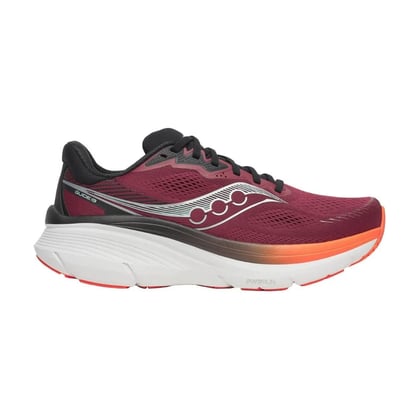

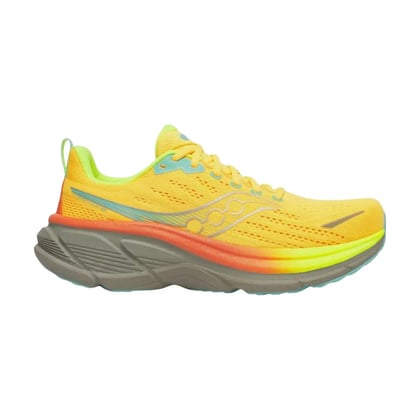
| Spec | Guide 19 | Hurricane 25 |
|---|---|---|
| Best price now | £91.00 | £90.00 |
| 90-day low | £80.00 | £83.84 |
| 30-day average | £116.93 | £114.00 |
| RRP | £150.00 | £160.00 |
| Category | Stability | Stability |
| Surface | Road | Road |
| Weight | 275g | 283g |
| Drop | 6mm | 6mm |
| Heel stack | 35mm | 38mm |
| Forefoot stack | 29mm | 32mm |
| Carbon plated | No | No |
| Stability | No | No |
| Review rating | — | — |
Expert review
Guide 19 or Hurricane 25: which should you buy?
Guide 19
The Saucony Guide 19 is a supportive daily training shoe built for runners who want gentle stability without a clunky, over-corrected ride. It sits in the classic stability daily trainer bracket: the shoe you reach for on easy runs, steady miles and long slow distance when your form starts to soften. Instead of a rigid medial post, the Guide leans on a centre-path guidance frame that keeps your foot tracking straight and only nudges you back when you drift. With a 35mm heel, 6mm drop and a 275g weight, this is a cushioned, planted running shoe rather than a light and lively one. We rate it as one of the safer picks for mild overpronators and neutral runners who simply like a stable, dependable platform. If you want a everyday mile-eater that keeps your legs honest over distance, the Guide 19 earns its place. Just do not expect it to feel fast.
Hurricane 25
The Hurricane 25 is Saucony's max-cushion stability running shoe, and this generation is the one where it finally feels like a premium daily trainer rather than a heavy-duty support boot. It pairs a tall 38mm heel stack with structured guidance, so you get plush, protected miles with a hand on the tiller when your form goes soft late in a run. At 283g it is not light, and it never pretends to be a tempo shoe. What it does brilliantly is soak up easy and long runs when you want support without the old-school firmness. Think of it as the supportive cousin of the neutral Triumph 24: same cushioned, everyday brief, with added stability for runners whose ankles roll in. If you overpronate and log high weekly mileage, this is one of the most comfortable supported daily trainers on the market. Runners who want a firm, corrective post will find it gentler than they expect, and that is the point.
At a glance
Guide 19 vs Hurricane 25: how they score
Guide 19
Lightness5.5
Cushioning7.5
Flexibility6.0
Responsive5.5
Stability8.5
Grip7.0
Hurricane 25
Lightness5.5
Cushioning9.2
Flexibility6.0
Responsive5.5
Stability8.5
Grip7.5
Who it suits
Who the Guide 19 and the Hurricane 25 are for
90D Low£80.00
30D Avg£116.93
RRP£150.00
UK prices
Where to buy the Guide 19


- 01Profeet2d ago£91.00£150.00−39%
- 02Direct RunningLIVE£91.36£150.00−39%
- 03Runner's Need2d ago£94.89£150.00−37%
- 04365RiderLIVE£96.94£150.00−35%
- 05BrandAlley UKLIVE£99.00£150.00−34%
- 06365RiderLIVE£99.27£150.00−34%
- 07Sportsdirect6d ago£110.00£150.00−27%
- 08DirectRunning2d ago£111.95£150.00−25%
- 09SportsShoesLIVE£113.39£150.00−24%
- 10Start FitnessLIVE£122.95£150.00−18%
- 11J's CyclesLIVE£124.99£150.00−17%
- 12The Jog ShopLIVE£125.00£150.00−17%
- 13DecathlonLIVE£129.99£150.00−13%
- 14AmazonLIVE£136.91£150.00−9%
- 15CotswoldOutdoorLIVE£139.95£150.00−7%
- 16DecathlonLIVE£139.99£150.00−7%
- 17GreavesLIVE£140.00£150.00−7%
- 18Run ActiveLIVE£140.00£150.00−7%
- 19Run ActiveLIVE£140.00£150.00−7%
- 20RunningBearLIVE£140.00£150.00−7%
- 21Kinisi Run HubLIVE£140.00£150.00−7%
- 22Progress Running ClubLIVE£140.00£150.00−7%
- 23Saucony1d ago£140.00£150.00−7%
- 24RunAndBecome6d ago£140.00£150.00−7%
- 25About The Run6d ago£140.00£150.00−7%
- 26Sporting Feet6d ago£140.00£150.00−7%


