Launch 12 vs Kinvara 15
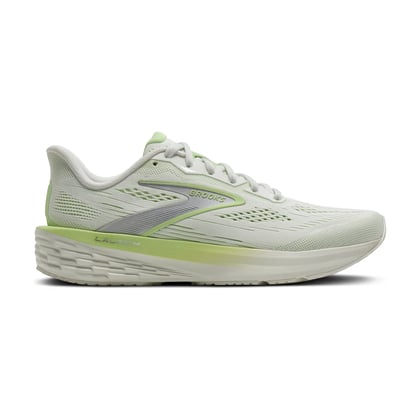


| Spec | Launch 12 | Kinvara 15 |
|---|---|---|
| Best price now | £75 | £64.99 |
| 90-day low | £75 | £57.28 |
| 30-day average | £100.92 | £117.14 |
| RRP | £110 | £120 |
| Category | Lightweight | Lightweight |
| Surface | Road | Road |
| Weight | 244g | 200g |
| Drop | 8.9mm | 4mm |
| Heel stack | 33.4mm | 30mm |
| Forefoot stack | 24.5mm | 26mm |
| Carbon plated | No | No |
| Stability | No | No |
| Review rating | - | - |
Launch 12 or Kinvara 15: which should you buy?
Launch 12
The Brooks Launch 12 is the honest, no-frills daily running shoe in the range, and at £100 it is one of the easier trainers to justify. This is a neutral road shoe built for everyday miles rather than race day. There is no carbon plate and no fancy super foam, just a springy, no-nonsense ride that suits easy runs, steady miles and the occasional pick-up in pace. At 244g it is not a genuine featherweight despite the Launch name, but the 8.9mm drop and traditional geometry feel familiar and secure underfoot. We rate it as a dependable first pair or a simple workhorse to rack up mileage in without babying an expensive racer. If you want plush max-cushion comfort or marathon-day pop, look elsewhere. If you want a straightforward, affordable trainer that just gets on with the job, the Launch 12 delivers. The Brooks Ghost 17 sits one step up for more cushioning.
Kinvara 15
The Kinvara 15 is Saucony's lightweight, low-drop daily trainer for runners who like to feel the ground and pick up the pace. At 200g with a 4mm drop, this is a running shoe built around a natural, quick footstrike rather than plush isolation, and that gives it a versatility a lot of chunkier trainers lack. Easy miles, strides, a parkrun, a bit of tempo work, the Kinvara handles all of it without ceremony. It is not a max-cushion shoe and it is not a carbon racer, so do not buy it expecting either. What you get instead is an honest, unfussy lightweight trainer that keeps you connected to your stride. We rate it as a great second shoe or a one-and-done option for lighter, efficient runners. The successor Kinvara 16 refines it further, but the 15 is often the smarter buy on discount.
Launch 12 vs Kinvara 15: how they score
Launch 12
Lightness6.5
Cushioning6.5
Flexibility7.0
Responsive7.5
Stability6.5
Grip7.0
Kinvara 15
Lightness8.5
Cushioning6.5
Flexibility8.0
Responsive7.5
Stability6.0
Grip7.0
Who the Launch 12 and the Kinvara 15 are for
Launch 12
Who should buy it
- New runners who want a dependable, affordable first road shoe
90D Low£75
30D Avg£100.92
RRP£110
Where to buy the Launch 12


- 01RunningBear1d ago£75£110−32%Men's
- 02RunningBear5d ago£75£110−32%Women's
- 03Start Fitness1d ago£77£110−30%Women's
- 04Northern Runner5d ago£93.42£110−15%Women's
- 05Amazon5d ago£105.82£110−4%Men's
- 06Sporting Feet1d ago£110Women's
- 07Run Active1d ago£110Women's
- 08Sutton Runner1d ago£110Women's
- 09Sporting Feet1d ago£110Men's
- 10Run Active3d ago£110Men's
- 11Brooks Running3d ago£110Men's
- 12Brooks Running5d ago£110Women's
- 13Amazon5d ago£113.80Women's
Live = checked in the last 24 hours. Older prices show when we last saw them.


