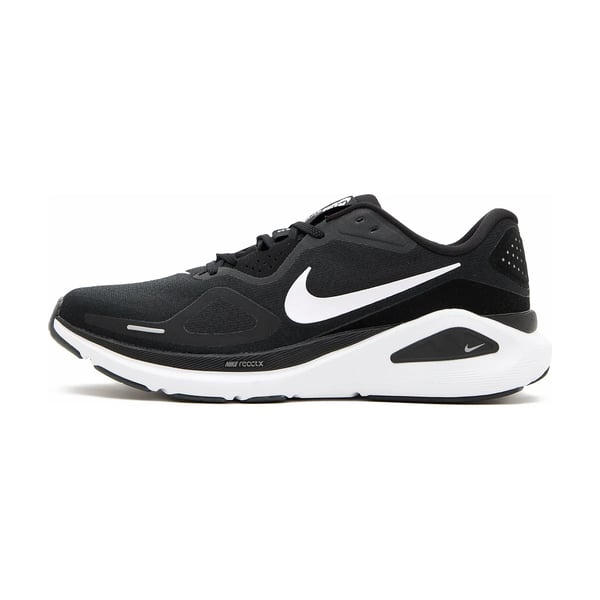
Photo shows one example colourway

Structure 26
Today's tracked prices

- 01The Sports EditLIVE£129.50£130.00−0%
Prices and sizes can change, so always check the latest availability at the retailer. Some links earn us a commission at no extra cost to you.
Price history
Our verdict
The Nike Structure 26 is a steady, no-drama stability running shoe built for everyday miles rather than fireworks. It is a support daily trainer aimed at runners who want gentle guidance underfoot without a heavy-handed medial post. At 298g it is a substantial shoe, and that weight tells you what it is for: long, easy, repeatable training runs where comfort and a planted feel matter more than speed. The 10mm drop and 36.1mm heel stack give you a familiar, protective ride that suits heel strikers well. It is a sensible step on from the Structure 25, keeping the supportive character while smoothing out the ride. We rate it as a dependable workhorse: not exciting, but exactly the kind of stability daily trainer you reach for when you just want to clock the miles and stay comfortable. At £130 RRP it sits in the mainstream support bracket and competes squarely with the established names.
Key features
- Supportive midsole geometryGuides mild overpronators in a straight line without a harsh medial post digging into your arch
- Wide, planted baseKeeps you stable and centred on the platform, so longer runs feel secure underfoot
- 36.1mm heel stack with 10mm dropProtects your legs on hard pavement and suits heel strikers and long-run comfort
- Secure midfoot and heel lockdownHolds your foot firmly so nothing shifts as you fatigue late in a run
- Durable structured upperStands up to high mileage and keeps its hold run after run
Who it suits
Who should buy it
- Mild to moderate overpronators who want guidance without a harsh post
- Heel strikers who like a 10mm drop and a protective stack
- Runners logging steady, easy daily miles and long runs
- Anyone wanting a dependable, hard-wearing support trainer at a fair price
Who should not buy it
- You want a light, fast shoe for tempo runs or racing
- You prefer soft, plush cushioning over a firm, planted feel
- You have wide feet and need a roomy forefoot in standard width
- You are a severe overpronator who relies on a firm medial post
Best uses
Extra information
Fit & sizing
The Structure 26 fits true to size for most runners, so order your usual Nike length. The midfoot lockdown is secure and the heel hold is firm, which is what you want from a stability shoe, your foot stays planted and centred over the platform. The toe box is on the medium side rather than generous. If you have a wider forefoot or like to splay your toes on longer runs, it can feel a touch snug, and Nike's wide fitting is worth seeking out if that is you. The upper holds the foot without hot spots once it beds in. For half marathon and longer efforts where feet swell, runners between sizes may prefer to size up a half. If you want a roomier, more accommodating fit in the same support class, the Asics GT-2000 14 is a little more forgiving across the forefoot.
Performance breakdown
Ride & feel
This is a smooth, controlled ride rather than a bouncy one. The Structure 26 rolls you through the gait cycle in a predictable, reassuring way, with enough cushioning to take the sting out of pavement without feeling soft or vague. At easy and steady paces it is in its element, planted, stable and consistent mile after mile. Push the pace and the 298g weight becomes noticeable, the shoe does not have the snap or turnover of a lighter trainer and it is not trying to. Hold it to comfortable running and it just gets on with the job. The overall character is dependable and undramatic, which is exactly what a lot of runners want from their highest-mileage shoe.
Cushioning
Cushioning is firm-to-medium and protective rather than plush. The 36.1mm heel and 26mm forefoot give you a solid layer of foam underfoot that shields your legs on hard surfaces, but it leans towards a supportive, grounded feel instead of a soft, sink-in one. That firmness is deliberate, it keeps the platform stable and stops the shoe wallowing under heavier runners. Over long runs it holds up well and does not bottom out, though if you love a soft, cushioned landing you may find it a little flat. For most daily training it strikes a sensible balance between protection and control.
Stability
Stability is the whole point of this shoe, and it delivers it in a modern, non-intrusive way. Rather than a hard medial post jammed under the arch, the Structure 26 uses a supportive midsole geometry and a wide, planted base to keep your foot tracking straight. The result is guidance that mild overpronators will appreciate without the shoe feeling corrective or stiff under the inside edge. It is a good fit for runners who have been told they need support but do not want to feel pushed around. Severe overpronators who rely on a firm post may want something more aggressively built, but for mild to moderate needs this hits the mark.
Upper & comfort
The upper is comfortable and built for the long haul. The fit is secure through the midfoot and heel, with padding around the collar and tongue that holds without pinching. Breathability is reasonable for a structured daily trainer, it is not the airiest mesh out there but it copes fine in UK conditions and on most runs you will not think about it. There are no obvious hot spots once the shoe is broken in, and the lockdown stays consistent as you fatigue. It feels like a shoe designed to be worn often and reliably, which is exactly what its intended runner is after.
Reviews
No reviews yet, be the first to review this shoe.
Sign in to write a review.
FAQ
Specifications
| Category | Stability |
| Surface | Road |
| Drop | 10.1mm |
| Heel Stack | 36.1mm |
| Forefoot Stack | 26mm |
| Weight | 298g |
| Carbon Plated | No |
| Stability | Yes |