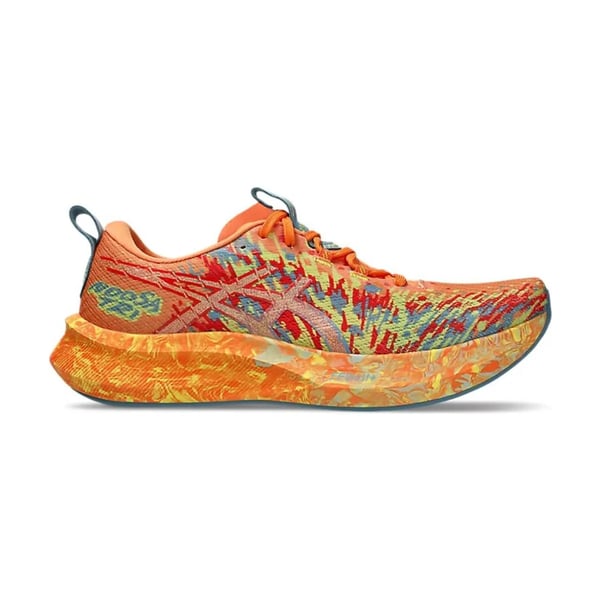
Photo shows one example colourway

Noosa Tri 16
Today's tracked prices

- 01DirectRunning5d ago£128.48£140.00−8%
Prices and sizes can change, so always check the latest availability at the retailer. Some links earn us a commission at no extra cost to you.
Price history
Our verdict
The Noosa Tri 16 is Asics at its most playful: a light, lively tempo running shoe with triathlon roots and a deliberately loud look. At 215g with a low 5mm drop, it sits in that sweet spot between a daily trainer and a racer, the kind of shoe you reach for when an easy run turns into a fartlek and you want your feet to feel quick. There is no carbon plate here, so do not expect supershoe propulsion. What you get instead is honest, connected speed: a firm, responsive ride that rewards a forefoot or midfoot strike and turns over fast. The tri heritage shows in details built for racking transitions and shrugging off water, which also make it a genuinely fun stripped-back trainer. We rate it as a speed-day shoe for runners who already have a cushioned daily trainer and want something snappier for tempo work, strides and shorter races. It is not a do-it-all shoe, and it is not trying to be.
Key features
- Light 215g buildKeeps your feet feeling quick and lets you turn the legs over without the shoe dragging on tempo efforts and strides
- Low 5mm dropSits you closer to the ground for a connected, stable feel that encourages a snappy forefoot or midfoot strike
- Firm, responsive rideReturns energy crisply when you push the pace instead of soaking it up like a soft daily trainer
- Triathlon-ready upperIs thin, breathable and quick-drying, so you can pull it on fast in transition or race it sockless on warm days
- Grippy road and track outsoleHolds confidently through fast corners and damp roads so you can trust your footing at speed
- Bold, unmistakable looksStand out on the start line if you like a shoe with personality rather than another stealth black trainer
Who it suits
Who should buy it
- Runners who want a light, snappy shoe for tempo runs, threshold sessions and strides
- Triathletes who need a quick-drying shoe that is easy to pull on in transition
- Neutral runners who already own a cushioned daily trainer and want a faster second shoe
- Forefoot and midfoot strikers who enjoy a firm, connected ground feel
- Anyone racing 5k to 10k who prefers ground feel over a tall plated stack
Who should not buy it
- You want one cushioned shoe to handle every run including long slow miles
- You are a heavier runner or hard heel-striker who needs more underfoot protection
- You need stability features to manage overpronation
- You have wide or high-volume feet that struggle in a snug performance last
- You are chasing a marathon PB and want carbon-plated propulsion
Best uses
Extra information
Fit & sizing
The Noosa Tri 16 fits true to size for most runners, so order your usual Asics. It is built around a snug, performance-oriented last with a secure midfoot and a heel that locks in well, exactly what you want when you are pushing the pace and do not want any internal slip. The toe box is moderate: there is enough room to splay on faster efforts, but this is a narrow-to-standard fit rather than a roomy one, and runners with wide feet or those who like to wear socks of varying thickness may find it close. The upper is thin and breathable with very little structure, a nod to the shoe's triathlon DNA where you might pull it on with bare, wet feet in transition. If you are between sizes or plan to wear it sockless, we would not size up, but those with high-volume feet could consider a half size. If you prefer a touch more room up front, the Saucony Kinvara 16 runs a little more forgiving.
Performance breakdown
Ride & feel
The ride is firm, fast and direct. This is a shoe that disappears on your foot at speed and asks you to run, with a snappy turnover that comes alive when you drop into tempo or threshold pace. You feel the ground through it, which is the point: there is a connected, low-slung sensation that flat, plated trainers iron out. At easy jogging pace it can feel a little flat and unremarkable, because the firmer foam needs some force to give anything back. Pick up the effort and it rewards you. Compared with a cushioned cruiser like the Hoka Mach 7, the Noosa Tri trades plush comfort for ground feel and a quicker, more reactive transition. It is best over shorter, sharper sessions rather than slow grinding miles, and it is happiest on the road or a track.
Cushioning
Cushioning is on the firmer, lower-stack side of the modern market, and that is by design. There is enough foam underfoot to protect you through a tempo session or a 10k, but this is not a soft, pillowy ride and it does not pretend to be. Heavier runners or anyone who heel-strikes hard will feel the road sooner than they would in a max-cushion trainer, and long slow efforts can leave the legs a little more worked. For faster running, where you spend more time on the forefoot, the firmness becomes an asset: it returns energy crisply and keeps the platform stable under load. Think of it as protective rather than plush. If you want cushioning that carries you through marathon-distance long runs, look elsewhere in the range.
Stability
This is a neutral shoe with no medial posts, guide rails or stability structures, so it makes no attempt to correct overpronation. What it offers instead is the natural steadiness of a lower, firmer platform: sitting closer to the ground with a 5mm drop, it is harder to roll than a tall, soft stack, and the secure midfoot wrap helps keep your foot centred at speed. Neutral runners with reasonable foot strength will feel planted and confident through fast turns and strides. Runners who genuinely need support, or who notice their form falling apart late in long runs, will not find help here and should pair it with a dedicated stability trainer for their easy days. For its intended job, short and fast, the stability is perfectly adequate.
Upper & comfort
The upper is where the triathlon heritage is most obvious. It is thin, light and highly breathable, with minimal overlays and a quick-drying feel designed to be pulled on fast in transition, even over bare, wet feet. That makes it comfortable and airy on warm days and forgiving if you race without socks, though it also means there is little plushness or padding to hide behind. The tongue is slim and the lacing locks the midfoot down cleanly. Some runners will love how unobtrusive it feels; others used to a more cosseting daily trainer may find it spare. Breathability is excellent, so if anything it errs towards cool rather than warm, which suits the fast, sweaty sessions this shoe is built for.
Reviews
No reviews yet, be the first to review this shoe.
Sign in to write a review.
FAQ
Specifications
| Category | Tempo |
| Surface | Road |
| Drop | 5mm |
| Heel Stack | 34.5mm |
| Forefoot Stack | 29.5mm |
| Weight | 215g |
| Carbon Plated | No |
| Stability | No |