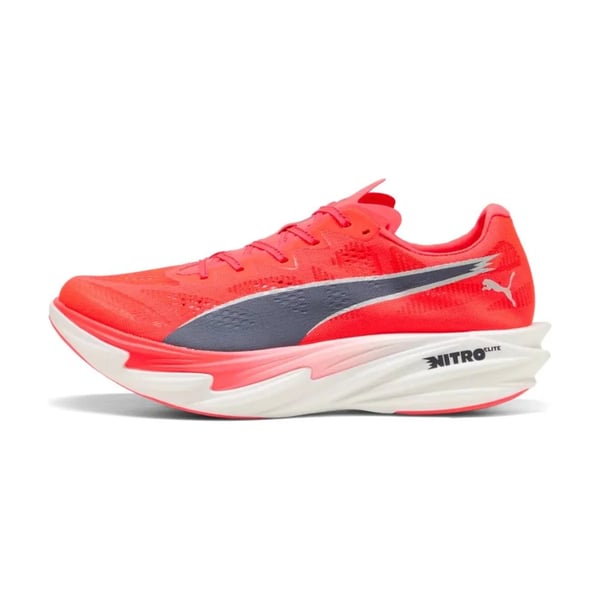
Photo shows one example colourway

Deviate Nitro Elite 4
ATPU midsole and PUMAGRIP outsole. Q1 2026 Puma flagship racer
Today's tracked prices

- 01Direct RunningLIVE£118.26£215.00−45%
Prices and sizes can change, so always check the latest availability at the retailer. Some links earn us a commission at no extra cost to you.
Price history
Our verdict
At 170g, the Deviate Nitro Elite 4 now weighs the same as Puma's more aggressive Fast-R Nitro Elite 3, and that shifts who it's for. It keeps the steadier, heel-strike-friendly shape the Elite line has always had, but most reviewers found the midsole livelier than the Elite 3's and the outsole better too. One long-term tester said it was the first Deviate Elite they'd enjoyed since the original, and Believe in the Run went further, calling it Puma's best race shoe so far. We see it as a carbon racing shoe for 10K and half marathon, and a marathon shoe for runners who find the Fast-R too twitchy. The catches are a narrow midfoot, thin forefoot rubber and early wear reports from a couple of testers. At £215 RRP it's priced alongside the big names, so check the price table before paying full whack.
Key features
- Carbon plate with early forefoot rockerRolls you onto your toes quickly, so the shoe feels its best when you're pushing the pace rather than cruising
- Nitro midsoleGives you a bouncy but fairly firm ride, so you feel connected to the road instead of sinking in
- 170g buildMeans less weight to lift with every stride, which you'll notice most in the second half of a race
- PUMAGRIP outsoleGrips well on wet roads, though it's trimmed back under the forefoot to save weight, so heavy scuffers will wear into the midsole sooner
- 8mm drop and a steadier heelSuits heel strikers and runners who find more aggressive racers wobbly
Who it suits
Who should buy it
- Half marathon and 10K racers who want a light, fast shoe that doesn't feel twitchy
- Heel strikers, who reviewers say suit its shape better than midfoot strikers
- Marathoners new to carbon plates who want a steadier ride late in the race
- Runners who liked the Elite 3's stability but found it heavy
Who should not buy it
- You have wide feet, since the midfoot is snug and the last hasn't changed
- You scuff your feet or wear through outsoles fast, given the sparse forefoot rubber
- You want one shoe for easy runs too, because it's stiff at slow paces
- Your heels rub easily, as the collar padding is thin
Best uses
Extra information
Fit & sizing
Length isn't the problem. Every review we read had testers in their normal size, and one who sits between sizes went for the smaller one and was happy with it. Width is where you need to be careful. Puma kept the same last as the Elite 3, and reviewers describe the midfoot as snug, so this suits narrow to average feet. One review thought the slightly stretchy upper gave wider feet a bit more leeway, but we wouldn't bank on it if you normally buy wide fittings. Lockdown gets good marks thanks to flat, grippy laces, even though the tongue isn't gusseted. The heel collar has very little padding, and one tester found it irritated their heel, so if you're prone to rubbing there, do a long session in it before race day.
Performance breakdown
Ride & feel
Reviewers don't agree on how firm it is. One UK reviewer found it firmer than expected, closer in character to the Fast-R than the old Elite ever was, while a US review called it softer and bouncier than the Elite 3. What they do agree on is the snap. The stiff plate and an early forefoot rocker move you through toe-off quickly, and it feels at home at 10K to half-marathon effort. Slow down to easy pace and the same stiffness makes it feel clunky. One reviewer also mentioned sore feet after hard sessions, even though the shoe felt fine during them.
Cushioning
There's enough protection under you for a half marathon, and for plenty of runners a full one, but nobody describes it as plush. Think bouncy and connected at pace rather than soft. The Run Testers felt it was slightly softer and springier than the Elite 3, and they pitched it at slower marathoners who want a bit of support late on. If you want maximum cushioning over 26.2, a higher-stacked racer will suit you better.
Stability
It's a neutral shoe, yet reviewers found it steadier than most carbon racers. The rearfoot is fairly narrow with a slight inward lean at the heel, and one review noticed the forefoot nudges you outward at toe-off. Heel strikers seem to get on with it best, and midfoot strikers may prefer the Fast-R's shape. If you need real support, you won't find it in any carbon racer.
Upper & comfort
The mesh upper is thin, light and very breathable. That's great for a warm spring marathon, less so on a cold January start line. The tongue is wide and stays put, and the laces hold your foot without pressure points. The weak spot is the lightly padded heel collar mentioned above.
Reviews
No reviews yet, be the first to review this shoe.
Sign in to write a review.
FAQ
Specifications
| Category | Race |
| Surface | Road |
| Drop | 8mm |
| Heel Stack | 38mm |
| Forefoot Stack | 30mm |
| Weight | 170g |
| Carbon Plated | Yes |
| Stability | No |